
A partnership between the U.S. Forest Service and Adventure Scientists is bringing statistically rigorous, large‑scale biodiversity monitoring to some of the most remote forests in Washington, Oregon, and Northern California.
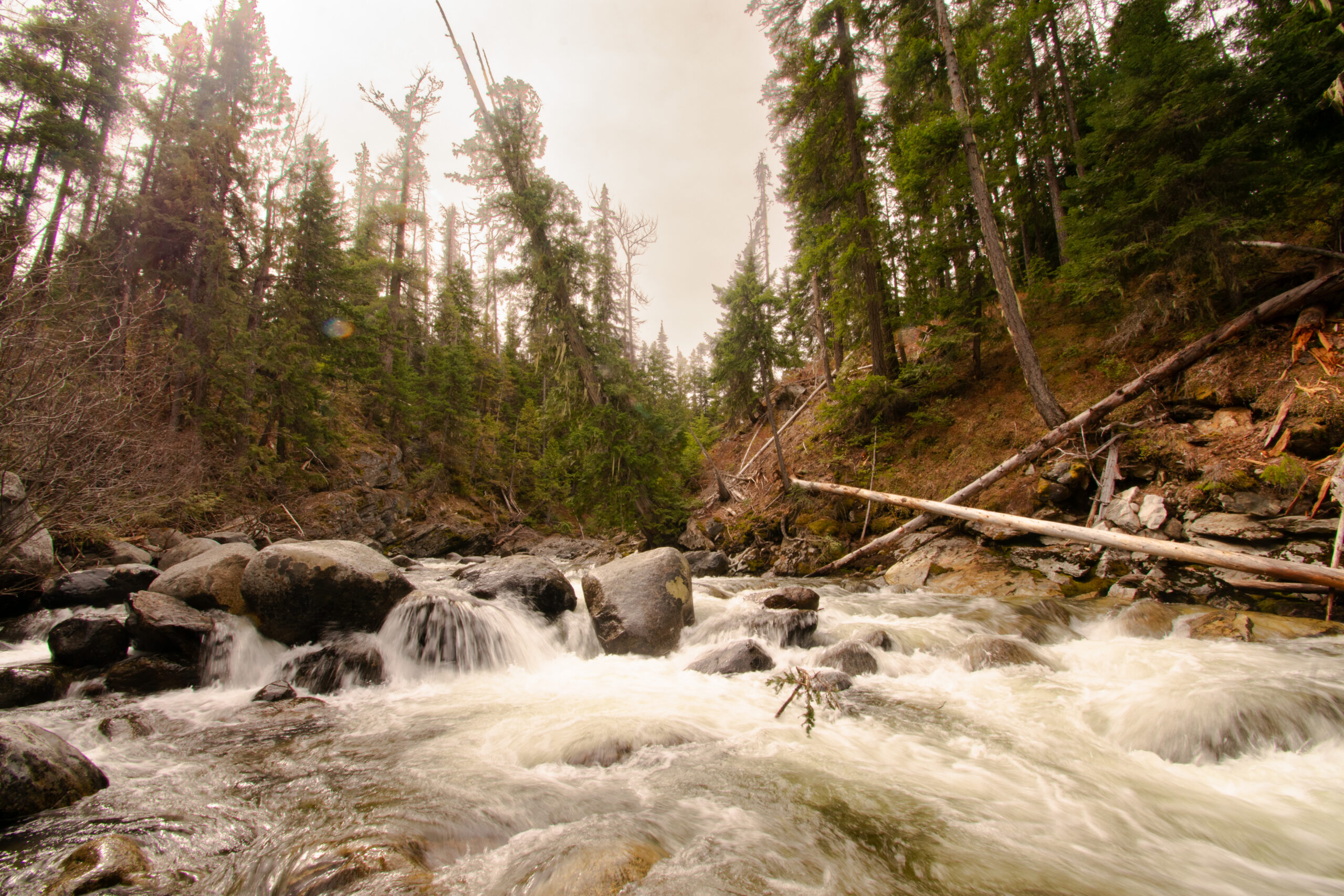
Deep in the forests of the Pacific Northwest, life is constantly in conversation. At dawn and dusk, thousands of animals communicate. For decades, much of that conversation went unheard, simply because listening across millions of rugged acres was logistically impossible.
Now, that’s changing.
Through a powerful partnership between Adventure Scientists and the US Forest Service’s Pacific Northwest (PNW) Bioacoustics Research Lab, outdoor volunteers are helping scientists listen to forests at a scale never before possible by collecting the data needed to guide forest conservation in the Pacific Northwest for generations to come.
As Damon Lesmeister of the US Forest Service explains:
“I’m excited about this partnership with Adventure Scientists. At the PNW Research Station, we’ve built one of the largest passive acoustic monitoring programs in the world. We know how to design statistically rigorous monitoring; we know how to process and manage massive amounts of data, but we face this real challenge with massive spatial scale. The forests we study span millions of acres across western WA, OR, and northern CA, and many of our sites are rugged, mountainous terrain; reaching them requires skill, preparation, and commitment. Adventure Scientists brings exactly that, connecting highly skilled outdoor volunteers with real scientific needs. This partnership – we are confident – will allow us to expand monitoring into remote areas while maintaining scientific rigor into areas we just haven’t been able to get to. It represents the shared stewardship of public lands: federal science, nonprofit coordination, and dedicated volunteers working together to generate data that will guide how these forests ultimately are managed. There’s real-world impact.”
This collaboration sits directly on Adventure Scientists’ mission of integrating adventure and science to advance conservation solutions, demonstrating how volunteer-powered field data collection can achieve goals deemed otherwise impossible.
Preserving Northwest Forest Biodiversity at Scale
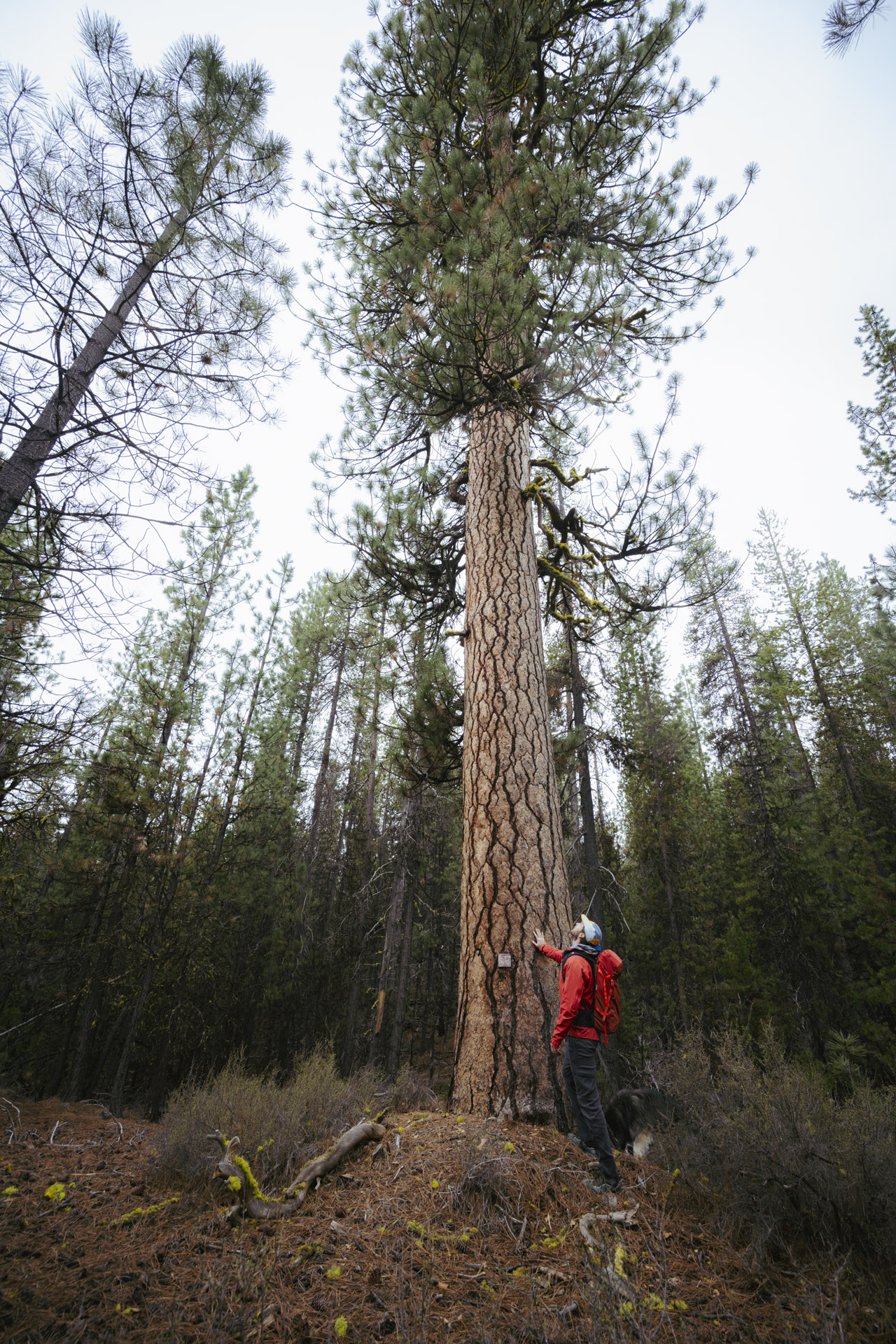
The Preserving Northwest Forest Biodiversity Project is a large-scale passive acoustic monitoring effort led by Adventure Scientists and the US Forest Service’s PNW Bioacoustics Research Lab with critical field support from Adventure Scientists volunteers. Together, they are working to understand how wildlife communities are distributed across millions of acres of federally managed forests in western Washington, Oregon, and northern California.
Passive acoustic monitoring has fundamentally transformed how scientists study ecosystems. As Damon describes it:
“When we think about passive acoustic monitoring, it really has changed the game in how we’re studying and understanding forest ecosystems. Forests are constantly communicating; every day, every night, thousands of animals are vocalizing. Until recently, we were barely listening. We didn’t have the ability to listen to all the sounds that were happening in these forests. The vocalizations and other sounds in these forests provide critical information about these animals and how the forests are functioning.”
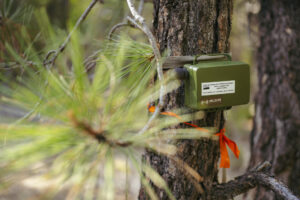
Using small, ruggedized, weather-proof recording devices known as autonomous recording units, scientists can collect continuous, non-invasive audio data for weeks or months at a time. These devices work in places where traditional wildlife surveys are difficult or impossible, capturing hundreds of thousands of hours of sound across remote terrain.
As Damon explains:
“Passive acoustic monitoring has revolutionized how we study ecosystems. Historically, we would work on a few field sites per year; now we can get continuous records of what species are present at large scales. We collect this data across millions of acres.”
This approach allows scientists to move beyond isolated study plots and instead understand biodiversity patterns across entire forest landscapes – exactly the scale needed for effective forest conservation in the Pacific Northwest.
Why the US Forest Service Chose Adventure Scientists
At the PNW Bioacoustics Lab, scientific capacity is not the limiting factor. The team has built one of the largest bioacoustics research programs in the world, collecting an astonishing volume of data.
“At the PNW Bioacoustics Lab, we’ve collected over 10 million hours of recordings over the last several years. To give you some perspective, there are 876,000 hours in a century; we’ve collected eleven and a half centuries of acoustics data. Now, that’s impossible to sit and listen to, so we’ve built machine learning models to automatically identify over 80 [wildlife] species. Our systems turn these massive amounts of raw sound data into usable science.”
The challenge isn’t analysis. It’s access.
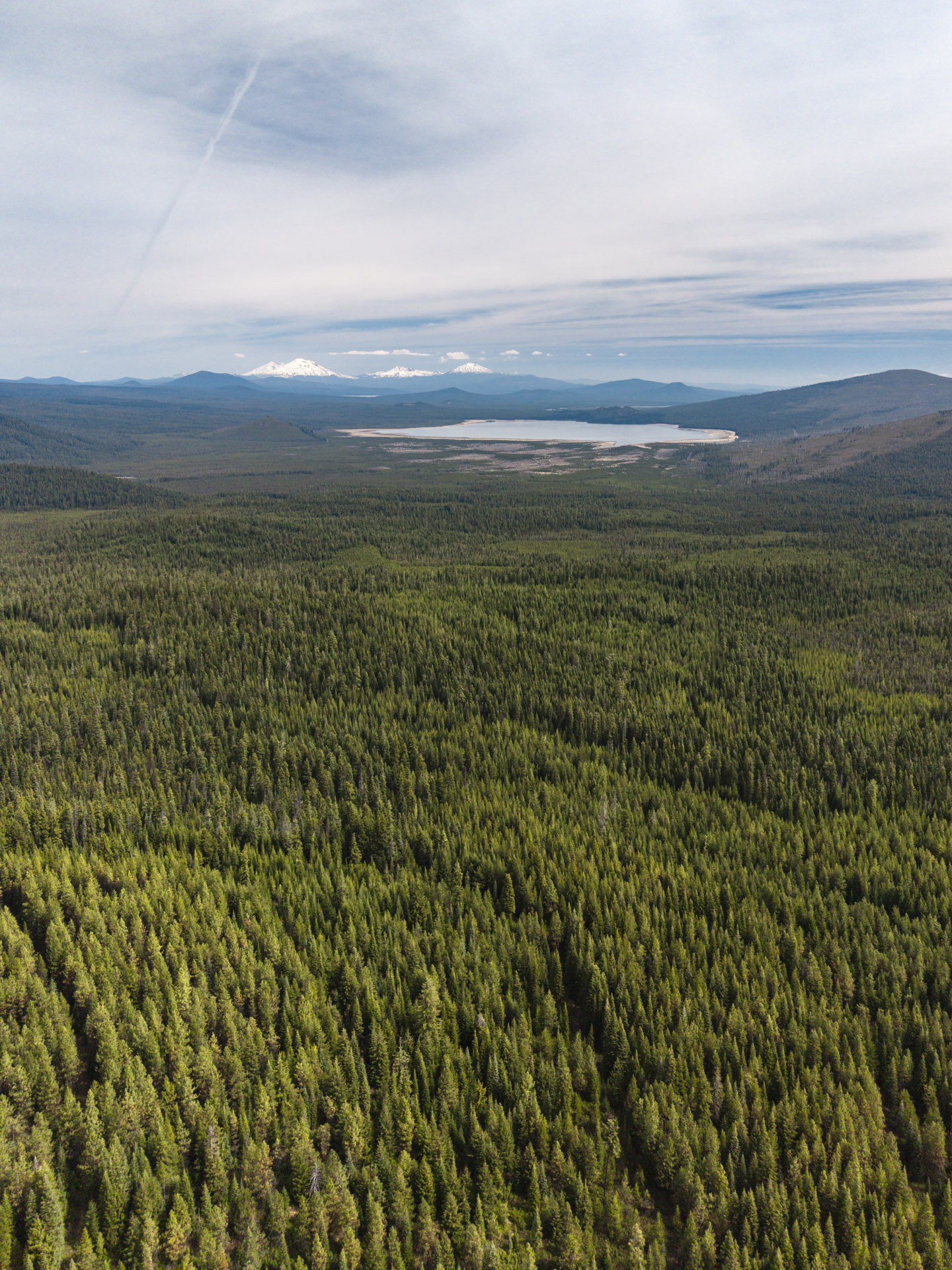
The forests under the Northwest Forest Plan span millions of acres, much of it steep, mountainous, and incredibly challenging to access. Thousands of monitoring sites must be reached, deployed, and revisited with precision and care. For a federal research team, doing that alone would be logistically impossible.
That’s where Adventure Scientists enhances the capacity of the US Forest Service.
Adventure Scientists specializes in mobilizing and preparing highly skilled outdoor volunteers through comprehensive online training, then equipping and coordinating them to collect high-quality field data in some of the most remote landscapes on Earth. Rigorous protocols, attention to data sensitivity, and commitment to scientific integrity make Adventure Scientists a trusted partner for complex conservation and field data collection projects like this one.
Damon underscores that partnership:
“Technology alone doesn’t make this possible. We need volunteers to help us make this a reality – boots on the ground to actually deploy these recording units.”
Sound Data That Drives Conservation Decisions
The power of this partnership lies not just in data collection, but in the impact that follows.
Each recorder deployed by an Adventure Scientists volunteer becomes part of a carefully designed monitoring network. The recordings are processed using machine learning models that identify vocalizations from dozens of species, turning raw sound into actionable science.
Importantly, this data is sensitive. As Damon explains:
“An important consideration of this data is that it’s quite sensitive. The deployment sites are carefully protected because they potentially involve endangered species locations.”
Adventure Scientists’ high quality training and deployment protocols are crucial – and trusted – for sensitive conservation work that requires accuracy, confidentiality, and consistency over time.
The resulting data feeds directly into real-world conservation decisions:
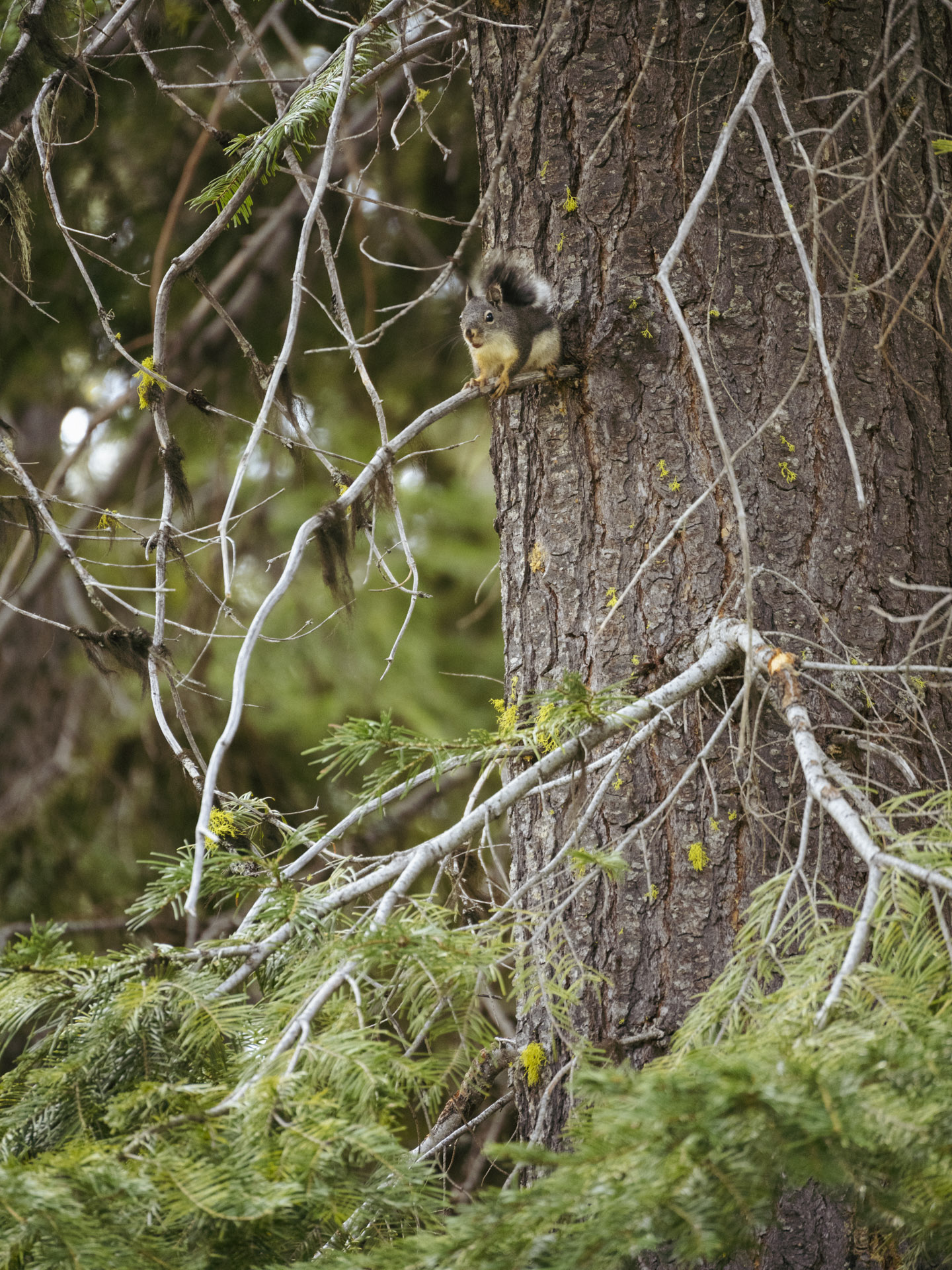
“Everything we’re deploying captures critical species vocalizations – squirrels, wolves, amphibians, bats, pika, owls, some of which are threatened species in the Endangered Species Act.”
Monitoring occurs across thousands of sites and millions of acres, enabling scientists to track population trends, detect shifts in species ranges, and understand drivers of decline.
As Damon explains:
“This data will be used – in addition to feeding directly into threatened species monitoring programs – it will help us track population trends over time and understand drivers of decline. These data-informed decisions across millions of acres of federally managed lands are used in forest planning, [including] restoration treatments, thinning, and prescribed fire, and they support Endangered Species Act compliance and help reduce regulatory uncertainty in land management decisions.”
This is the direct, tangible conservation impact of volunteer-powered science: sound collected in remote forests becomes evidence that shapes how public lands are managed.
The Impact of Volunteer-Driven Science
This is biodiversity monitoring at scale, made possible by people who are comfortable navigating off-trail terrain, carrying equipment into remote landscapes, and following rigorous scientific protocols. It’s a model that allows federal science to move faster, farther, and with greater impact without sacrificing rigor or credibility.
The payoff is near real-time conservation relevance:
“Your work in the field directly translates to data that gets analyzed and passed on to land managers to shape conservation initiatives and the US Fish and Wildlife Service to make decisions around endangered species,” says Damon.
These sites are often in mountainous areas, and there are thousands of them. It would be logistically impossible to cover this ground without the partnership we have with Adventure Scientists. The work you do as volunteers helps us to multiply our research. You’re not just placing monitoring devices in the woods; you’re enabling biodiversity science at scale that would otherwise not be achievable.
Shared Stewardship and What Comes Next
This partnership represents a powerful model for the future of conservation: shared stewardship of public lands through collaboration.
Federal scientists bring statistical rigor, analytical expertise, and long-term vision. Adventure Scientists brings project management coordination, volunteer training, and proven experience in conservation field data collection. Volunteers bring skill, commitment, and a willingness to go where few others can.
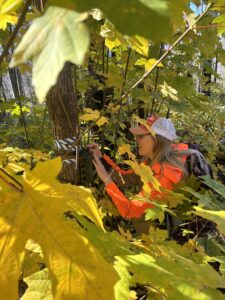
Volunteer places acoustic monitoring equipment in Oregon’s Cascade Range as part of Adventure Scientists’ Pacific Northwest biodiversity conservation project.
Together, they are building on one of the most comprehensive bioacoustics research efforts in the world and ensuring that forest conservation in the Pacific Northwest is guided by the best available science.
“We use these recordings to support murrelet monitoring, to study climate-sensitive species like the varied thrush, and to understand how wildlife communities are responding to fire and forest treatments. I find it quite exciting that it connects rugged field work with real-world conservation outcomes in near real time. What you help us collect will directly shape how forests are managed across the Pacific Northwest,” Damon reflects.
For outdoor adventurers who want to use their skills to preserve the places they love, donors seeking measurable conservation impact, or scientific institutions looking for a trusted field partner, this project shows what’s possible when science and stewardship come together at scale.
Together, we can keep listening and ensure the forests of the Pacific Northwest continue to speak for generations to come.