By: Victoria Ortiz
Are some people more prone to accepting change? Changing something requires a level of risk. It means venturing into a new territory where things are outside of your control and relying on one’s skills, creativity, and optimism to succeed. Many of our volunteers actively seek change, not just in their adventures, but also in their everyday life.
One of our Gallatin Microplastic Initiative volunteers, David Breck, made a big change in 2013. He had spent years working as a conservation engineer in Bozeman, Montana, doing stream restoration projects for his co-founded company, Spanish Peaks Engineering & Consulting. In March of that year, however, he and a friend quit their jobs to start a brewery.
One of our Gallatin Microplastic Initiative volunteers, David Breck, made a big change in 2013. He had spent years working as a conservation engineer in Bozeman, Montana, doing stream restoration projects for his co-founded company, Spanish Peaks Engineering & Consulting. In March of that year, however, he and a friend quit their jobs to start a brewery.
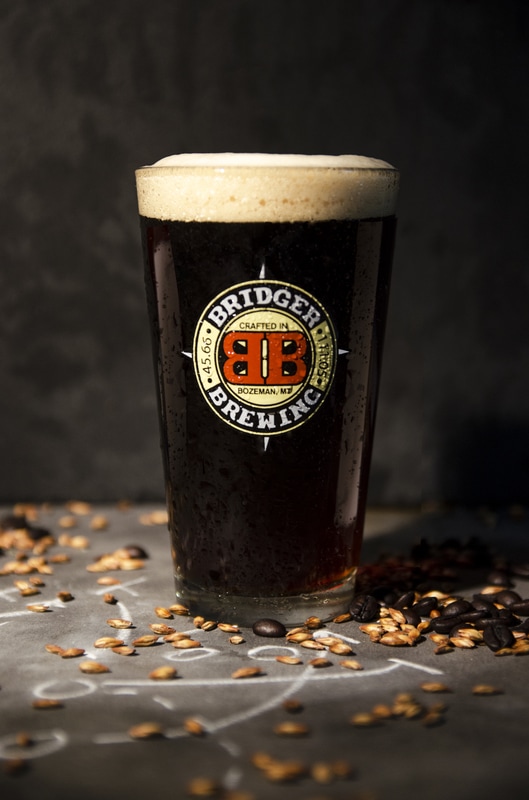
Bridger Brewing Bobcat Brown, PC: Bridger Brewing
|
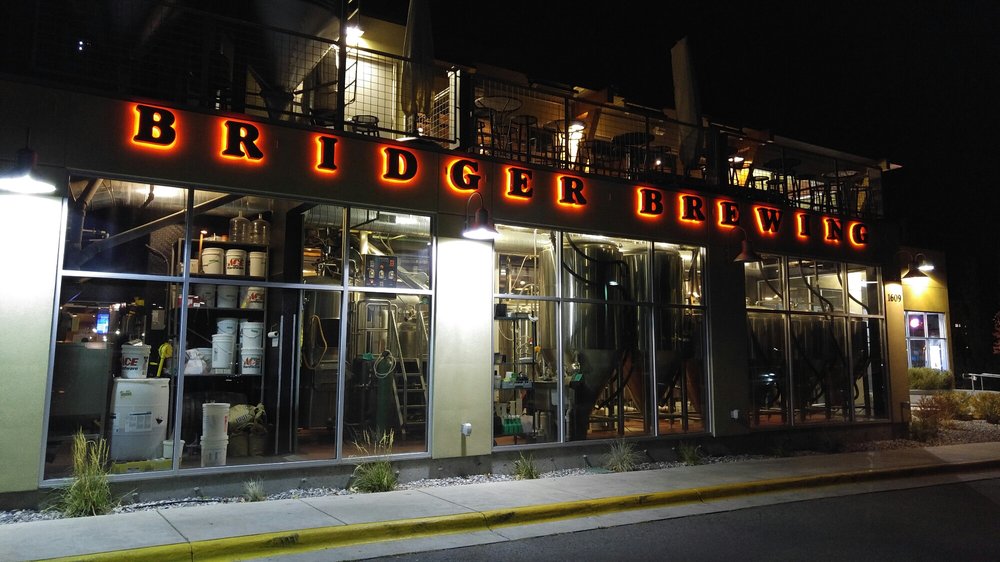
PC: Bridger Brewing
|
To say that Bridger Brewing is a success would be an understatement. When I sat down with Breck and Chelsea Kaderavek at 4pm on a Thursday, almost every table was taken and there was a line to be seated. After tasting their home-brewed ginger beer I understood why – they strive for quality and invest a lot of thought into all of their business decisions, whether it’s how much fresh ginger to include or how to minimize their plastic waste.
Microplastics are tiny plastic particles smaller than five millimeters in size that likely pose a significant environmental and human health risk when they enter our waterways. Adventure Scientists has amassed the most diverse and likely the largest global data set recording microplastic distribution and concentration data thanks to adventure volunteers collecting samples from oceans and waterways all over the world. Even though nearly 75% of these samples contain microplastics, many people aren’t aware of the issue.
Microplastics are tiny plastic particles smaller than five millimeters in size that likely pose a significant environmental and human health risk when they enter our waterways. Adventure Scientists has amassed the most diverse and likely the largest global data set recording microplastic distribution and concentration data thanks to adventure volunteers collecting samples from oceans and waterways all over the world. Even though nearly 75% of these samples contain microplastics, many people aren’t aware of the issue.
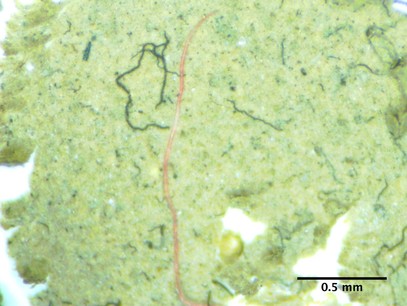
A close-up view of a red microplastic fiber
“I was an environmental biologist and I had never even heard of microplastics,” says Kaderavek, who has been leading the charge for Bridger Brewing’s environmental initiatives. “They’re so small, micro, really, that I didn’t give the issue the attention it deserved,” adds Breck.
They reached out to Adventure Scientists to learn more and quickly signed up to take samples for the spring collection of microplastic samples along the Gallatin River and its tributaries.
They reached out to Adventure Scientists to learn more and quickly signed up to take samples for the spring collection of microplastic samples along the Gallatin River and its tributaries.
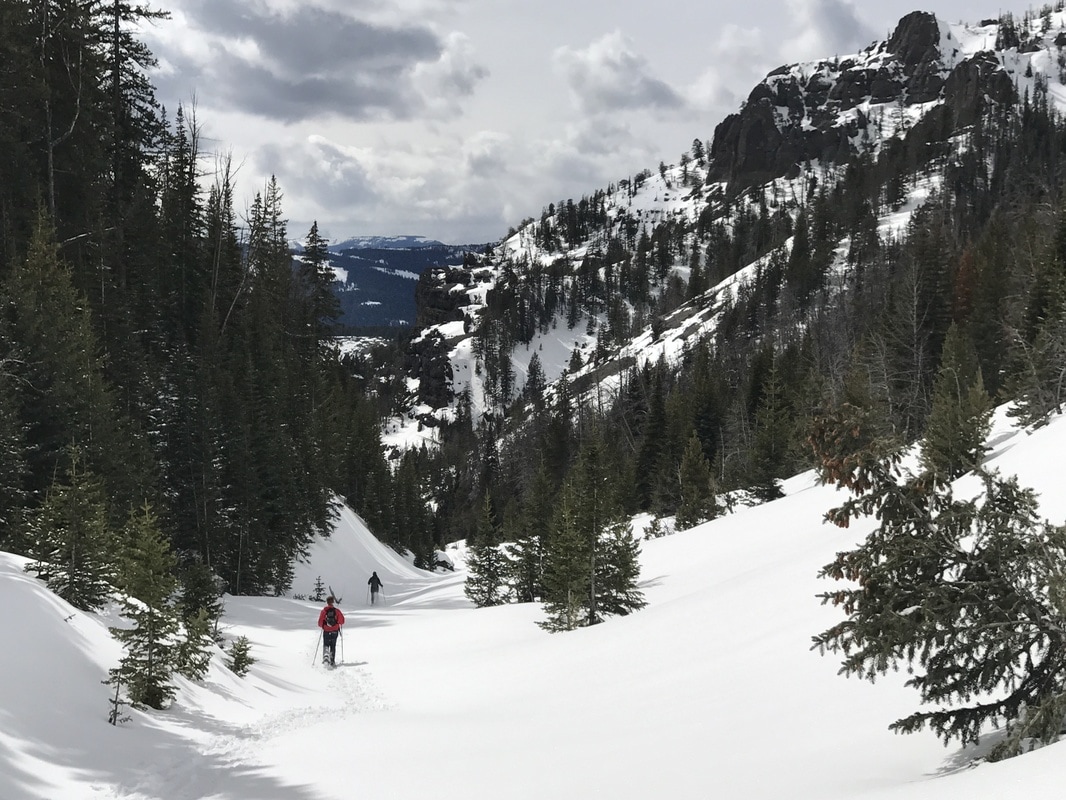
Chelsea and Hayden hike down the Black Butte drainage after sampling for microplastics near the headwaters of Black Butte Creek. PC: David Breck
In mid-March Kaderavek, Breck, and his fifteen-year-old son snowshoed six miles off-trail up a remote stream only to find that their collection site was buried under four feet of snow. They ended up finding open water a bit further downstream and collected their water sample, but the overall volunteer experience had an effect.
“The fact that there are microplastics that far in the backcountry is pretty shocking,” begins Breck, shaking his head. “You wouldn’t have much of a reason to be there unless you were taking a sample, so if they can exist in places like that then they must be everywhere.”
“The fact that there are microplastics that far in the backcountry is pretty shocking,” begins Breck, shaking his head. “You wouldn’t have much of a reason to be there unless you were taking a sample, so if they can exist in places like that then they must be everywhere.”
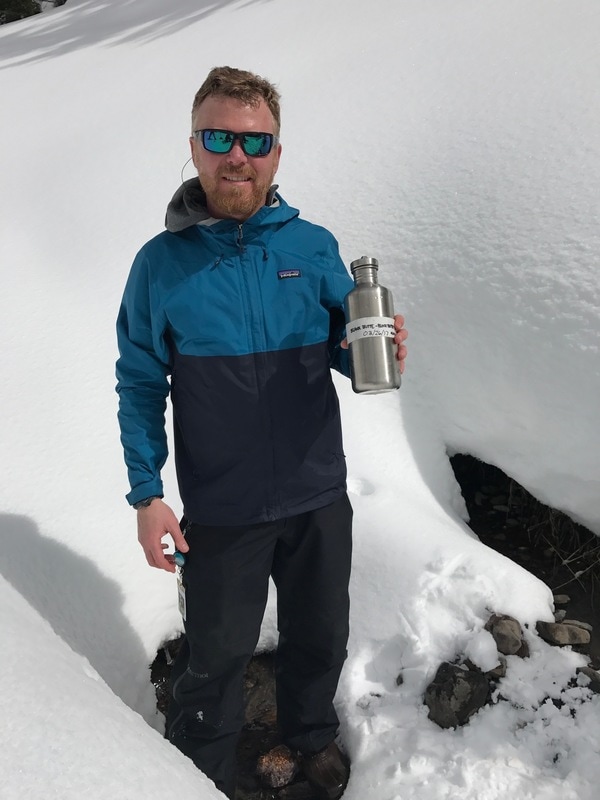
Breck takes a microplastic water sample for the Gallatin Microplastics Initiative, PC: Chelsea Kaderavek
|
Back at the brewery they started evaluating ways that they could reduce their business’s plastic consumption. On the consumer-facing side, they now use compostable takeout containers and have eliminated plastic straws and cups, opting instead for metal straws. Though metal straws cost more than plastic, “it’s well worth it,” says Breck.
“I know we’re influencing people,” says Kaderavek, “because the other day I had a woman who owns her own restaurant come in who wanted to buy a metal straw. After talking to her about why we use them she said wanted to start using them at her place too.” |
On the back end, Bridger Brewing has also started purchasing 60 lb refillable jugs of locally sourced honey twice a month instead of dozens of 5 lb plastic tubs of Argentinian honey from Costco. They’ve also started dumping all of their individual trashcans into one bag. “A lot of our waste is paper from receipts, so the bags don’t get smelly anyway,” says Kaderavek. “If things get stinky we’re going to have to change it, but it’s been fine so far.”
It can be hard to get customers and our employees (60 people and counting) on board with these changes, but overall, they say they’re getting a positive response.
“What we’re doing is small but I think the public influence could be really big. We’re such a community-driven place and we have a responsibility to this town to raise awareness about this issue,” says Breck.
So what’s next? “We’re looking at ways to compost our food scraps, trying to purchase things locally from places that use less plastic packaging, and are exploring ways to make our summer concert series less wasteful,” says Breck. “And of course, we’re going to continue to be Adventure Scientists volunteers.”
Change begins with individual actions and ripples into the community, business practices and ultimately government policies. We believe that quality data helps drive these changes, and are dedicated to unlocking solutions to the world’s most pressing environmental issues by filling in those data gaps.
Share your ideas for how Bridger Brewing can further improve their business practices and show your support for data driving local change at the Pints for Purpose event on August 28th.