
This photograph from Roatán shows a team loading dive tanks onto a boat before a reef monitoring run. Every person in the frame is a woman. It isn’t a staged shot, and in Honduras, it isn’t unusual anymore.
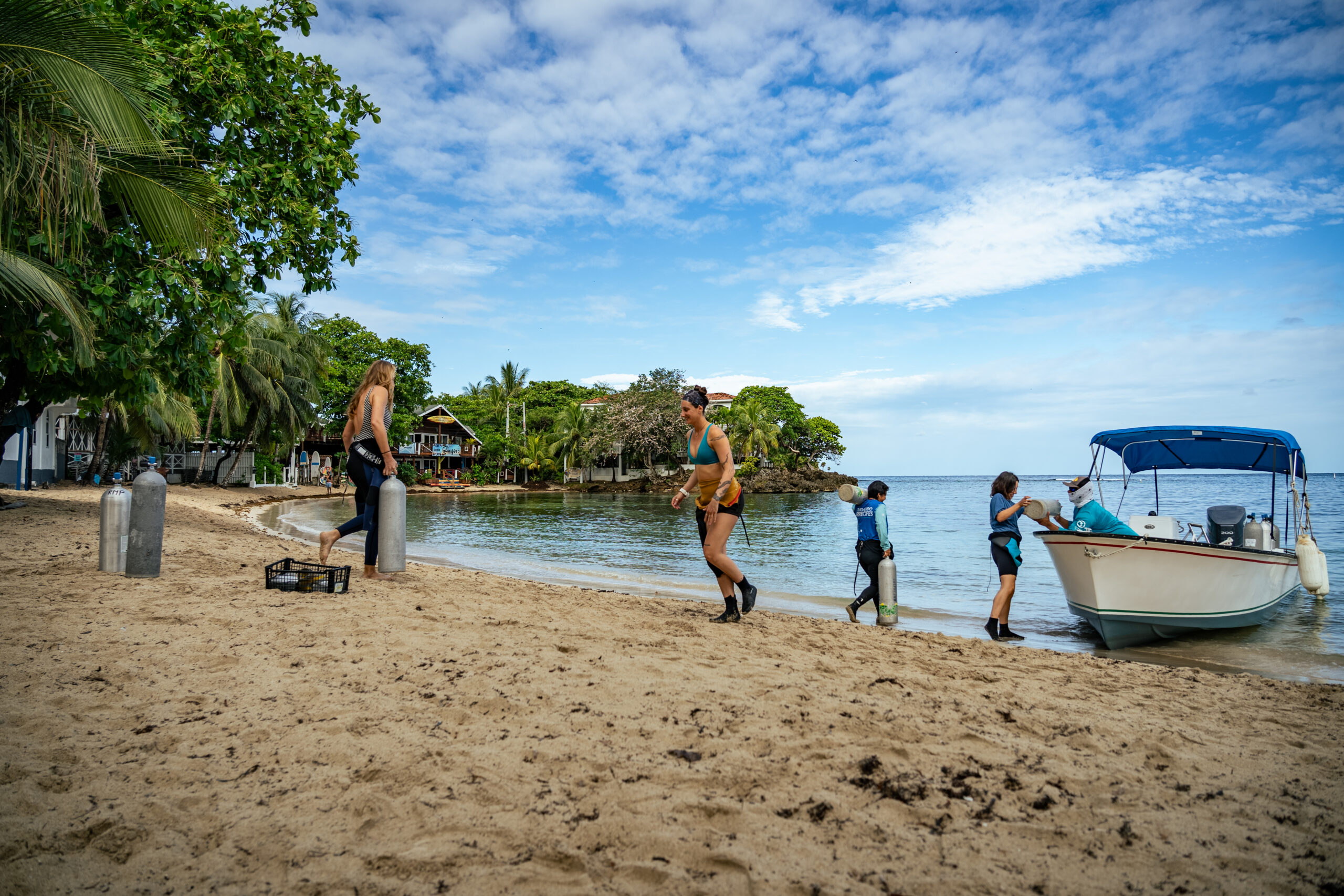
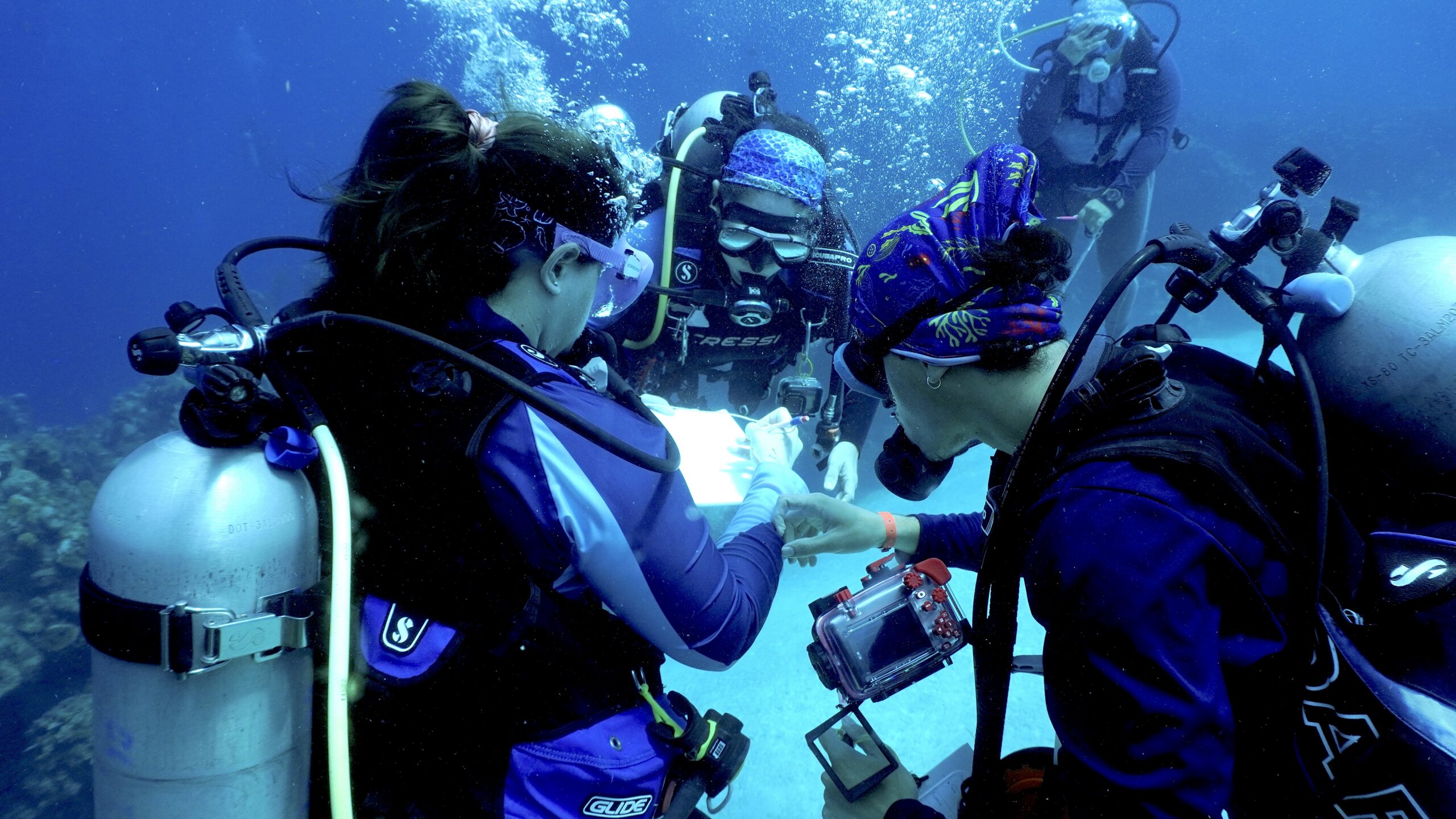
Reef monitoring is not a one-time activity. It asks trained community members to show up again and again, often in physically demanding conditions, to collect data carefully enough, following rigorous standardized protocols, so that scientists and managers can use it. In Honduras, this structure has helped women move into the center of the work.
The Numbers Behind Reef Monitoring in Honduras
Across the first year of coral reef monitoring in Honduras:
- Women made up 63.6% of all community members engaged in the project.
- 57.8% of the most active and consistent fieldwork volunteers were women.
- All 3 monitoring leads were women.
Stories about women in marine conservation often focus on representation. This one starts with reef data. The program was built to collect hard-to-gather coral reef data that can drive conservation and restoration, but the way we designed this work also created paid, skills-based roles in coastal communities close to the reefs themselves.
Women moved into those roles, then they moved up through them.
What We Designed
We set out to answer a practical conservation question: how do you collect reliable, rigorous reef data over time in places where long-term monitoring is difficult to sustain?
The answer was not to fly in outside teams for short windows of fieldwork; it was always to train and equip people who live near the reefs, compensate them for their time, and build protocols rigorous enough that someone without a marine biology degree could still contribute meaningful scientific data, and more importantly, it was to transfer expertise. In partnership with the Roatan Marine Park, skills that once took years of specialized training can now be taught through structured protocols in a matter of weeks, allowing reef communities to build scientific capacity that remains long after any single survey season ends.
The program was built to create monitoring capacity in reef communities, not create a demographic outcome, and yet one of its most visible outcomes in Honduras has been the emergence of women as leaders across the monitoring network.
The Women Leading Marine Conservation Work
The pattern shows up in individual stories as much as in the numbers.
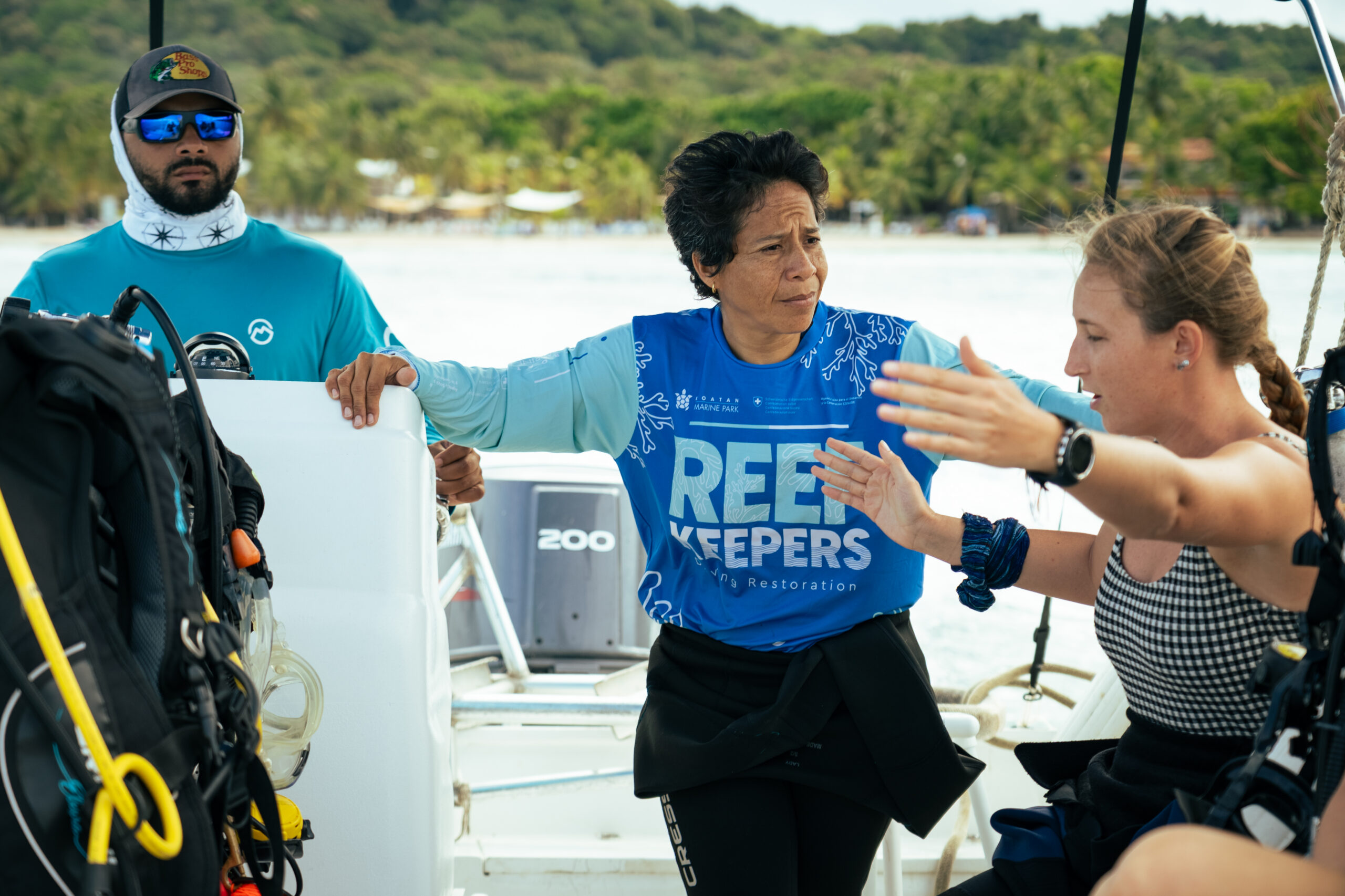
Velvet Teos came through the program as a volunteer before becoming the Honduras coordinator. From that position, she has helped strengthen team coordination, improve data quality, and grow participation. She also points to stipends as a practical reason volunteers could continue showing up over time.
“Most importantly, the project generated critical information for the Roatán Marine Park, including the discovery of healthy pillar coral (Dendrogyra cylindrus) colonies that now serve as priority sites for conservation and genetic protection.” – Velvet Teos
For Adventure Scientists and the Roatán Marine Park, that result matters because strong community leadership increases the likelihood that monitoring continues year after year, producing the long-term datasets reef managers need to guide conservation decisions.
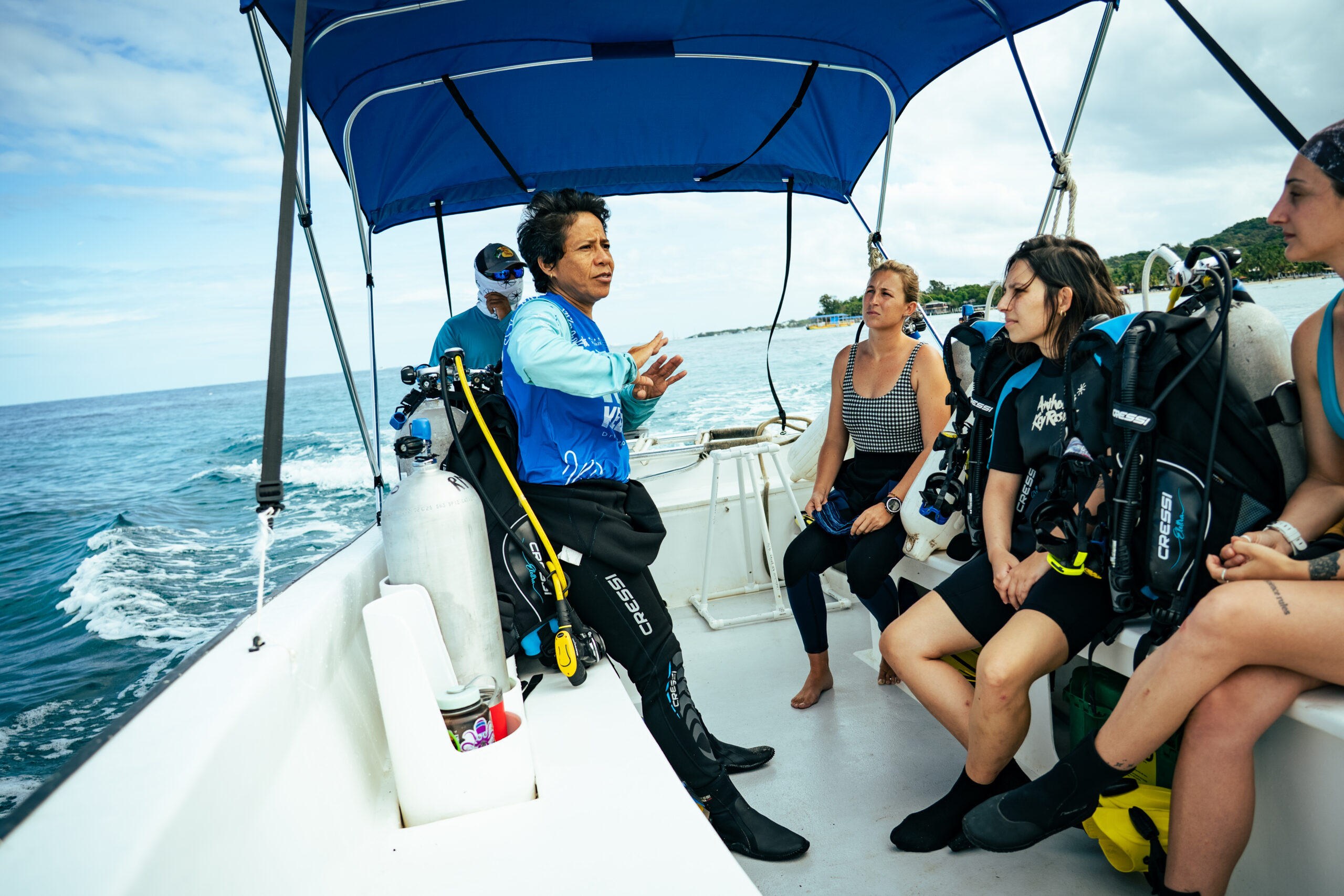
Pictured above: Honduras country coordinator, Velvet Teos, briefing volunteers before the dive.
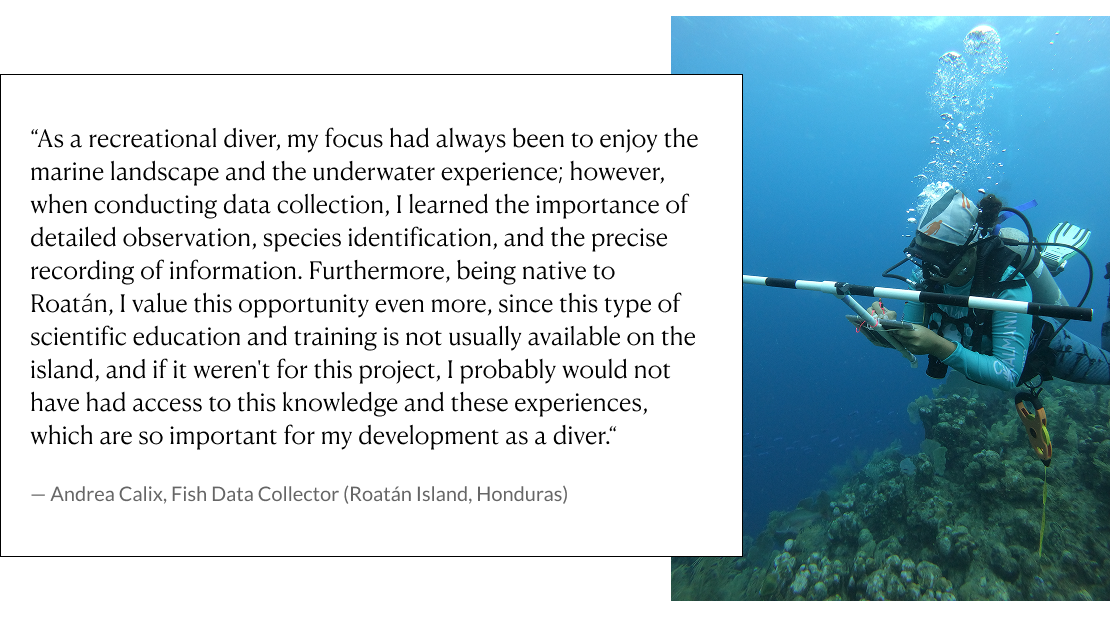
Andrea Calix, from Roatán, collects fish transect data. For her, the project has provided access to scientific education and field training that would otherwise be difficult to find locally. Without the program, she has said, she is not sure she would have had access to this kind of opportunity on the island.
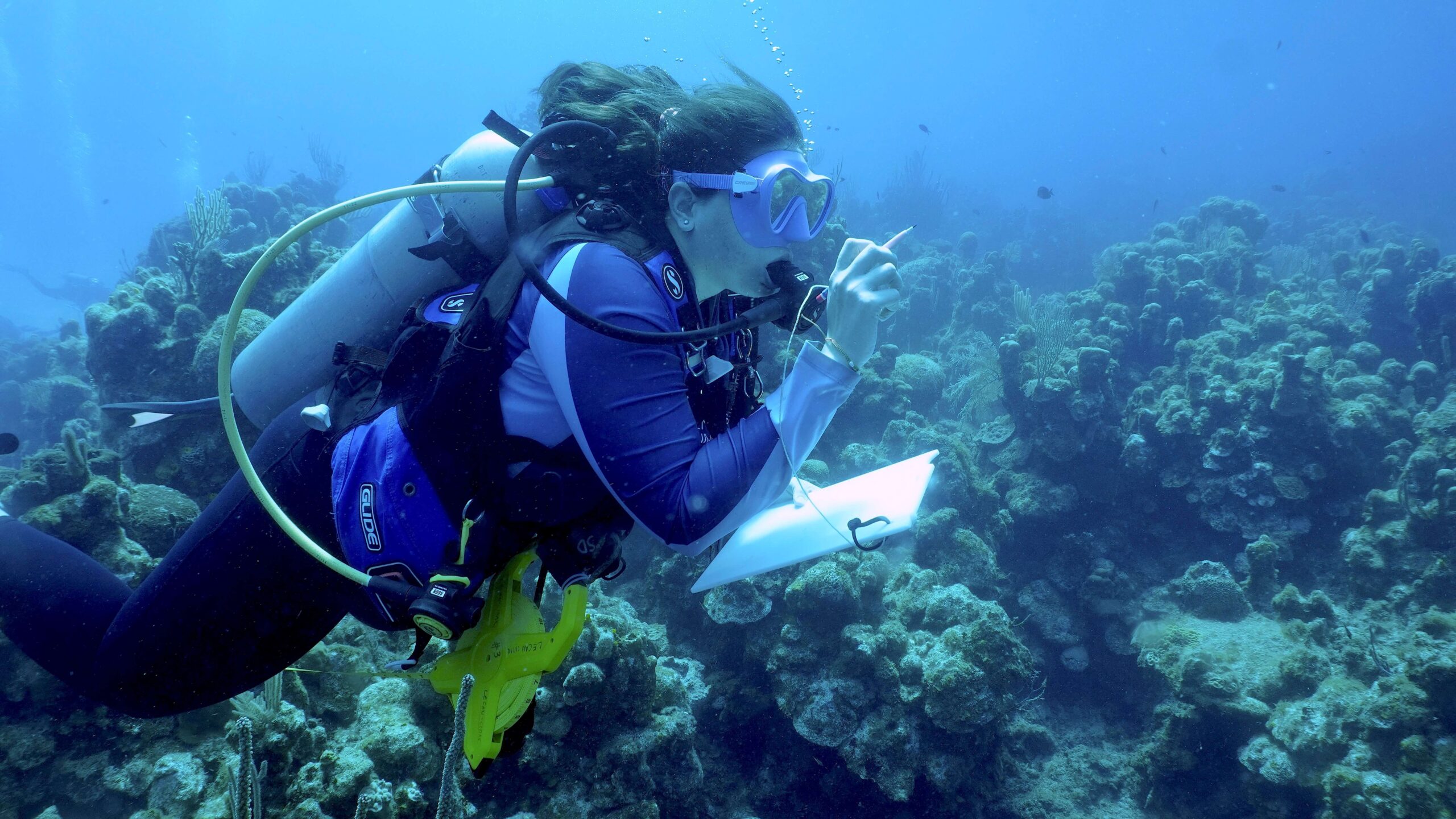
Gianna Paden, a marine biology master’s student, spent three months supporting benthic and photo-quadrant surveys. Later, she presented her analysis back to the same volunteers who had helped collect the underlying data.
“… this program generated a robust data set that can be utilized to support a wide range of research applications, including defining reef states, assessing bleaching impacts, and monitoring recovery trajectories. I look forward to seeing what Roata Marine Park accomplishes with this dataset, and I feel grateful to have been part of it.” -Gianna Paden
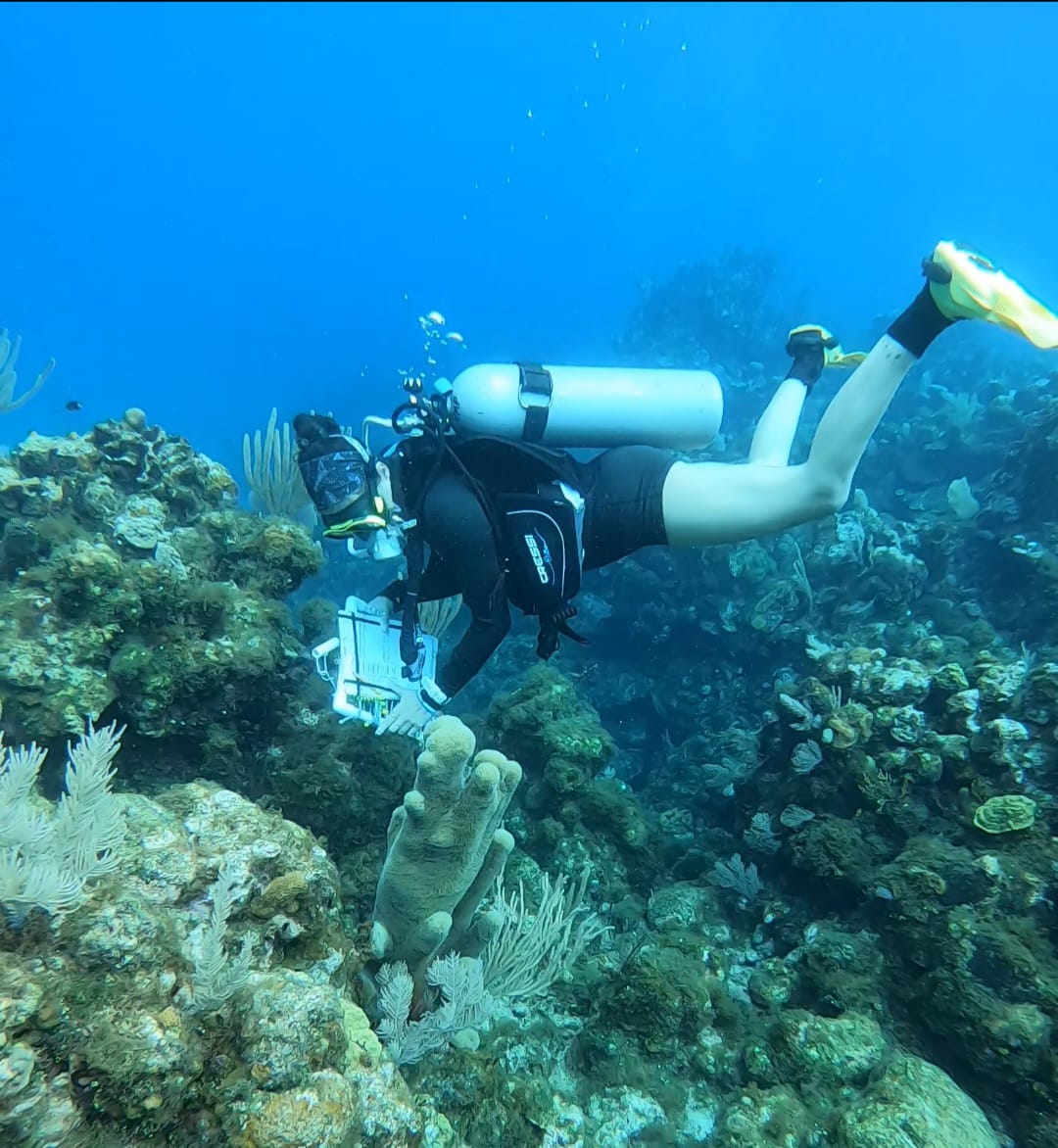
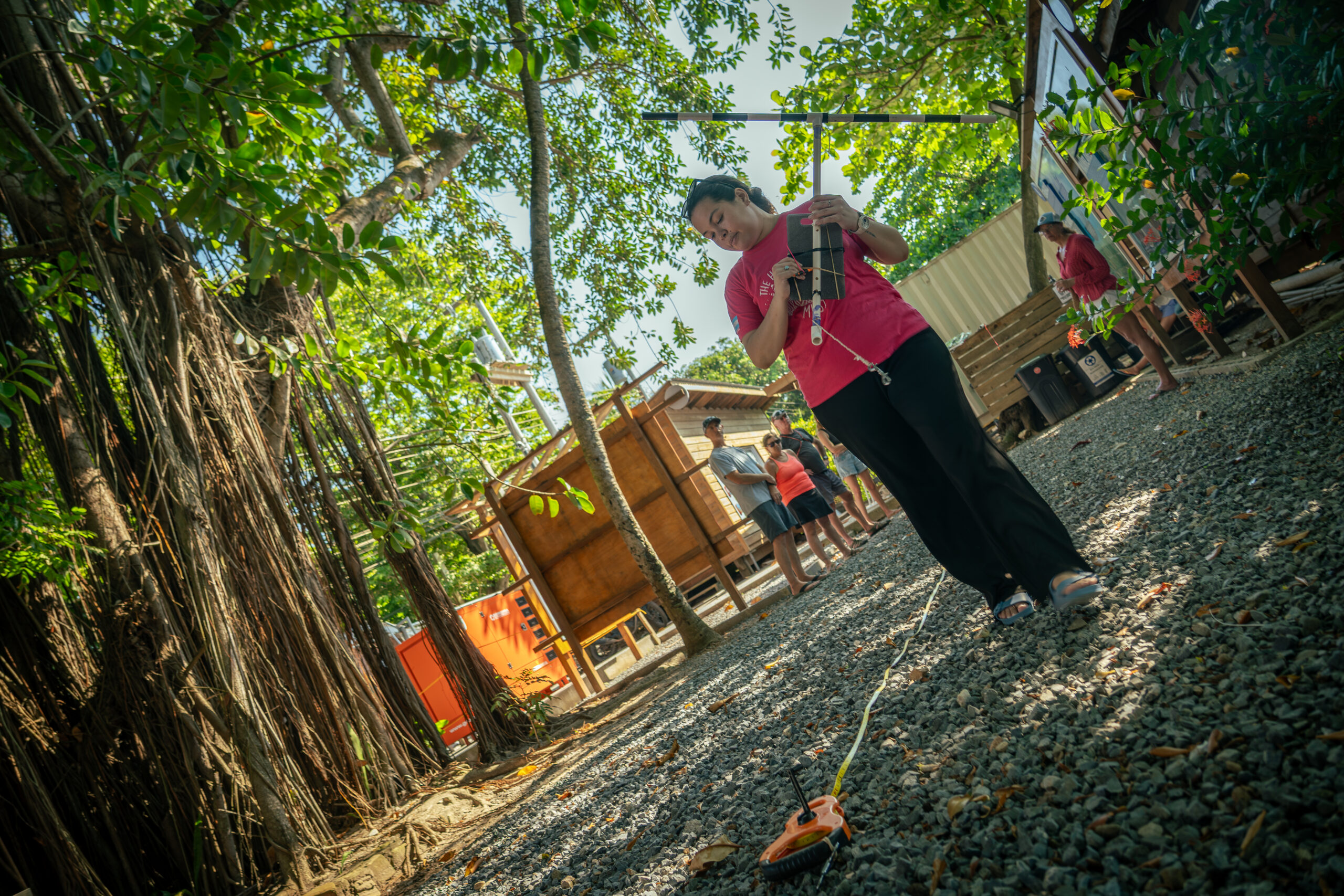
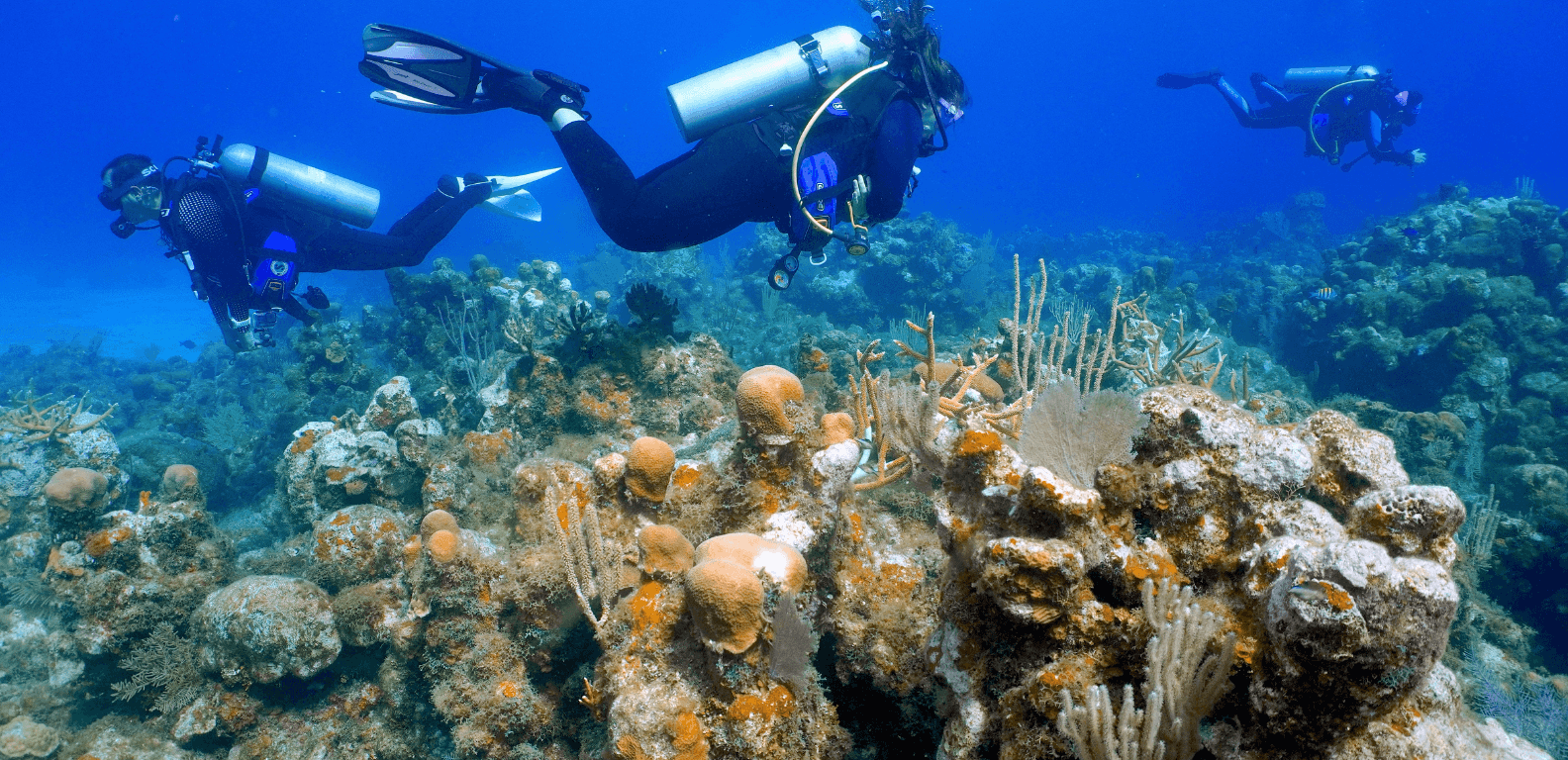
Pictured above: Volunteer Gianna P. performing a benthos transect in a dive site in Roatán Island.
And Dr. Alma Paola Rodríguez, the project’s principal investigator at the Universidad de Guadalajara in Mexico and a National Geographic Explorer, describes watching this work expand across regions as a defining moment of her professional career.
Together, their stories point to the same idea: local conservation capacity is built through training, trust, repetition, compensation, and leadership pathways that people can actually move through.
“I like the fact that is well lead in the sense that there are theoretical and practical classes about the different types of monitoring so every step of the way we feel like we’re learning something, which is interesting. I like the fact that staff have very in-depth knowledge of the fauna and flora of the area and a lot of diving experience. I really love fish, so fish ID was fun for me, but it is super interesting to know how such data is collected, and I think it’s going to help me a lot on my future work as a scientist. We came because we want to help yet we don’t realize in how many ways this program helps us grow instead!”
Why Community Science Leadership Matters
Reef monitoring done once is just a single data point. Reef monitoring repeated over years becomes a trend line, and trend lines are what managers can act on.
This project expands across 5 Latin American countries: Mexico, Costa Rica, Ecuador (including the Galápagos Islands), Colombia and Honduras. Every partner uses the same monitoring protocols so these efforts are not isolated projects. Data collected in Honduras can be compared with data collected elsewhere across the globe, creating a shared scientific language that allows communities, researchers, and reef managers to learn from one another and act towards management decisions as a region.
The people most likely to keep diving these sites years from now are the ones who live near them, understand them, are trained properly, are paid for their time, and have a stake in the answer.
In Honduras, many of those people are women.
The Coral Reef Monitoring program works because local teams are collecting rigorous data over time, and in Honduras, women’s leadership is one of the clearest signs that this community-based model is building the long-term capacity needed to sustain reef monitoring.
Want To Be Part of This Work?
Share these stories with your network or support the work through a donation. If you’re part of a conservation organization, research institution, government agency, or marine protected area interested in bringing standardized reef monitoring to your region, we’d love to hear from you.
In partnership with:
The Roatan Marine Park (RMP) is a non-profit organization and co-manager of the Bay Islands National Marine Park. Founded in 2005, its work spans marine protection, infrastructure, community development and research. RMP operates Central America’s first state-of-the-art Coral Restoration Center for assisted coral reproduction and partners with Adventure Scientists to advance coral conservation through standardized reef monitoring and regional collaboration across Latin America. Learn more at www.roatanmarinepark.org