
There’s a word for it, and Matt Leitzinger didn’t learn it until afterward.
He had described the worst two hours of his field season to an old Forest Service friend, now Head of the Avian Biology Program. She supplied the term he had been missing: shrubmarining.
By the end of the day, Leitzinger had earned the word, and just weeks later, fire crews would be sent into the same country he had just placed acoustic recorders.

Saturday, June 13
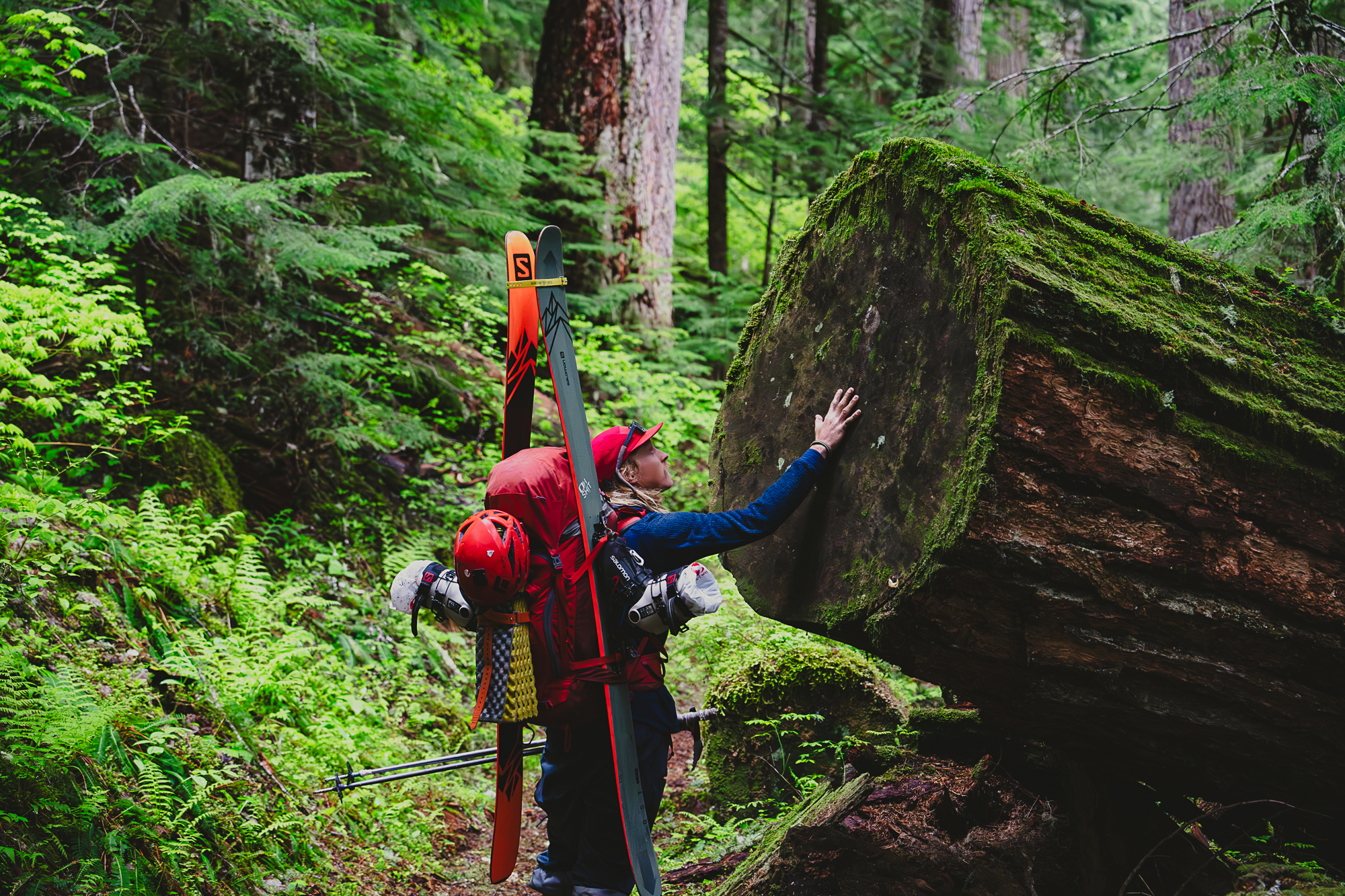
Leitzinger set out to place four acoustic recording units in the Glacier Peak Wilderness. He wanted the 3,000-foot climb out of the way early, so he was moving by 8 a.m., carrying three liters of water and four acoustic recording units.
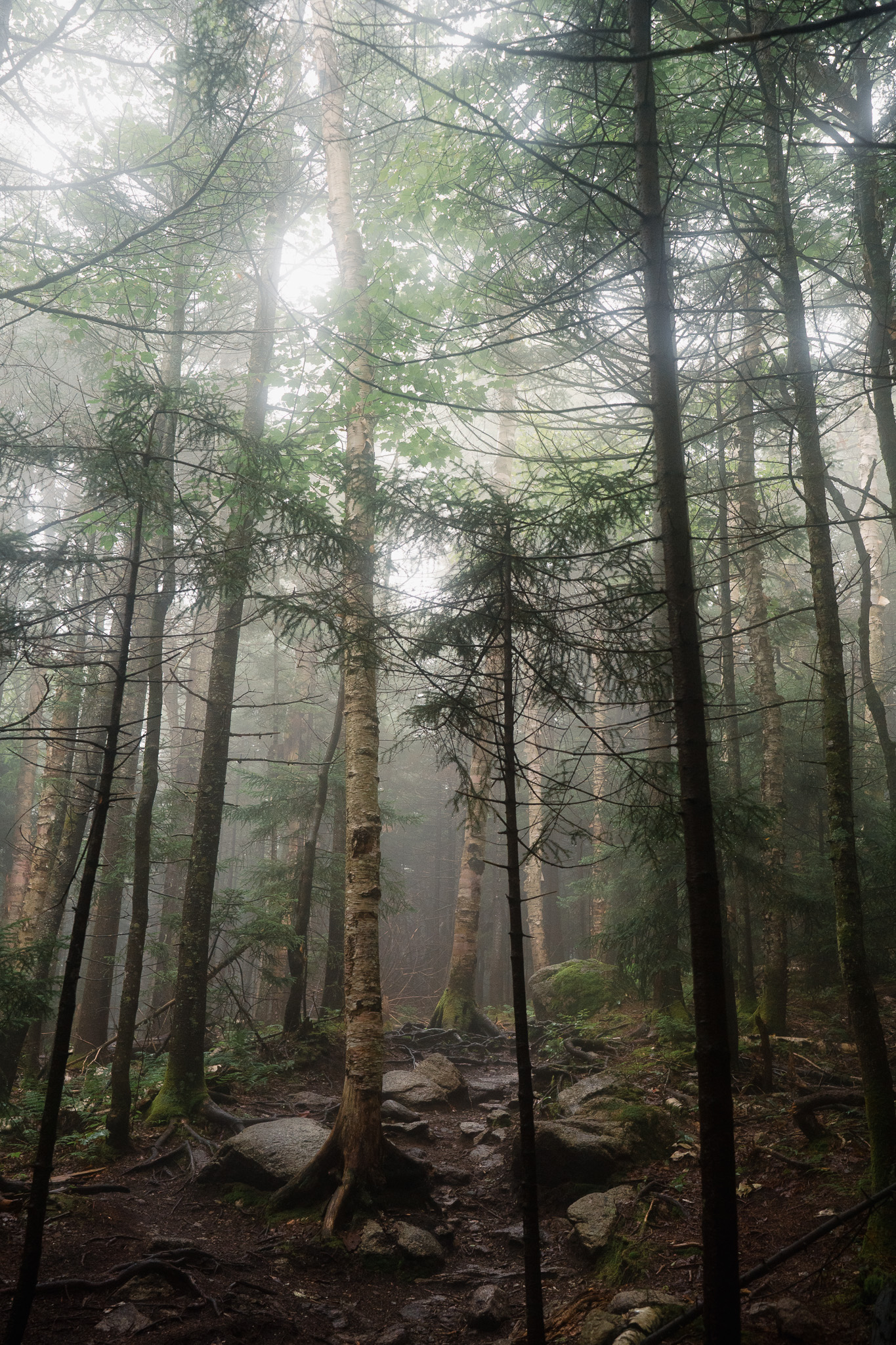
The load made for a sweaty climb. Not helping his pace: more than 150 downed trees across three miles of trail.
“The bugs on this north slope were voracious and had me in full rain gear despite the sweaty temps while I hurried to install the unit.”
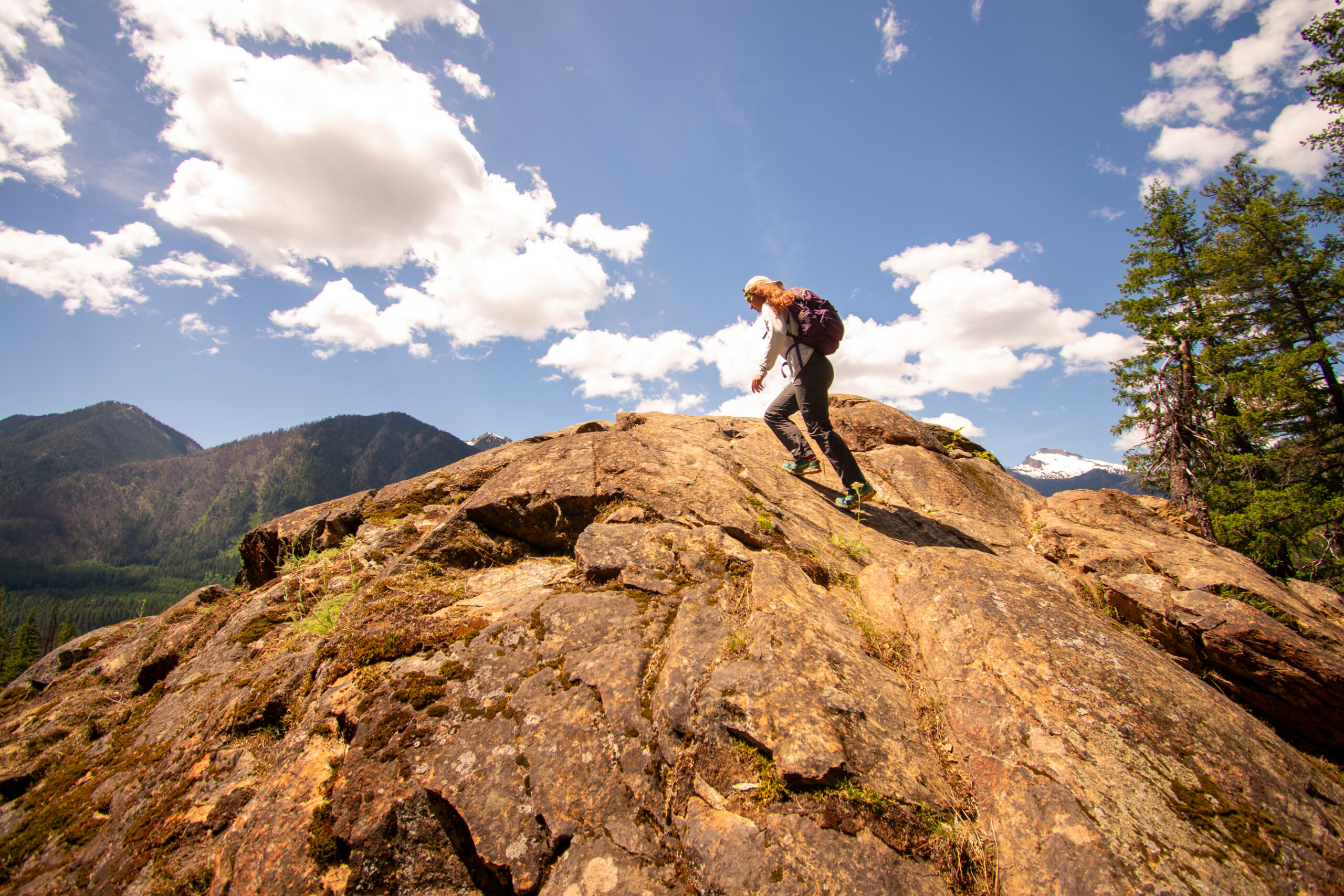
He hit the ridge around noon and took a bug-free lunch in the wind with a view, working out how to reach the other three placements. One sat below the ridgeline on the trailless south side. The other two lay farther down the drainage.
“Those miles held unknown hazards and barriers and, by all observations, looked dizzyingly steep.”


Shrubmarining
The first section was what Matt describes as definitively no-fall-zone terrain, where staying upright took full concentration and careful line choice. He placed the second recorder, judged he could keep going, and worked slowly down the ridge. One very steep mile later, the next was in. It was around 3 p.m. He was tired and down to his last liter.
“I knew I was in for some disappearing trail, but nothing could have prepared me for the next mile of travel.”
The stretch ahead had been landslid and avalanched. With no mature trees, there was no shade, and in Leitzinger’s phrasing, the understory had become the only story.
Where a path once ran, there was now no trace of one. Interwoven vines, slide alder, and shrubby fir filled the drainage, leading Matt to “shrubmarine”.
“It took me more than an hour and a half to travel the worst half mile in this stretch.”
Suspended in the tangle, he laughed quietly to himself about the upper limits of type-two fun and wondered whether he would make it home that night.
Eventually, he reached mature forest. He was back on his entry trail by 6 p.m., where sixty more downed trees stood between him and the truck – nothing by comparison.
Take a look and see Matt and his partner’s slog through the backcountry here →
Wildfires in Washington
By late summer, two of the hex regions where Matt had placed recorders sat dangerously close to large, creeping forest fires. Nearby, a wildfire had burned nearly 150,000 acres.
“The data on those devices is now our last chance for a glimpse into these ecosystems in the glacier peak wilderness before they feel the effects of this megafire that’s torched nearly 150,000 acres to date.”
The ARU’s recordings are a baseline, documenting what those ecosystems sounded like before they felt the effects of fire.
Carried in on foot and in pack, each acoustic recording unit had captured wildlife sounds that would have otherwise been lost.
It’s also why the retrieval deadline isn’t an administrative date. Every recorder still in the woods is a stretch of forest and wildlife that either gets documented or doesn’t, and fire doesn’t wait for a volunteer’s schedule to clear.
What’s Actually Out There
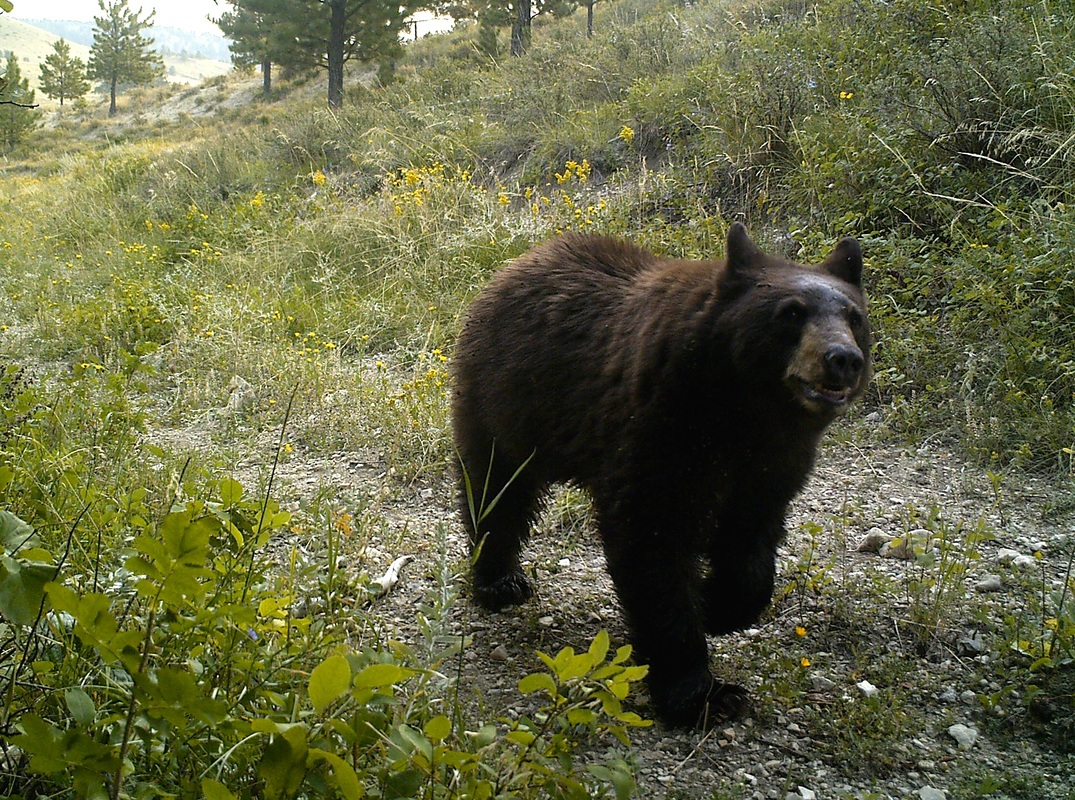
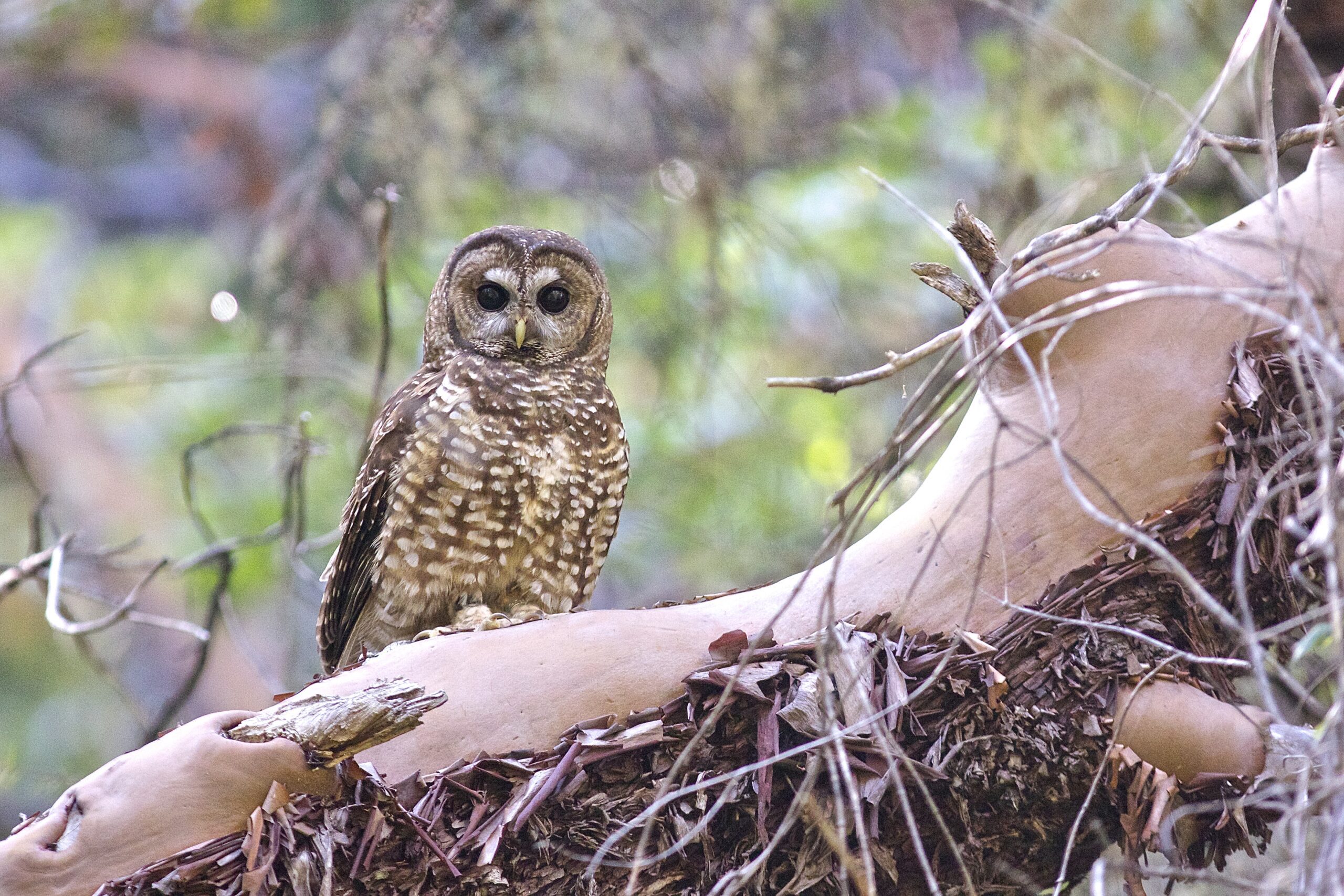
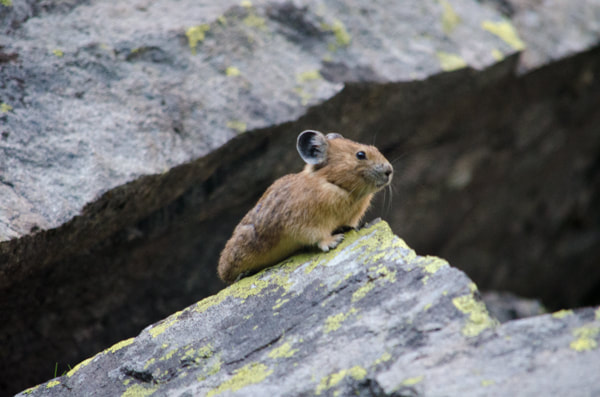
The species this project monitors depend on some of the oldest and least disturbed forests remaining in the Pacific Northwest – keystone and indicator species that need continuous corridors of aged, densely wooded forest, ancient trees, a well-developed understory, and the larger structure that holds up a food chain capable of supporting what he calls enigmatic megafauna.

“I believe that the beauty of these places is worth preserving purely for just that — its aesthetic perfection — that we may emulate and better understand the complexity that underlies that beauty.
Without eyes (and in this case ears) on these places, we stand the risk of taking for granted the uniqueness and irreplaceable nature of the ancient forests of the Pacific Northwest. It’s crucial that we keep a finger on the pulse of these systems we can’t supplant or replicate once we’ve let them slip away.”
Why This Work Needs Field Data Volunteers
Matt’s experience raises an obvious question: Why is a volunteer carrying acoustic equipment into terrain like Panther Creek?
“There wouldn’t be nearly the amount of data collected that we’re achieving here. Local field office technician staff has been gutted across these forests, so much of the field work is being accomplished by volunteers and more senior staff who would normally focus on higher order tasks. This volunteer work really takes some pressure off struggling systems and allows the teams the ability to keep the status quo for observations across the forest.”
The monitoring either happens or it doesn’t, and right now a meaningful share of it happens because people like Matt are willing to spend a Saturday shrubmarining.


The Pacific Northwest biodiversity work became a particular test of Matt’s mountaineering skills and, in his own phrasing, his capacity for sufferfests.
But the number that surprised him was not about elevation or distance. It was that volunteers helped to collectively deploy nearly every recorder available in the Forest Service’s inventory.
“It’s a joy to know that every available minute was spent listening in the northwest woods.”
Asked what he would tell the scientist who eventually uses his data, Matt spoke about the tenacity of the teams that established these monitoring sites and returned year after year to collect comparable data.
The experience also changed how he thought about his own future:
Is The Preserving Pacific Northwest Biodiversity Project Right For You?
Matt is clear that this work isn’t for everyone, and clearer still about who it is for:
“The best candidates here will be strong and driven to do the preparation and push through the hardest moments of wilderness off-trail travel, and also seasoned and wise enough to read the weather and the environment to get home safe.”
Eighty areas with active recorders are still out there. Every recorder needs to be out of the forest by the end of September.
Sign up for the project to see available recorders to claim.