
In partnership with:
The Roatan Marine Park (RMP) is a non-profit organization and co-manager of the Bay Islands National Marine Park. Founded in 2005, its work spans marine protection, infrastructure, community development and research. RMP operates Central America’s first state-of-the-art Coral Restoration Center for assisted coral reproduction and partners with Adventure Scientists to advance coral conservation through standardized reef monitoring and regional collaboration across Latin America. Learn more at www.roatanmarinepark.org
Ask Andrea Calix why community members should be the ones collecting scientific data on their own reef, and she doesn’t reach for a complicated answer.
“It’s our reef. It’s our ecosystem. It’s what protects us; that reef barrier is what protects us. It’s also what we make our living from. If everything gets destroyed, then what?”
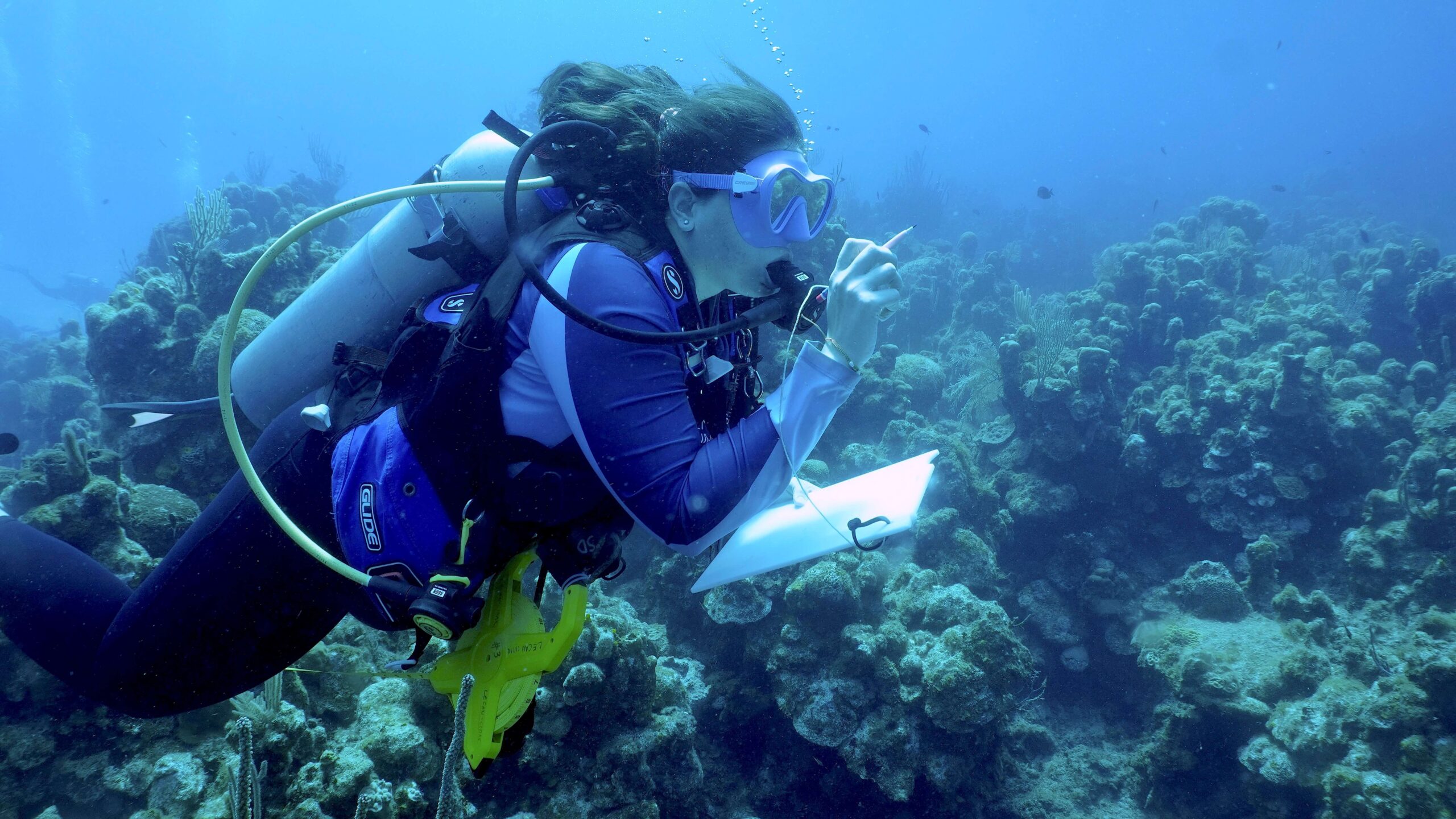
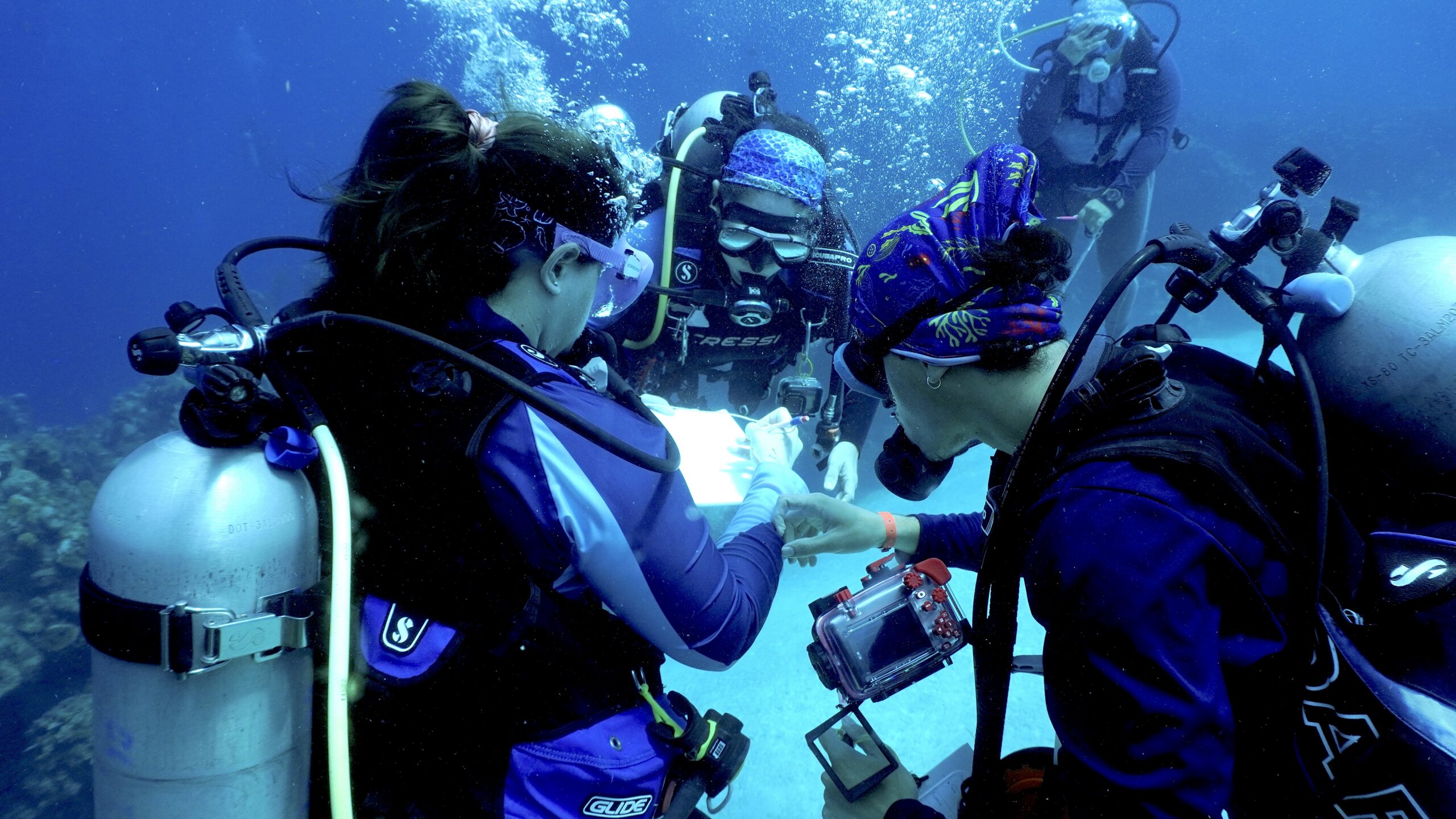
Andrea is 29, originally from La Ceiba on Honduras’s northern coast, and now based in Roatan. Last season, she was one of the volunteers carrying out Adventure Scientists‘ and the Roatan Marine Park’s coral reef monitoring protocol underwater, running fish transects, following a survey design built to produce data that’s comparable across sites and across countries.
She is not a scientist, and just a few years ago, she wasn’t a diver either.

A Route in the Water
Andrea’s path started, as she tells it, by watching from a distance. She used to spend time at a place in Roatan where a group of women – among them Velvet Teos, Coral Reef Monitoring in Honduras Country Coordinator – were always talking about diving.
“I would watch them from a distance, and little by little we got to know each other. I told them I was interested in diving.”
They pointed her toward organizations on the island that supported volunteer work. She found a dive shop in West End and traded volunteer hours for training, working her way from her first certification through Rescue Diver. Courses that would otherwise have been out of reach became possible in exchange for her time.
Then she learned that qualifying for the Dive Master course required a certain number of logged dives so she volunteered and took a coral restoration course so she could work at the Roatan Marine Park’s nursery.
“I still keep going because I love it. And then I realized that you can actually make a living doing something you really love.”
Velvet had been building a volunteer roster for the monitoring project and kept Andrea in mind. When the work resumed this season, Andrea was on the team.
“Will this actually be possible?”
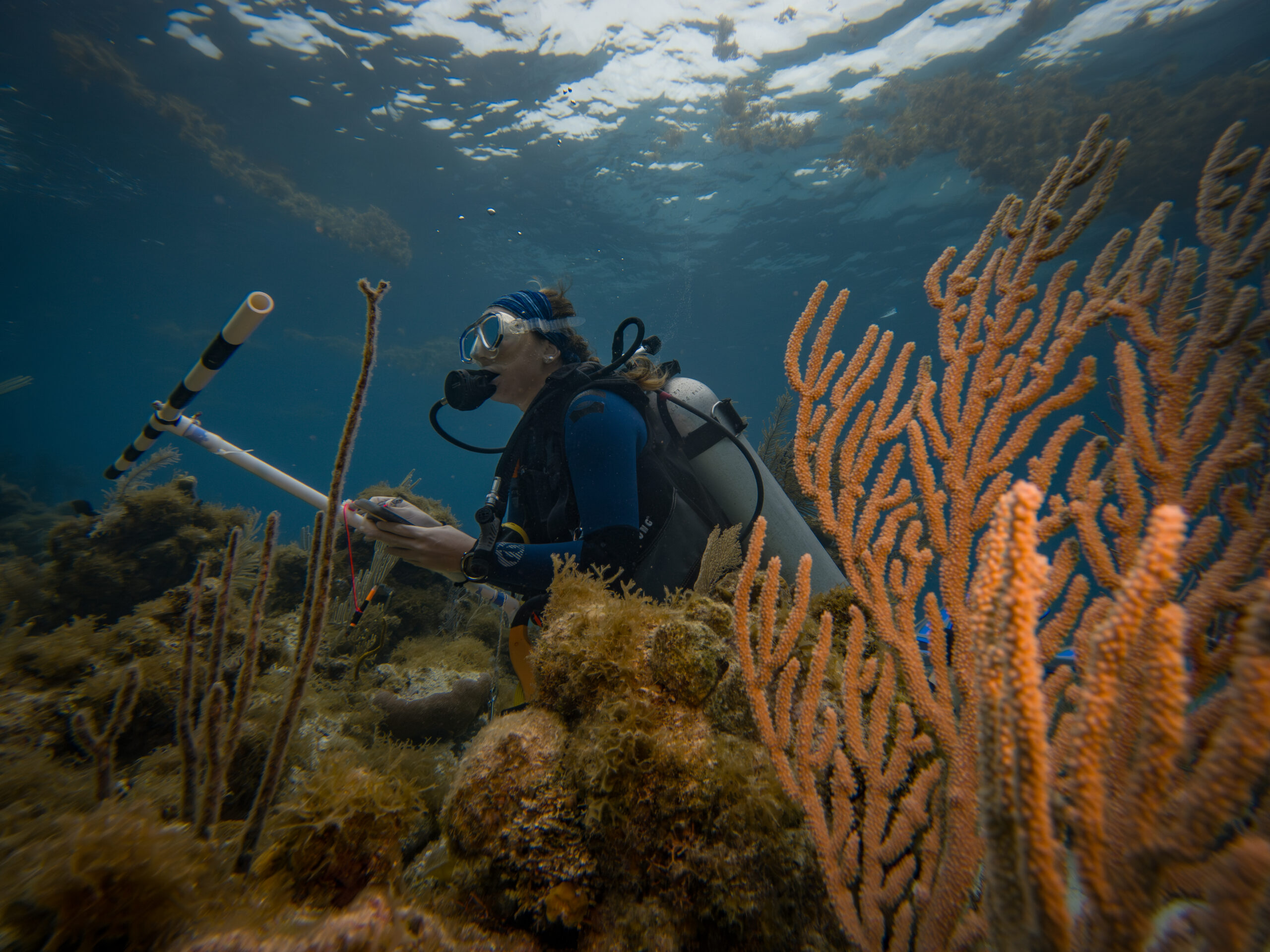
Adventure Scientists’ coral monitoring protocol is demanding by design. It has to be: the same methods are being run simultaneously in Honduras, Mexico, Costa Rica, and Colombia, with Ecuador joining in 2026, and the data is only applicable across borders if the data is rigorous and standardized. The training asks community members, most of them without formal scientific backgrounds, to execute a survey with the consistency a researcher would.
Andrea remembers wondering whether it would work:
“At first, yes. I was wondering whether it would actually be possible.”
What she remembers more vividly is what happened once the team was in the water.
“Seeing how coordinated everyone was, seeing how everyone followed the protocol exactly as we were taught. We didn’t have any problems. Everything was very clear, everything was very concise, and we worked together so incredibly well.”
The team came from several countries. Andrea’s read on why that mattered less than it might have:
“Working with people from all over the world, and underwater, there are no barriers.”
She’s careful not to speak for everyone. One volunteer, Renato, visiting from Guatemala, seemed less sure at the start, she says, simply because the work was unfamiliar; by the end of the dives, they debriefed together after every immersion and he was enjoying it. Her own theory is that comfort in the water does a lot of the work. She had years of it.
What changed
As a diver, Andrea was already confident underwater before the project, but the project shifted how she saw her reefs:
“The way I see the reef and the ocean now – every little thing – my perspective [has] changed a lot. There were things I didn’t notice before, and afterward, I started noticing them. I became much more aware and much more careful.”
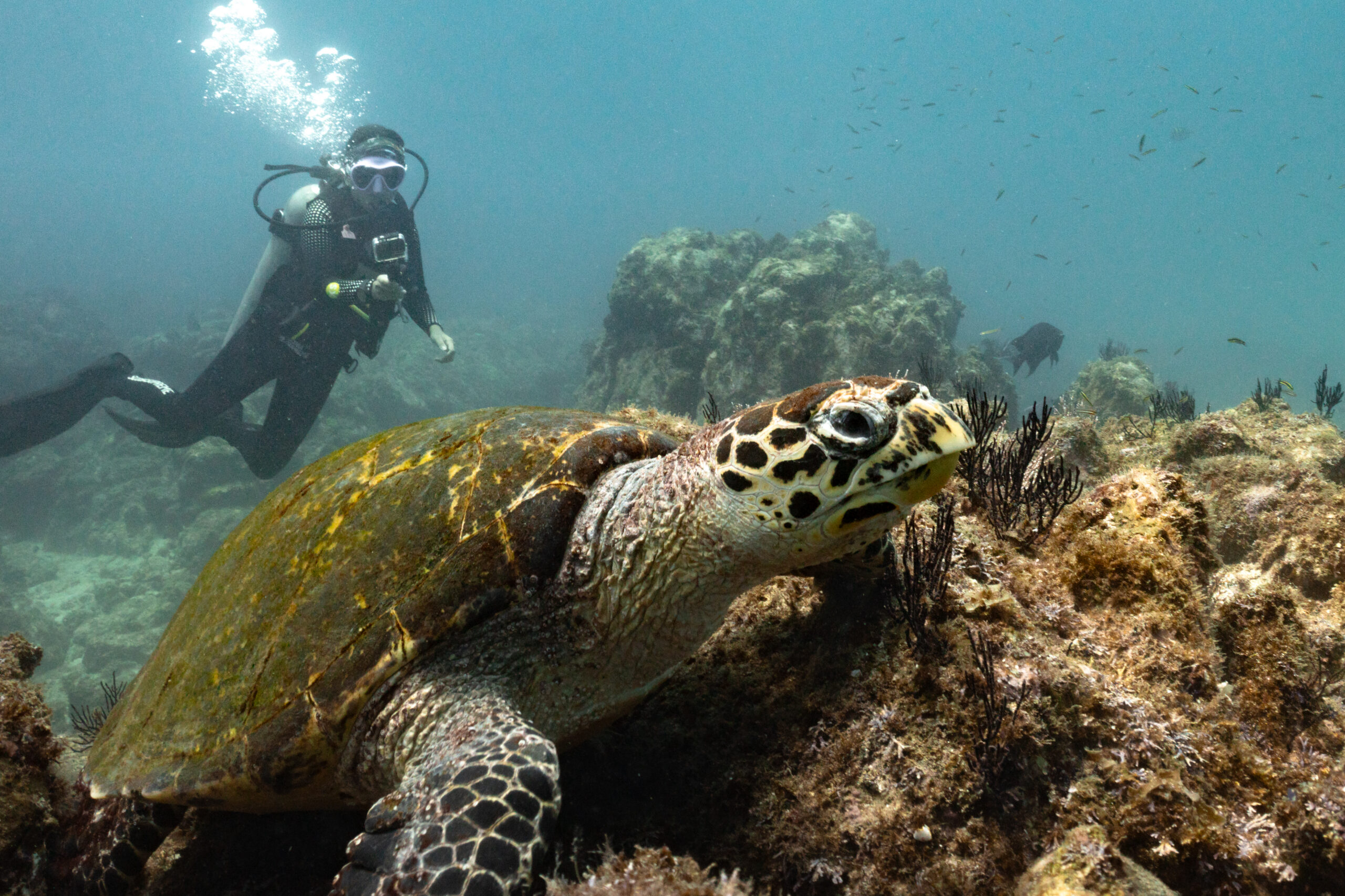
She describes it as gaining tools. On one dive during the fish transects, she counted two turtles and four eagle rays. Prior, that may have been a cool dive, but now she knows that kind of detail, in a monitoring context, is more than just a good day; it’s valuable data.
Back on land, she talks about the project and its impact in Roatan, where she is part of a wide diving community. When the Roatan Marine Park posts something, she always reposts it.
“The more people who know, the better.”
Thirty years out
Andrea has a five-year-old daughter. When asked what gives her hope, that’s where she goes:
“I hope that one day, when my daughter is my age, if she wants to do the same things I love doing, she’ll have a much more beautiful reef than the one I have today.”
She has a specific image for it. Recently, through the Roatan Marine Park’s restoration program, a gamete collection produced more material than the fertilized substrates needed, and the surplus was released into the sea.
“I know that maybe not all of those gametes released into the water will survive, but some of them will. I have faith in that. By the time my daughter is 30, that coral should be established somewhere.”
It’s a thirty-year timeline, arrived at independently, from a volunteer who came to this work through a dive shop trade and a course she took to get to a nursery.
“Being able to do something that maybe I won’t fully see the results of now, but that will benefit the generations that come after us… Everything the reef does for us, the least we can do is take care of it. We’re supposedly the intelligent ones here, right? So let’s act like it.”
Want To Be Part of This Work?
Share these stories with your network or support the work through a donation.
If you’re part of a conservation organization, research institution, government agency, or marine protected area interested in bringing standardized reef monitoring to your region, we’d love to hear from you.