
Volunteer applications are closed for the 2026 season.
Thank you to everyone who volunteered this season!
For new environmental volunteer opportunities and news and to hear when data has processed, sign up for our newsletter.
Restore a Rare Tree With Your Outdoor Adventures
Volunteer applications are closed for the season. Thank you to everyone who volunteered this season! For new environmental volunteer opportunities and news, sign up for our newsletter.
Butternut trees are disappearing from eastern forests. That’s why the Morton Arboretum and Purdue University’s Department of Forestry and Natural Resources have partnered with Adventure Scientists to locate remaining butternut trees, assess their health, and collect leaf samples from trees that may hold disease-resistant genetics.
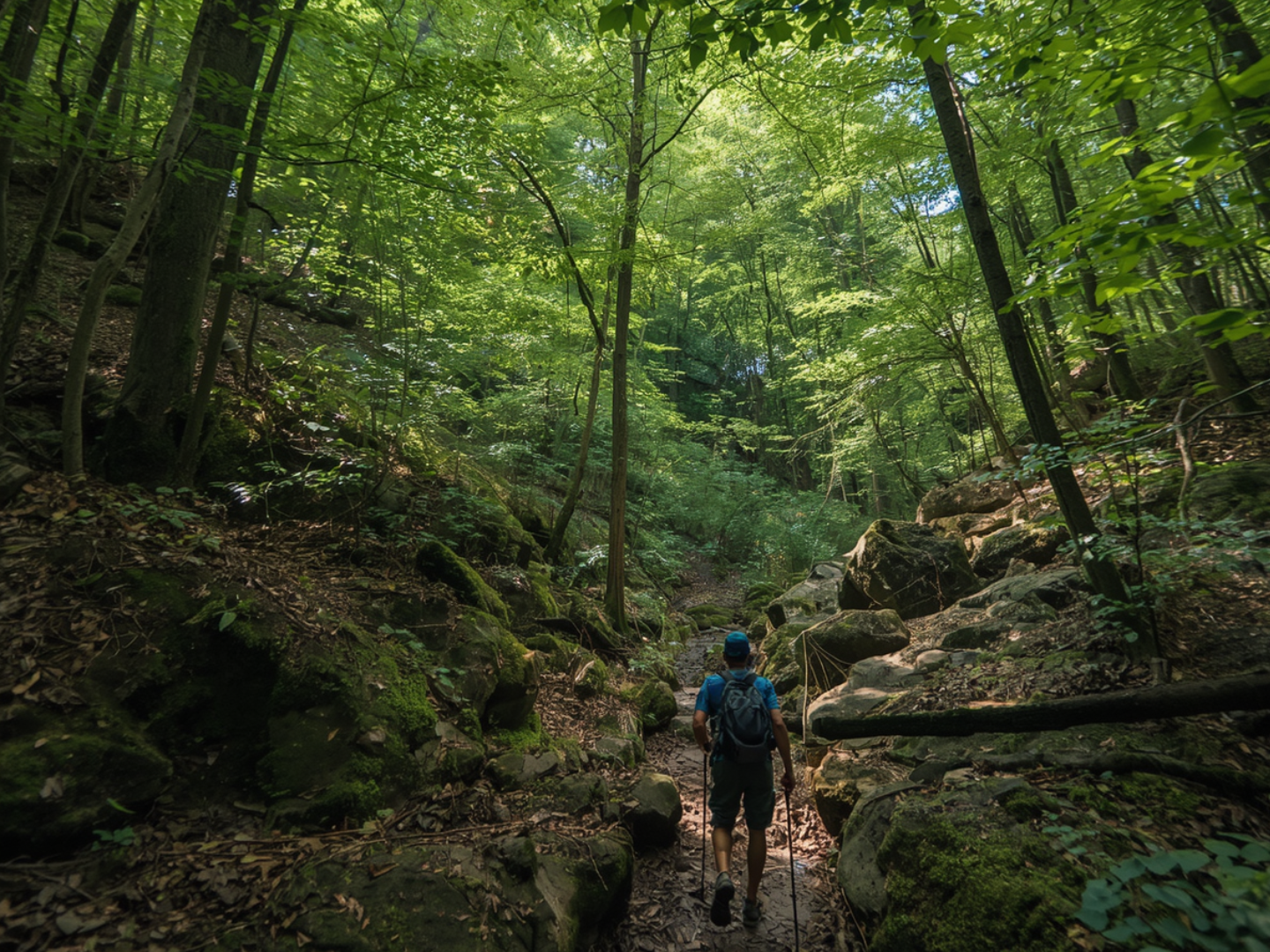
If you love to hike, bike, or explore forests, you can turn your next adventure into meaningful conservation by helping locate rare butternut trees, some of which may hold the genetic key to prosperous forests.
Join us in restoring a species and strengthening eastern US ecosystems.
Why Butternut Trees Matter for Forest Health
Butternut trees are a naturally rare species that support wildlife, contribute to ecosystem diversity, and have been culturally important for thousands of years. However, populations have declined drastically due to a lethal disease: butternut canker. Most remaining trees are infected, but a small number are still thriving. Finding and studying diseased and disease-resistant trees is critical to restoring them. This important work is crucial for the US Forest Service’s reforestation efforts.
Your sample and data could be the key for future, thriving forests.
What You Will Do:
Trained volunteers will:
Explore national and state forests and land trusts
Join an environmental scavenger hunt and navigate to known butternut trees
Search for healthy, new butternut trees and collect leaf samples for DNA analysis.
Record data on tree health to help butternut tree reforestation efforts.
Where Can You Volunteer to Protect Butternut Trees?
Volunteers are needed across a huge range of forests in the eastern United States, where there are significant gaps in research. Project locations span national forests, state forests and land trusts (over 1000 acres in size) in Alabama, Arkansas, Indiana, Kentucky, Michigan, Missouri, New Hampshire, North Carolina, Ohio, Pennsylvania, Tennessee, Wisconsin, and West Virginia.
Butternut trees grow along streams and rocky hillsides. Once trained, you will receive access to a map with possible butternut tree locations and be able to choose an area you’re comfortable with.
If you’re located in one of the areas, sign-up now! Sampling equipment is limited, and each tree must be found in the summer while leaves are still green.
Sign-up now to make an incredibly large impact for forest conservation.
Frequently Asked Questions about Protecting Butternut Trees for Forest Conservation
What is a butternut tree, and why is it important?
Butternut trees (Juglans cinerea) are a rare native tree species that support wildlife, contribute to forest biodiversity, and hold cultural and historical significance. Today, most remaining trees are threatened by disease, making conservation efforts urgent.
Where can I volunteer to find and protect butternut trees?
Volunteers are needed in large State and National Forests across the eastern United States, including (but not limited to!) the Allegheny National Forest (PA), Monongahela National Forest (WV), Cherokee National Forest (TN), Daniel Boone National Forest (KY), Hoosier National Forest (IN), Huron-Manistee National Forest (MI), Chequamegon-Nicolet National Forest (WI), Ozark and Ouachita National Forests (AR), and Bankhead National Forest (AL). A small number of additional opportunities may be available in Missouri, Ohio, North Carolina, and New Hampshire. Participation is intentionally limited by location to ensure high-quality, well-distributed data across priority areas.
Can I volunteer while hiking or backpacking?
Does this project overlap with the Appalachian Trail or other major trails?
Can I bring a friend to find butternut trees?
Exploration partners are welcome! We encourage you to have your friend(s) sign up so they can join you. Share this webpage with your friends to apply today!
What skills are required for outdoor volunteers?
How much time does volunteering require?
Time commitment is flexible and depends on your availability and location. Volunteers can plan a trip around the project or participate during trips they’re already planning, whether that’s a day hike or a longer outdoor adventure. Collecting leaf samples and completing the health assessment takes approximately 30-45 minutes for each tree.
What training do volunteers receive?
Why are volunteer opportunities limited?
Butternut trees are naturally rare, and researchers need samples spread across a wide geographic range. Access to equipment and field opportunities is limited, which means data collection opportunities may be as well. To increase your chances of finding a forest near you, don’t wait – sign-up now! For additional opportunities to help restore forests, check out our Saving American Beech Tree project.
There isn't an available location near me, but I still want to make an impact. What can I do?
We want you too! Though spots may be limited for our butternut health research, we have additional tree health projects in the eastern US. Check out our Saving American Beech Tree opportunity here! You can also donate to support this project and spread the word through your contacts and outlets to help support forest conservation.