
In this post
The short answer
Healthy coral is richly colored, fully covered in living tissue, and busy with fish and other marine species. Unhealthy coral often looks pale, bright white (bleached), broken, overgrown with algae, or reduced to rubble, with less marine life around it. The good news is that bleached coral is still alive, and it can recover, and monitoring coral reefs is a hopeful solution that informs restoration efforts and protections.
Across Latin America, local divers trained through Adventure Scientists’ coral monitoring network survey reefs that range from thriving to critically stressed. Their photos and counts come from reefs that are rarely measured at all, and the difference between a healthy reef and a struggling one is often visible in a single image.
That difference matters more than usual right now. One of the strongest El Niño events on record is building in the Pacific, spreading unusually warm water across the tropics. Corals already live near their heat limit, and when temperatures stay high for weeks, they expel the algae that feed them and give them color, leaving them bleached white. Over the coming months, that heat is likely to push many of these reefs toward bleaching.
Here’s what to look for, in the order damage usually progresses, and why this year’s surveys matter so much.
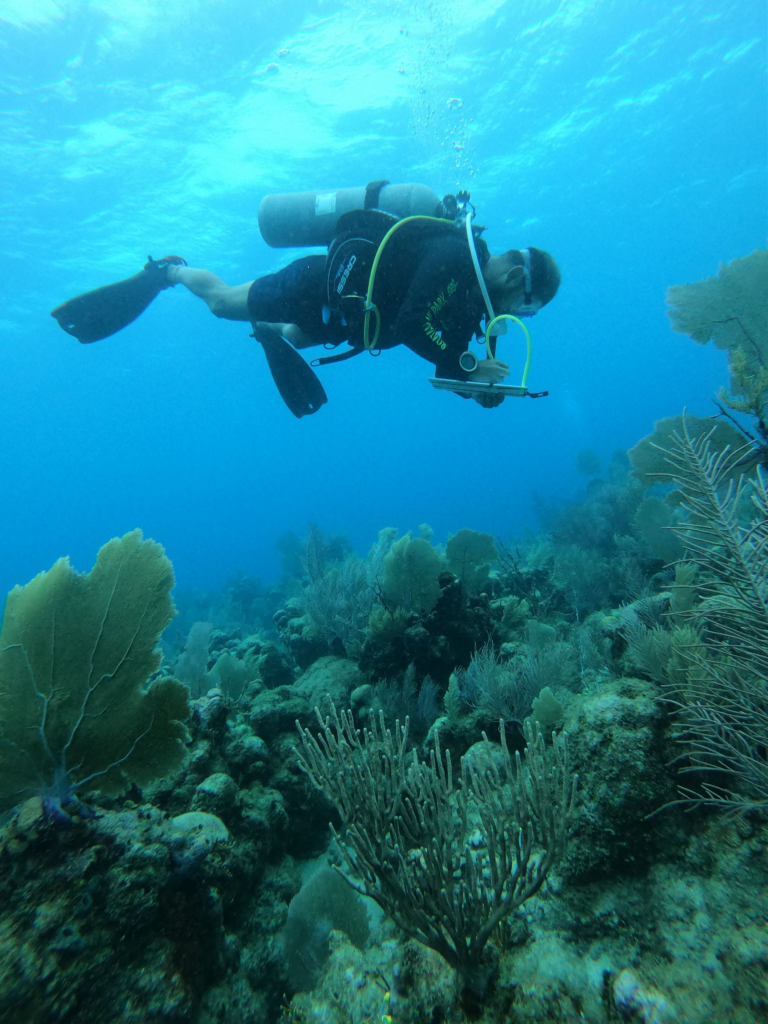
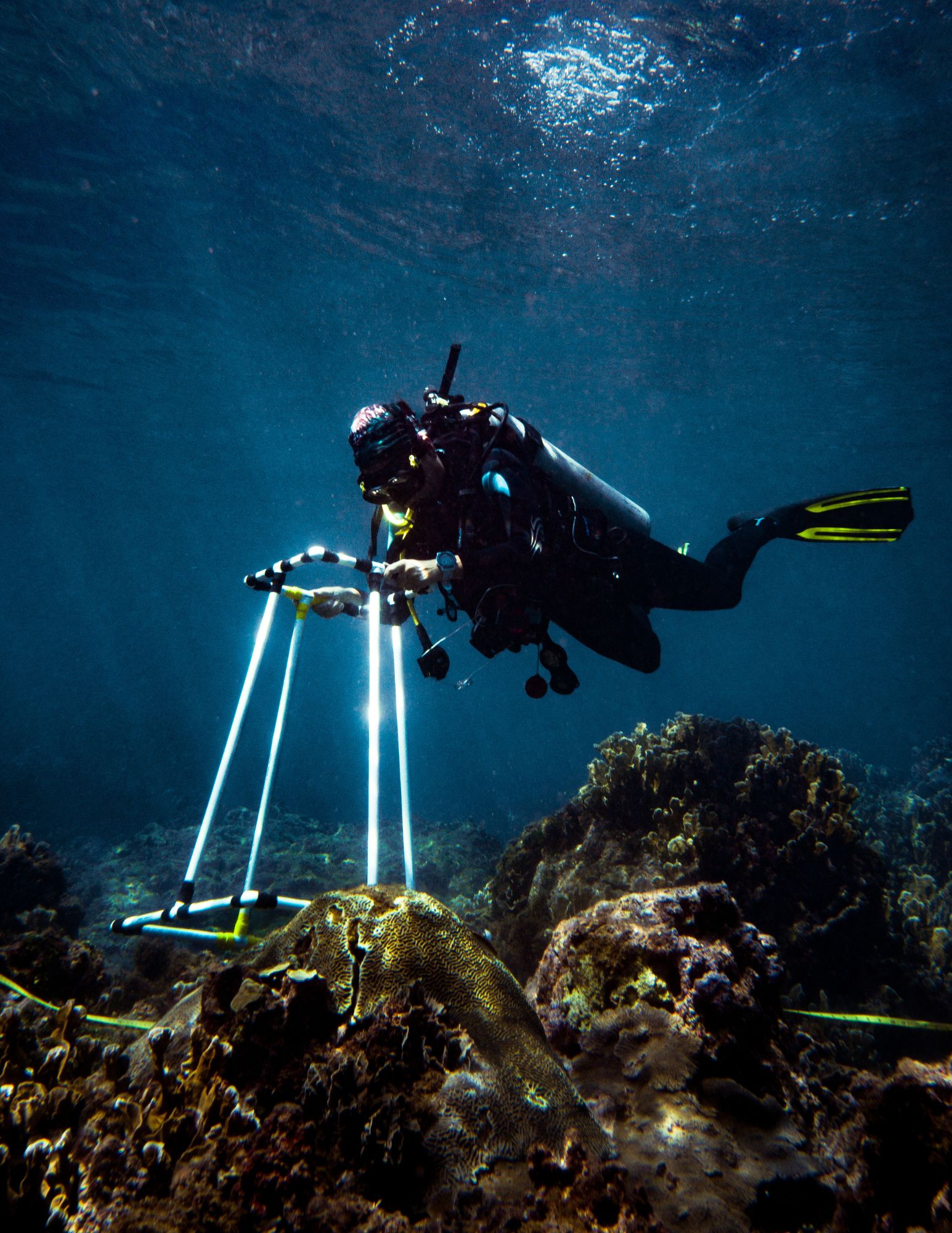
Volunteer Renato Ortiz records field observations while maintaining neutral buoyancy above a healthy reef with both soft and hard corals. Credit: Velvet Teos
The baseline
What does healthy coral look like?
Corals are living animals, made up of colonies of tiny organisms called polyps that are closely related to jellyfish and sea anemones. These polyps form a symbiotic relationship with microscopic algae called zooxanthellae, which live within their tissues, provide much of their energy through photosynthesis, and give corals their vibrant colors.
Healthy coral usually has:
- Rich brown, tan, gold, or green coloring
- Living tissue covering the whole colony
- An intact structure with no major breaks
- Little or no algae growing on the coral itself
- Fish and other reef life close by, using the coral as shelter, as a place to hunt, and as a hiding spot from predators
On Costa Rica’s Pacific coast, at the Playa Blanca restoration area, monitoring teams have photographed healthy Pocillopora colonies with strong color and full tissue cover.
Healthy vs. unhealthy coral at a glance
| Sign | Healthy coral | Unhealthy coral |
|---|---|---|
| Color | Brown, tan, gold, or green | Pale, patchy, or bright white |
| Tissue | Covers the whole colony | Missing in patches, skeleton exposed |
| Structure | Intact and attached to the reef | Broken, loose fragments on the seafloor |
| Algae | Little to none on the coral | Algae growing over coral and dead skeleton |
| Reef life | Fish and invertebrates nearby | Fewer fish, more bare rock and rubble or just algae |
Stage 1: early stress
What are the early signs of coral stress?
Bleaching rarely happens all at once. As water warms, many corals first turn pale, losing some of their zooxanthellae and color before they turn fully white.
Look for:
- A faded or washed-out appearance
- Uneven white patches across the colony
- Color that looks lighter than nearby colonies of the same species
On Costa Rica’s Pacific coast, monitoring teams photographed pale Gardineroseris colonies during a period of high water temperatures. Paleness like this can be an early warning that bleaching is coming.
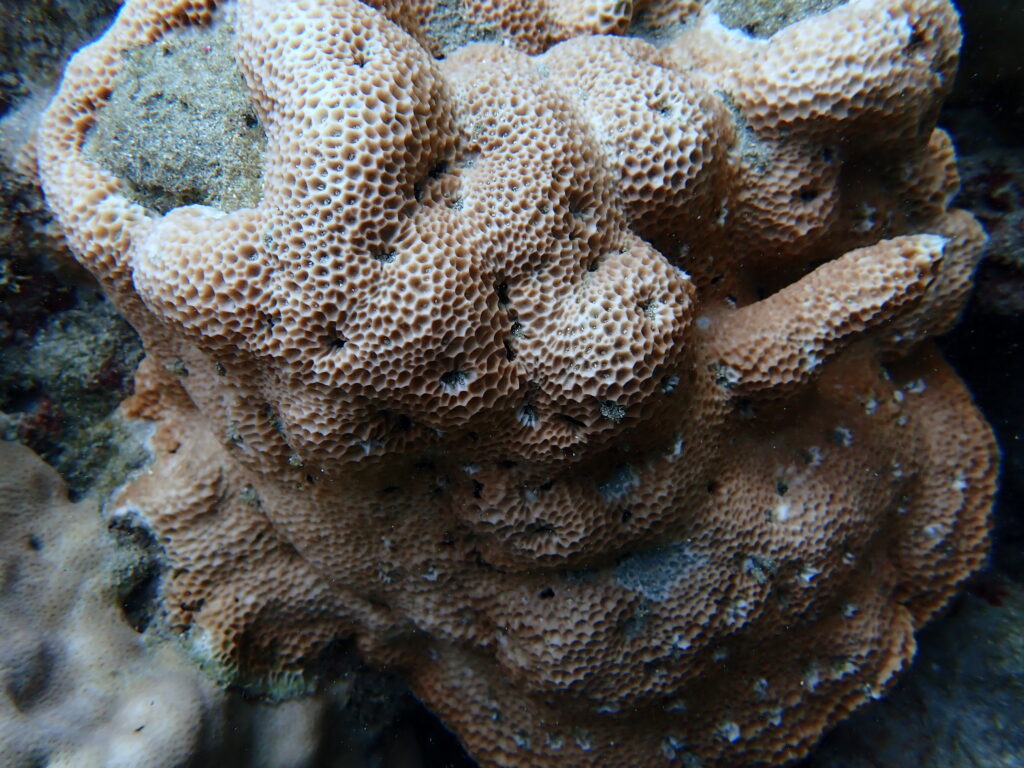
Pale Gardineroseris sp. colony at Viradores/Güiri-Güiri reef. Photo: María José Solano, Costa Rica country coordinator
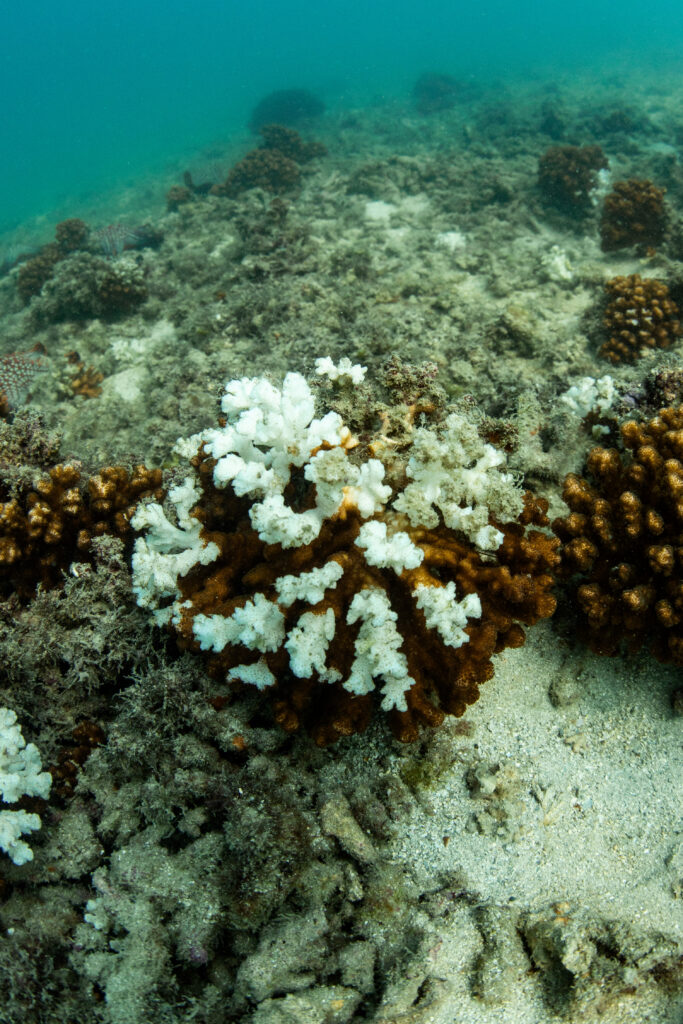
Pocillopora colony showing early signs of bleaching in continental Ecuador. Photo: CONMAR
Stage 2: bleaching
What does bleached coral look like?
Bleached coral is bright white. When ocean temperatures rise, heat damages the photosynthetic machinery of the algae living in coral tissue and produces harmful molecules called reactive oxygen species. These molecules injure both the algae and the coral’s own cells, so the coral expels the algae or loses its pigments. The tissue turns nearly transparent and the white skeleton underneath shows through.
The coral isn’t dead yet, but it is weakened. Without its algae it loses a major source of energy and becomes more vulnerable to starvation, disease, and death. If temperatures return to normal soon enough, it can regain its algae and recover. Prolonged heat stress can kill it.
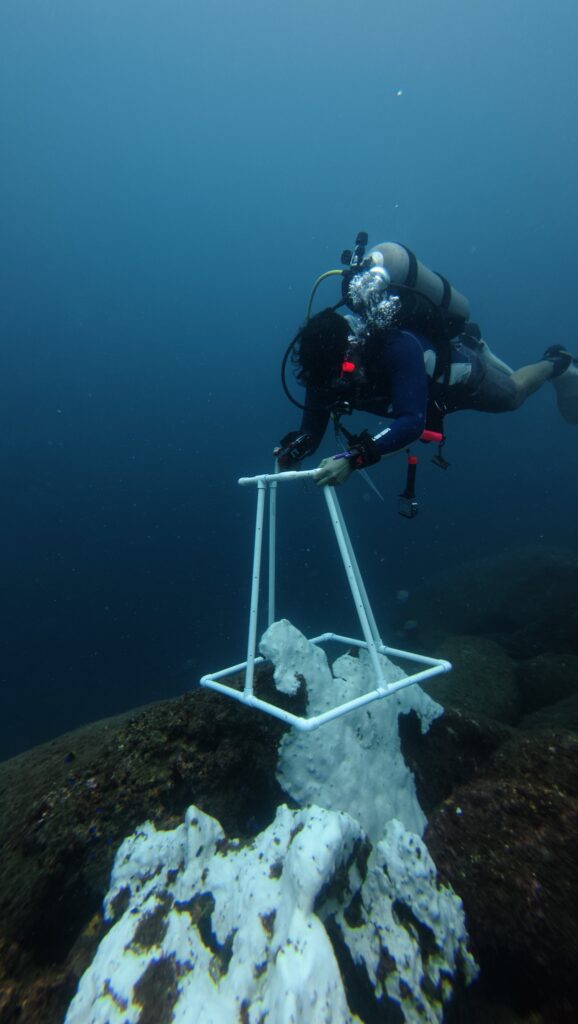
A community diver monitors a reef in Mexico’s Pacific waters. Bleaching has been recorded at every site surveyed since August, and some corals have already died in just a few months. Photo: Dr. Adolfo Tortolero, Mexico country coordinator
During periods of high ocean temperatures, monitoring teams in Costa Rica and Mexico documented bleaching in Pavona, Porites, and Pocillopora. In Mexico, teams have recorded bleaching at every site surveyed since August, including every Pocillopora and Pavona colony counted, and some corals have already died.
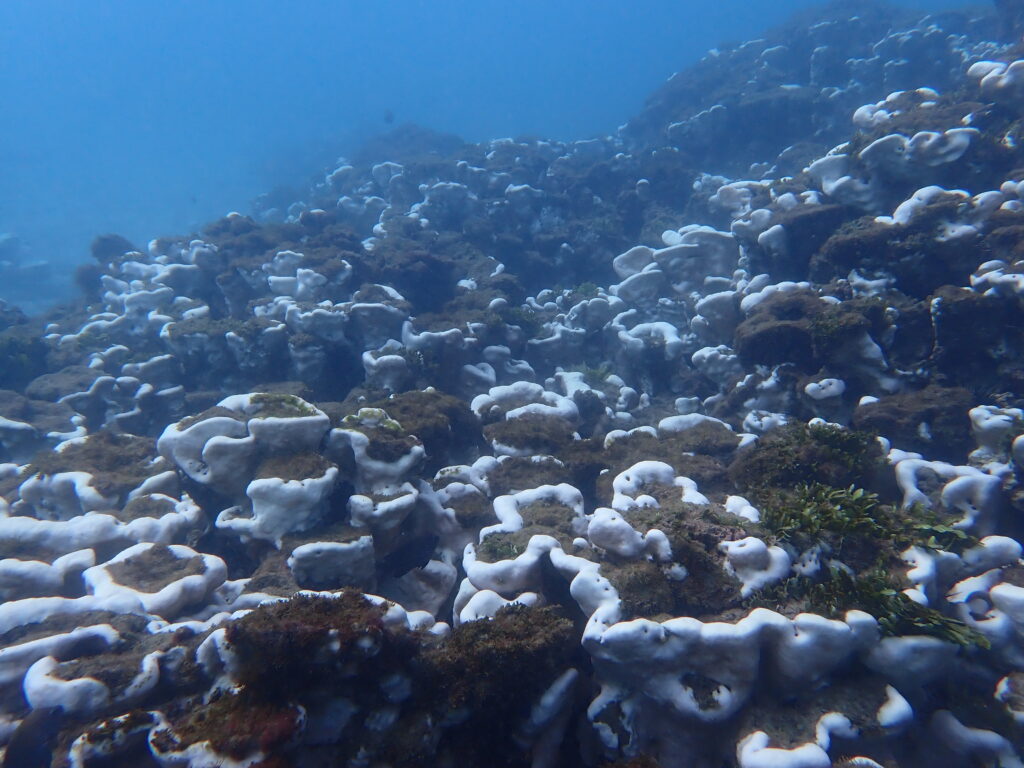
Bleached Pavona clavus colonies at Viradores/Güiri-Güiri reef. Credit: María José Solano
Recovery
Can bleached coral recover?
The good news is, yes, if conditions improve quickly. When water temperatures drop, bleached coral can take its algae back in and regain its color. If the heat lasts too long, the coral starves and dies, and macro, harmful algae begin to grow over its skeleton.
That’s why repeated monitoring matters. A single survey shows whether coral is bleached; returning to the same reef shows whether it recovered. NOAA’s coral bleaching guide explains the process in more detail.
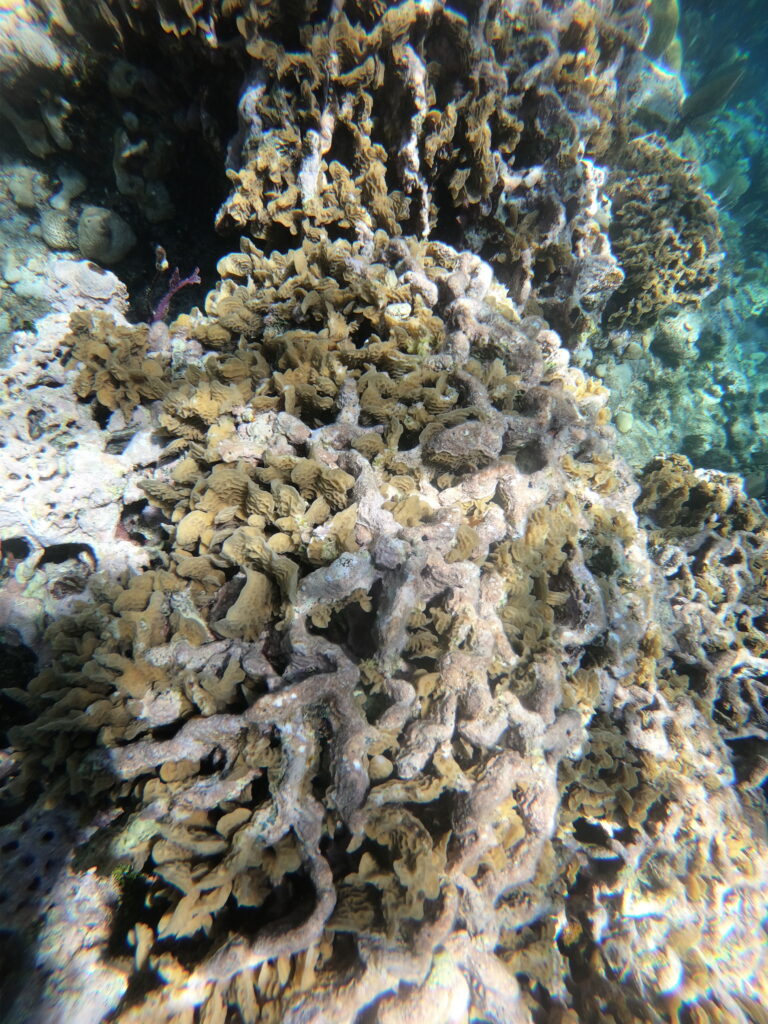
Atlantic lettuce leaf coral (Agaricia tenuifolia) showing signs of recovery. Credit: Velvet Teos
The forecast
How does El Niño affect coral reefs?
While El Niño is a natural climate pattern that warms the surface of the tropical Pacific, human-driven climate change has raised baseline ocean temperatures, making its warming effects more dangerous for reefs already facing multiple environmental stressors. Heat is what bleaches coral, so strong El Niño years are dangerous years for reefs. According to NOAA, global coral bleaching events have lined up with every strong El Niño since 1998.
Each of those events has been bigger than the last. Bleaching-level heat reached 21% of the world’s reef areas in 1998, 37% in 2010, and 68% in 2014–2017. The most recent event, which ran from 2023 into 2025, reached 84% of reef areas in 83 countries and territories, the most widespread on record.
Share of the world’s reef areas that reached bleaching-level heat in each global bleaching event, per NOAA.
Reefs barely had time to start recovering. Recovery from mass bleaching typically takes at least nine to twelve years, according to some studies, and the last event only ended in 2025. But reefs aren’t on their own. Restoration efforts around the world are helping damaged reefs re-grow faster, and knowing exactly where and how reefs are recovering helps that work go further.
A new El Niño is building. In its October update, NOAA’s Climate Prediction Center reported sea surface temperatures more than 4°C above average in parts of the eastern equatorial Pacific. It gave an 83% chance that the event would exceed every El Niño on record since 1950 during October through December, and expects strong to very strong El Niño conditions to last through at least March 2027.
If these forecasts hold, this could become a “Super El Niño,” an informal term for an exceptionally intense event that can bring extreme ocean warming, disrupted weather patterns, and a heightened risk of widespread coral bleaching and mortality.
Some of the strongest warming is in the eastern Pacific off Mexico, Ecuador and Peru, close to our monitoring sites in Mexico, mainland Ecuador and the Galápagos. In the Caribbean, NOAA forecast a greater than 70% chance that most of the basin would reach bleaching-level heat stress by late October and early November 2026.
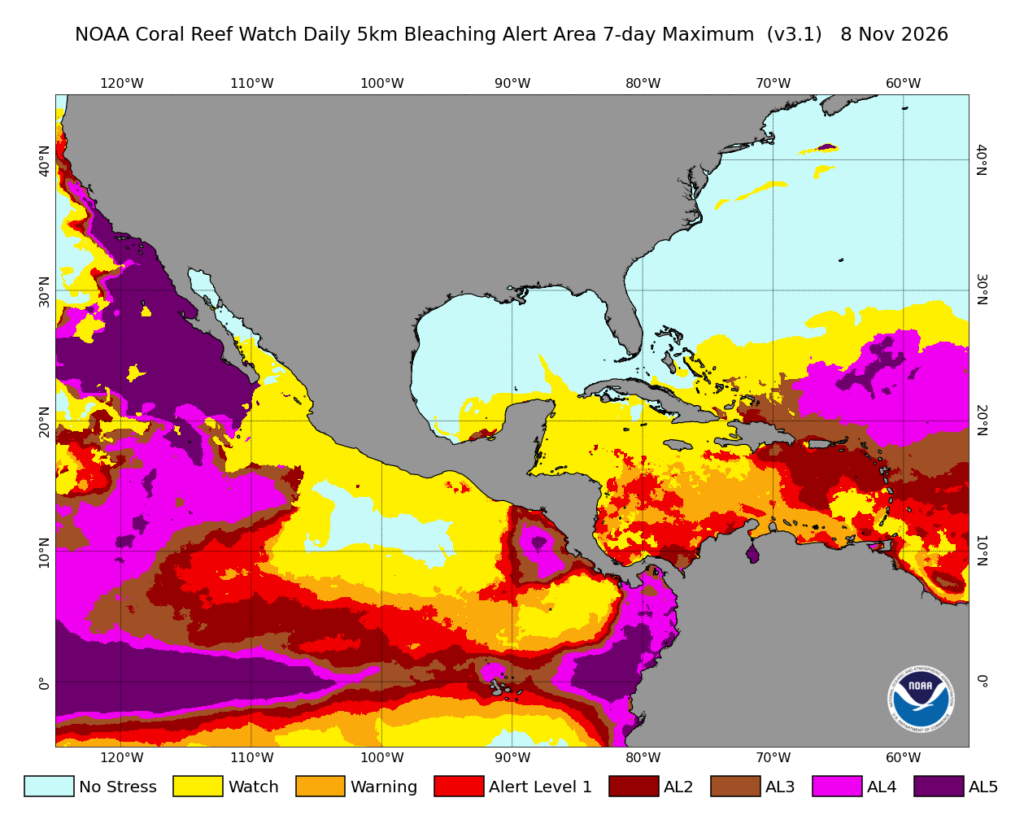
NOAA Coral Reef Watch bleaching heat stress map for late October 2026, consulted October 30. Source: NOAA Coral Reef Watch
Before, during, after
Why data before, during, and after El Niño matters
To know what an El Niño does to a reef, you need to know what that reef looked like before it hit. Without that baseline, bleaching and coral loss can only be estimated, not measured, and restoration teams are left guessing where their work is needed most.
- Before: In our first year of monitoring (September 2025 to June 2026), local teams surveyed more than 90 reefs in Mexico, Costa Rica, Honduras, and Colombia, creating a baseline to measure this El Niño against.
- During: Surveys this season show which reefs bleach, how severely, and which hold up under the same heat.
- After: Returning to the same sites shows which reefs recover and which don’t, helping guide where restoration and protection will be most effective.
That last step is where the most valuable answers come from. During the last global bleaching event, NOAA noted that some reefs resisted bleaching despite intense heat. Reefs like that are a source of hope, and a blueprint for restoration. Finding them takes patience: the same divers, on the same sites, year after year.
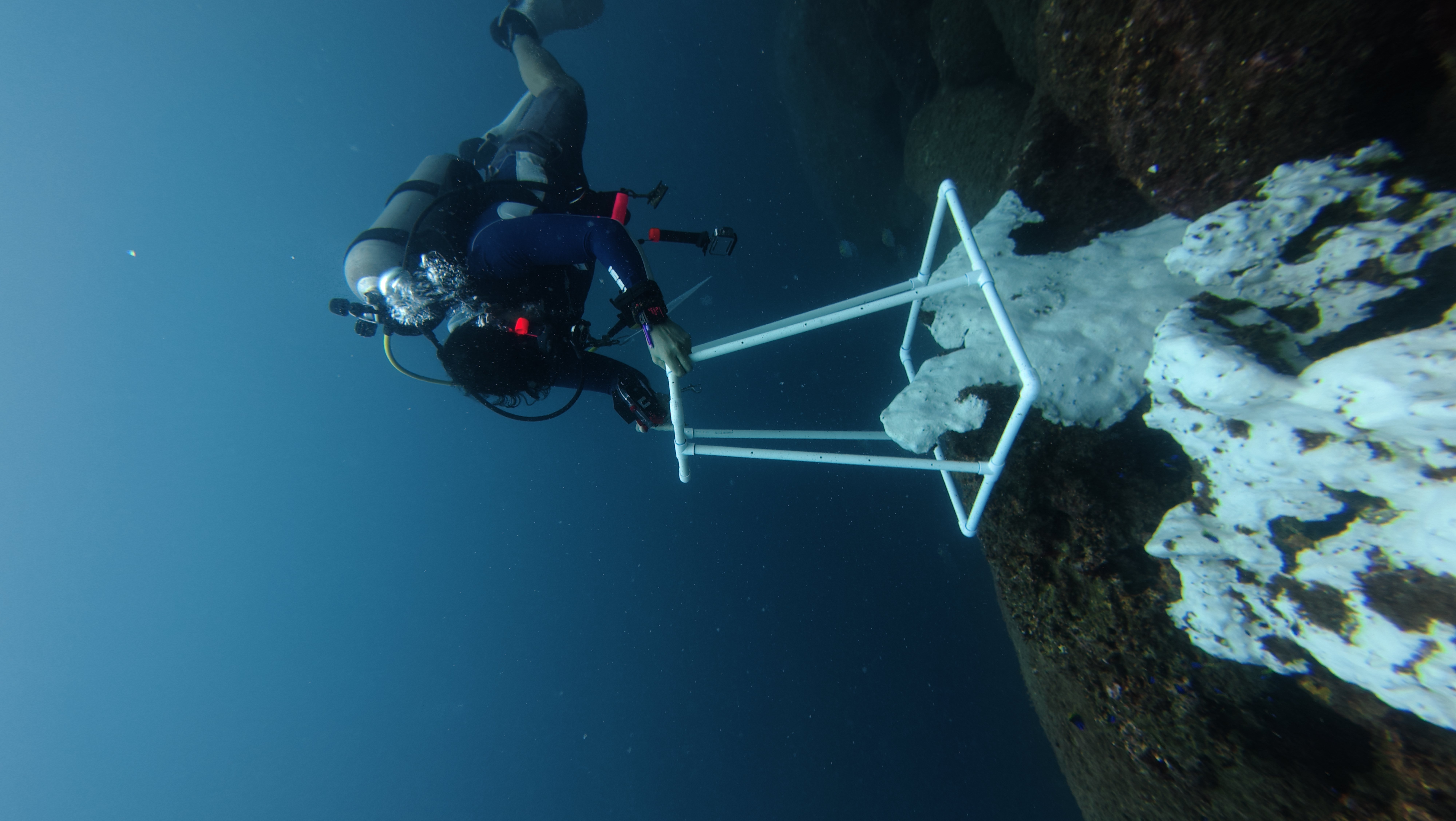
Our approach
What is Adventure Scientists’ coral reef monitoring program, and why does it matter?
Adventure Scientists works with local partners to run a standardized coral reef monitoring network across seven locations in Latin America: Roatán Island in Honduras, Mexico’s Pacific coast, Costa Rica’s Caribbean and Pacific coasts, San Andrés Island in Colombia, mainland Ecuador, and the Galápagos Islands.
Fish monitoring in coral reefs with Adventure Scientists
“This project is incredibly enriching. It gives us opportunities to dive and going to the field to practice these complex skills. It gives us the chance to learn a great deal about these ecosystems and the animals that live in them. And it also gives us the opportunity to have our questions answered by scientists who know a lot about the subject.”
Claudia Campos, volunteer, Costa Rica Caribbean
The data goes to scientists, marine park managers, and restoration partners, and it is built to feed into global reef reporting, including the Global Coral Reef Monitoring Network (GCRMN). Restoration partners, such as the Roatán Marine Park in Honduras and Blue Indigo Foundation in San Andrés Island, Colombia, grow and replant coral; monitoring shows whether those reefs are holding up and where restoration should go next.
Read how one volunteer, Andrea Calix, went from watching divers on Roatán to monitoring the reef herself.
Stage 3: loss
What is a coral rubble field?
When coral dies, algae colonize the bare skeleton. Over time, the dead coral breaks down, and stretches of reef turn into fields of gray, algae-covered rubble with few living colonies left.
Look for:
- Gray or sandy coral debris
- Algae-covered skeletons
- Only a few living colonies scattered among the rubble
In Ecuador, monitoring teams documented living Pocillopora colonies surrounded by rubble made of dead coral fragments.
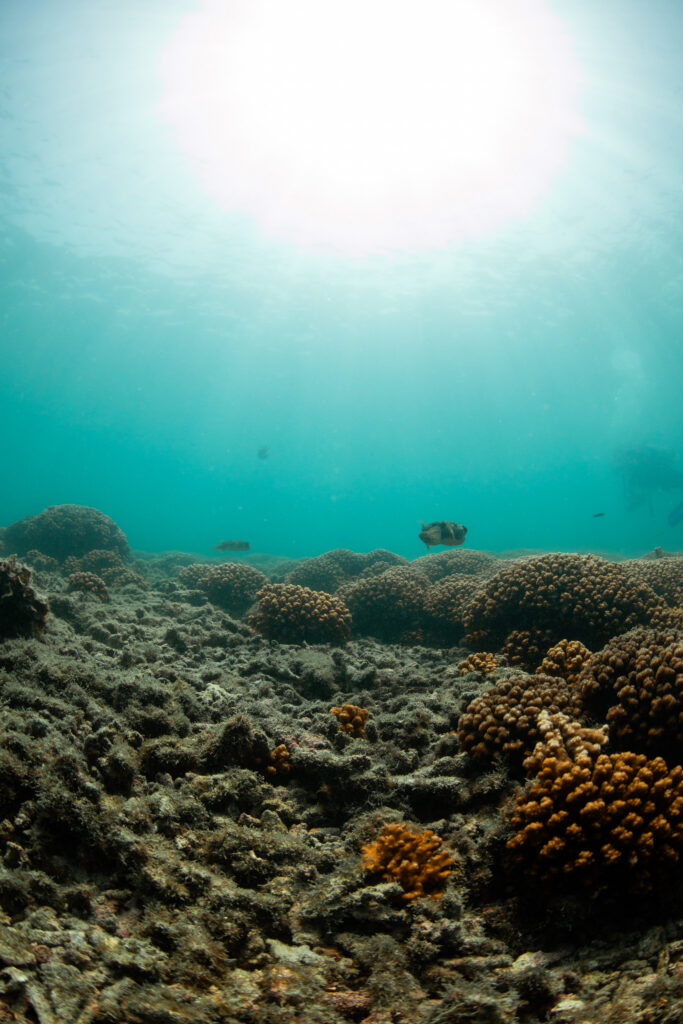
A coral rubble field in mainland Ecuador. Photo: CONMAR
How you can help
Help local teams monitor reefs through El Niño
The next year is the most important timeframe for Adventure Scientists’ coral reef work. Monitoring during and after El Niño only works if local teams can get in the water on schedule, at the same sites, while the heat is happening and after it passes. That data does more than document loss. It shows which reefs held on, which corals survived the heat, and where recovery is already underway, the information restoration partners need to decide where to replant and which corals are most likely to survive the next marine heatwave. Gifts made through the end of the year go directly into the 2027 field season, when these reefs will show whether they recovered, and where restoration can do the most good.
What your gift does:
- Trains and compensates new local community divers to join the network
- Gets teams to the reef: boat time, fuel, and community diver per diems, while employing local captains and mariners for each survey trip
- Keeps divers in the water safely: tanks, fills, scuba equipment rentals, and survey gear
- Pays the local team behind the data: country coordinators, photographers, and data analysts who check and process every survey
- Turns photos into data that scientists and reef managers can act on, with scientific publications and conference talks planned for 2027
Support coral reef monitoring
Gifts made through the end of the year go directly into the 2027 field season.
Frequently asked questions
How can you tell if a coral reef is healthy?
Healthy coral has natural brown, tan, gold, or green coloring, living tissue covering the whole colony, little macroalgae growing on it, and plenty of fish and other reef life nearby.
What does bleached coral look like?
Bleached coral is bright white. It has expelled the microscopic algae that give it color and most of its energy, so its white skeleton shows through its tissue.
Is bleached coral dead?
Not always. Bleached coral can still be alive but stressed and starving. It does die if high temperatures last too long.
Can bleached coral recover?
Yes. If water temperatures drop quickly enough, bleached coral can take its algae back in, regain its color, and thrive.
How does El Niño affect coral reefs?
El Niño warms tropical oceans, and that heat causes coral bleaching. According to NOAA, global coral bleaching events have coincided with every strong El Niño since 1998.
Why monitor coral reefs before and after El Niño?
Data from before an El Niño is the baseline that shows how much a reef changed. Surveys during and after show which reefs bleached, which recovered, and which resisted the heat, so protection and restoration can focus where they will work.
What causes coral reefs to become unhealthy?
Common causes include ocean warming and bleaching, physical damage from anchors and storms, pollution, disease, and sediment.
Why is coral reef monitoring important?
Monitoring shows where reefs are healthy, where they’re under stress, and whether they recover over time. Scientists, managers, and restoration partners use that information to decide where to focus their work.