
Guest writer and volunteer, Serena, shares her POV from the Cascade Brook and Mount Pemigewasset trails. Experience eight miles in the backwoods and a fast-moving storm on her search for threatened butternut trees.
Serena is an Adventure Scientists volunteer and a guest writing for AdvSci Field Notes. Read about Serena’s experience below.
I applied to the Adventure Scientists Mini Grant on a whim.
I was scrolling Instagram one night at a diner when I came across the post calling for adventurers. Adventure Scientists was an organization I’d been eyeing for a while, so kudos to the algorithm for sending it straight to my feed. The project combined outdoor adventure, photography, and science — all things I love — so in a rush to meet the deadline, I got my application in that night. I was beyond excited when the welcome email came.
The project is called Restoring Butternut Trees. Using leaf samples and tree health data collected by field volunteers, scientists are working to better understand the fungus that’s ravaging butternut trees and pushing them toward extinction.
Before heading out, I completed online training to learn butternut identification and how to safely collect leaf samples with a nifty tool I’d never heard of called a saw toss. I was already planning some wilderness adventuring later in the summer, so the timing was perfect. I pulled up the map of study regions, did some intense Google Imaging, and settled on the White Mountains of New Hampshire.
Getting There
After the sample collection materials arrived, my friends -Varun, Will, and I – packed up the car and headed north.
I’d signed up to search the western White Mountains, so we found a cozy campsite tucked away by a vast lake, enchanted by the calls of loons in the distance. As the sun went down, Will and I spent the evening looking for mushrooms, spider webs, and trees with ski-track bark and compound leaves — starting to train our eyes for the search — while Varun reclined by the fire.
We woke at 7 a.m. to the smell of pancakes frying at our neighbor’s site, but we weren’t having a slow morning. We hit the road, picked up bagels and coffee, and started the search: the Cascade Brook and Mount Pemigewasset regions – two trailheads offering moderate four-mile hikes that put us at about eight miles for the day.
Learning to See
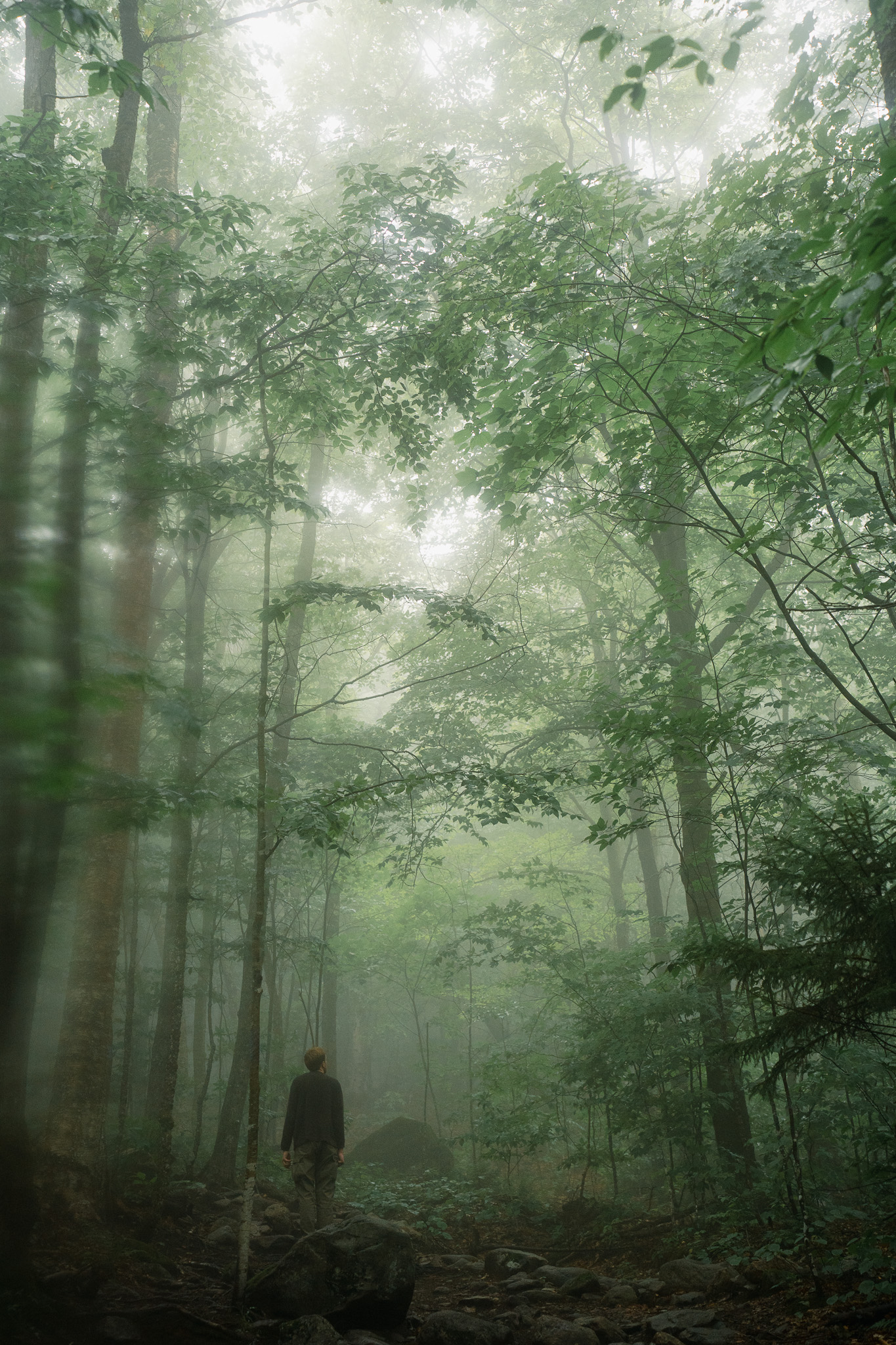
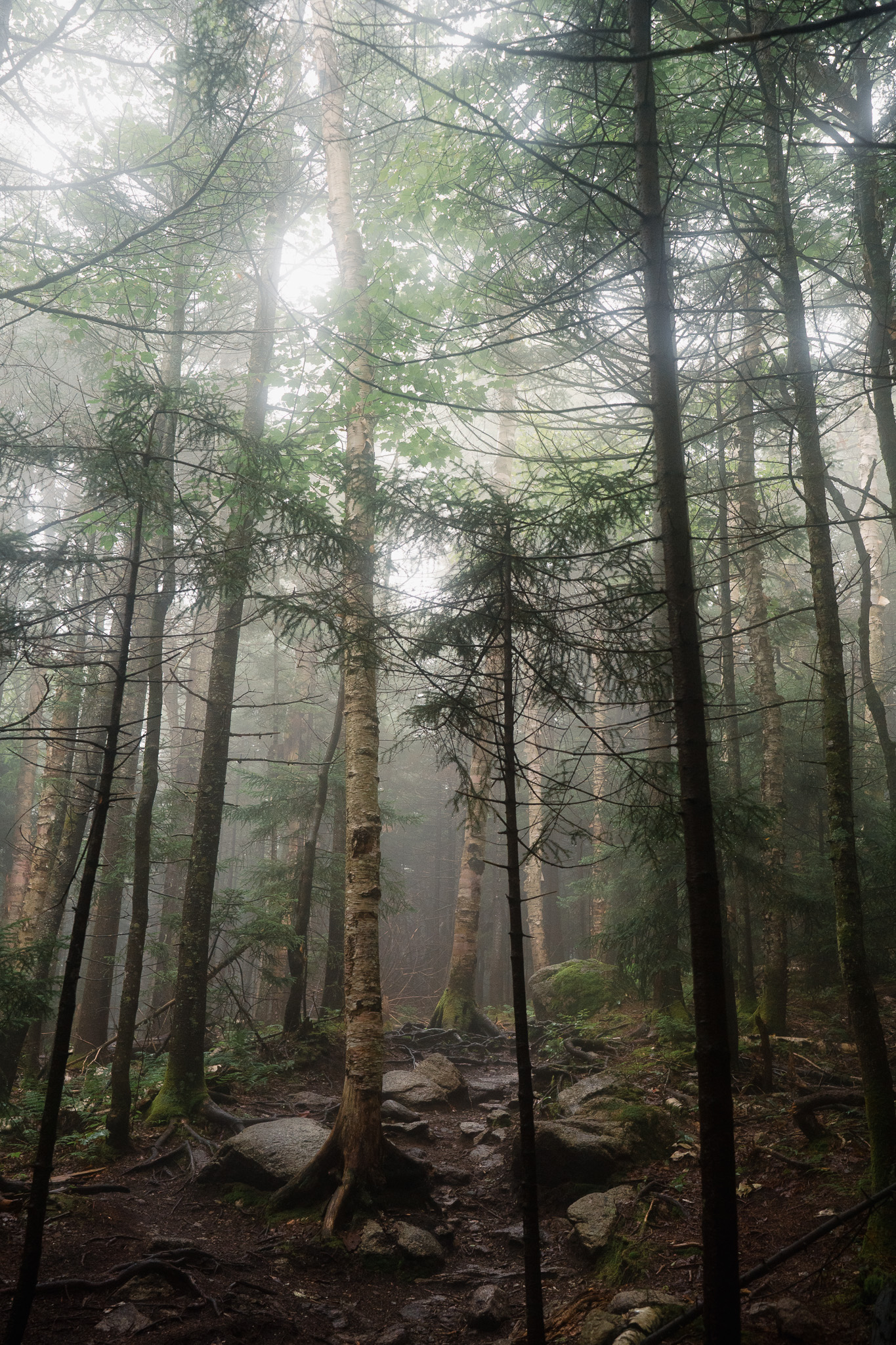
Will and I work as Park Rangers for NYC Parks, and despite our tree identification expertise and ample forest time, New Hampshire’s mountainous wilderness turned out to be quite different from what we were used to.
We saw some familiar faces — white pines, eastern hemlocks, maples — but mostly a lot of trees that don’t frequent the city, thanks to the White Mountains’ elevation and climate.
We spent the first hike examining any tree that looked even remotely like a butternut, cross-checking with iNaturalist to see whether our guesses were right. By the time we reached the second trailhead, we felt confident distinguishing continuous from blocky bark, and butternuts from white ashes.
If you’re heading out for the first time, that’s my one piece of advice: spend the first stretch deliberately misidentifying things. Check yourself against the app, be wrong a few times, and let your eye calibrate before it matters.
What We Found Instead
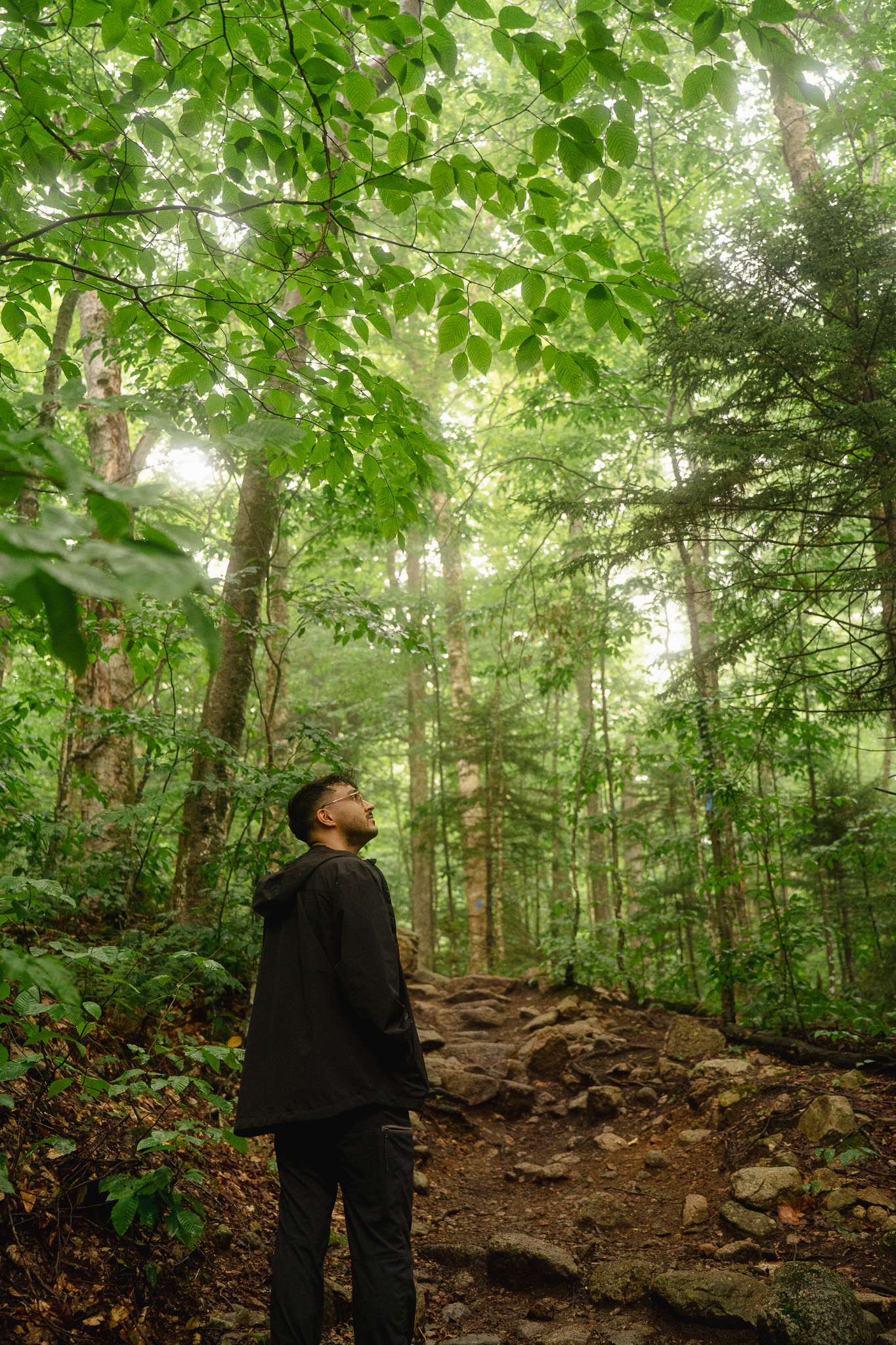
We weren’t seeing any butternuts. Honestly, the forest felt devoid of butternuts. Every direction I looked, the thin, papery bark of beeches and birches, tons of white ashes, or the deep green needles of the great evergreens — firs, spruces, and pines.
But we found other things. Will seemed to stop every ten steps for burgeoning mushrooms, the aboveground manifestations of the invisible underground fungal networks that connect a forest. We saw several salamanders — amphibians are an excellent indicator of forest health, because their permeable skin absorbs whatever is in the air, soil, and water. Intricate spider webs. Slugs. Tree saplings.
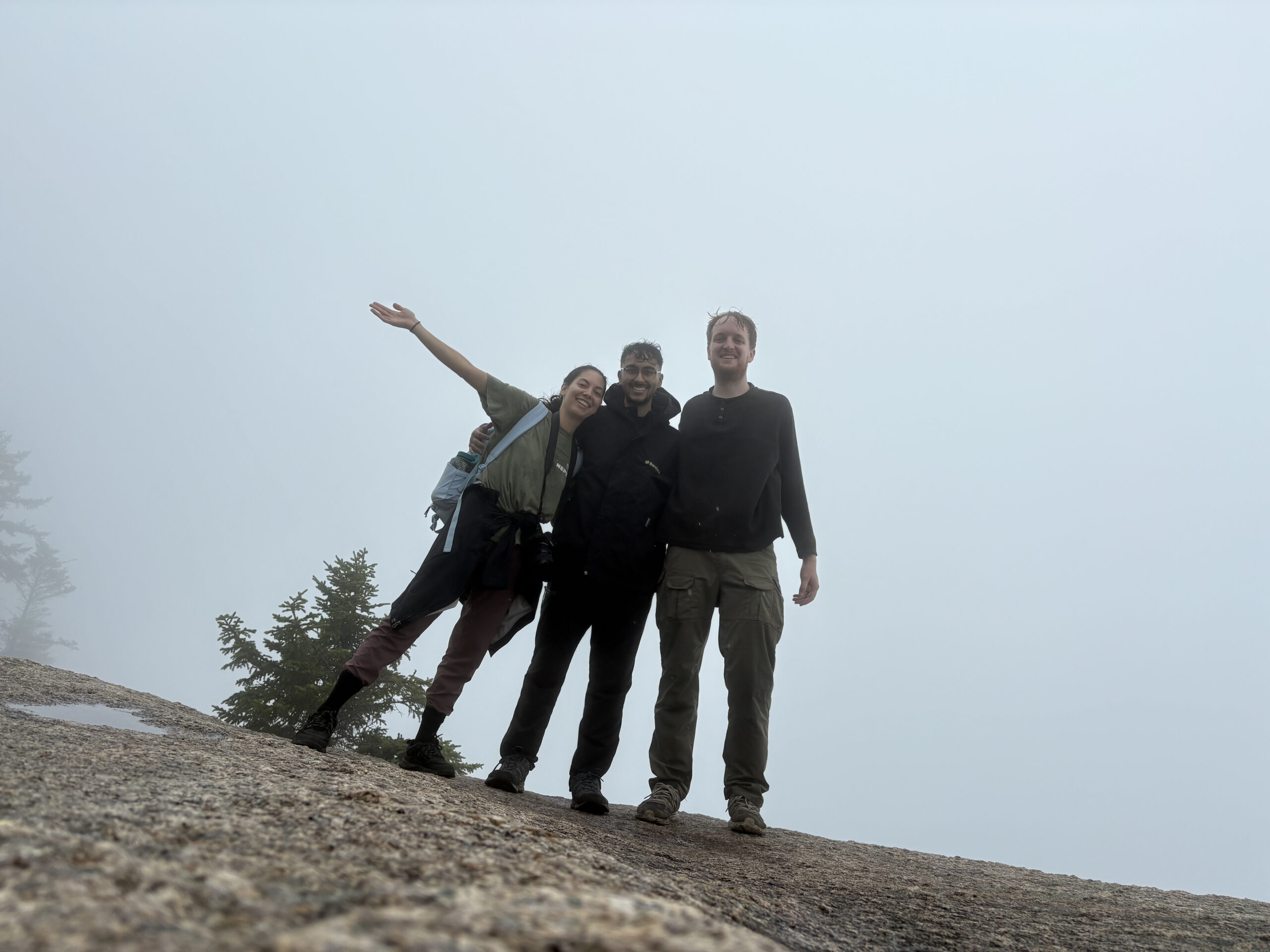
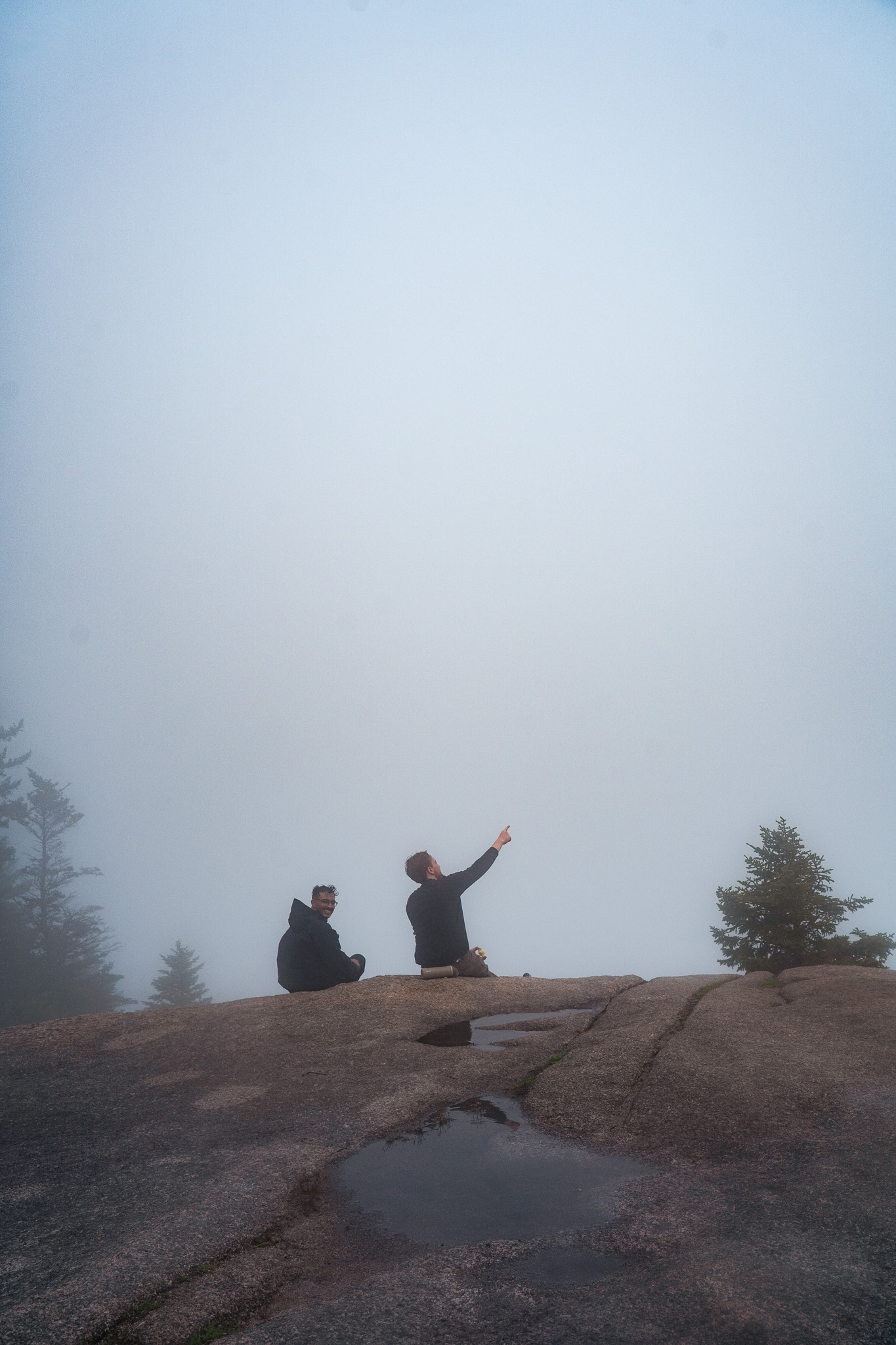
By the time we reached the top of Mount Pemigewasset, still without a single butternut, a storm rolled in. The clouds absolutely engulfed us.
I couldn’t help laughing a little as my rain jacket soaked through to my undershirt and my feet sloshed in my supposedly Gore-Tex shoes. I watched my every step and checked in with my friends frequently. It was some of the heaviest rain I’ve seen, and we were walking downhill in what felt like a newly carved river.
I punched in the coordinates of our location and snapped photos of our surroundings so I could log the data.
Naturally, just as we reached the parking lot, the sky cleared completely and the sun came out as if nothing had happened. We made our way back to camp, dried our clothes and shoes by the fire, and watched the lake calm down while the mountains evaporated the day’s moisture into gigantic foggy plumes.
Why Absence Data is Invaluable
We didn’t find the butternuts. We certainly had an adventure.
I was bummed not to break out the sampling equipment or try the saw toss. But here’s the thing I understood better afterward than before: it’s important data to know that butternuts don’t exist in an area, too.
So I submitted it. Coordinates, photographs, eight miles of forest across two trailheads, and no butternuts in any of it. That’s now in the dataset.
And it’s worth understanding why that matters. This project doesn’t always send you to a marked point where a tree is known to be. You’re given a study region — in my case, a whole corner of the White Mountains — and you go looking in remote areas scientists can’t reach. Nobody knows in advance what’s there. That’s the entire reason volunteers are doing it.
Which means a search that comes back empty is a real finding. Butternut is in steep decline, and working out how steep, and where, requires knowing both where the surviving trees are and where they’ve already gone. An unsearched forest tells you nothing. A searched one tells you something either way.
So there’s no way to do this wrong. There’s the version where you bring back a sample and the version where you bring back an absence, and both of them are the point.
We came home with wet socks and full hearts, and hopefully some data that will one day help save the butternuts.