
With wildfire season approaching, more than 100 wildlife recorders still need to be retrieved from remote forests across the Pacific Northwest. Every device recovered helps turn months of sound recordings into valuable conservation data.
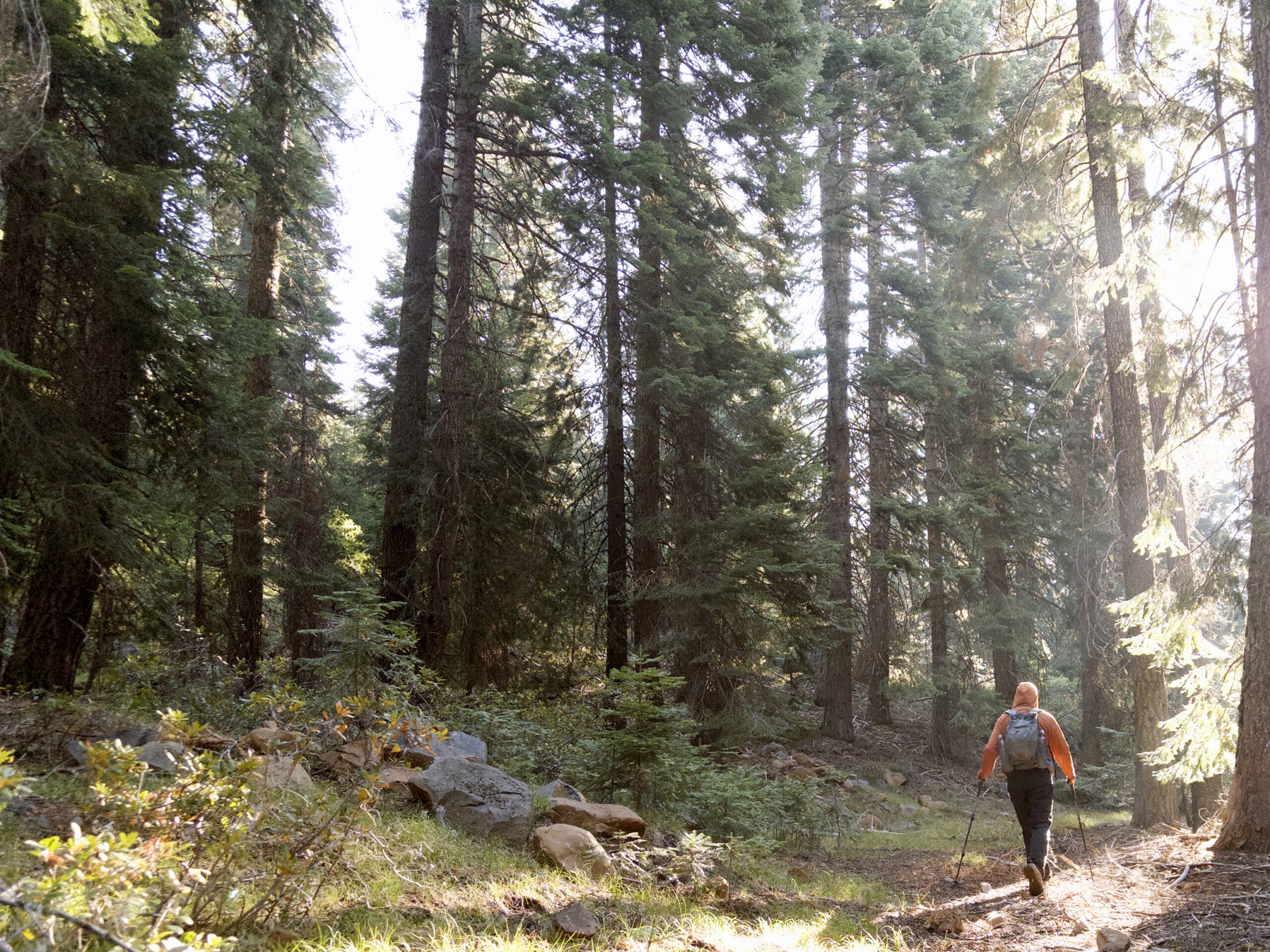
Somewhere in the backcountry of Oregon, Washington, and Northern California, more than a hundred small recording devices are still strapped to trees, waiting to be picked up.
Since early summer, they’ve been quietly capturing the sounds of the forest: the chirp of a pika tucked into a rockslide, a bald eagle calling overhead, and countless other sounds from corners of the Pacific Northwest that few people ever visit. Those recordings are helping build one of the largest biodiversity datasets the U.S. Forest Service has ever collected for this region, but only if the devices make it out of the woods before the season ends.
This spring and summer, Adventure Scientists volunteers placed more than 1,000 acoustic recording units (ARUs) across 267 survey hexes spanning three states. Placement closed on July 15, and we’re now in the retrieval phase. The window is short: every device needs to be back in hand by September, before wildfires make these areas truly inaccessible.
The Retrieval Window is Closing Fast
That’s not a scare tactic. It’s simply the reality of backcountry access in late summer.
Forest roads and trailheads across the Pacific Northwest routinely close during fire season, sometimes with little notice. A hard-to-reach area can become unreachable by September, cutting off access to recorders before volunteers can retrieve them.
Every recorder left in the field represents over a month of wildlife observations. Until it’s recovered, that information remains inaccessible, making retrieval one of the most important stages of the entire project.

What Backcountry Fieldwork Really Looks Like
Adventure Scientists volunteer Kellen S. recently experienced firsthand how quickly conditions can change. He hiked eight miles round-trip near Mount Hood to reach his designated collection location, only to discover that one of his three stations was now beyond a section of recently logged forest.
That’s the reality of fieldwork. Maps don’t always reflect what’s happened on the ground, and landscapes can change between visits. It’s also why retrieval can’t wait until the final days of the season.
The challenges are part of the work, but they’re also what make citizen science in remote landscapes so valuable. Reliable biodiversity data depends on volunteers who are willing to navigate changing conditions and bring the recordings home.

Help Bring the Data Home
The good news? You don’t have to be the person who placed a device to help retrieve it.
Any trained volunteer can claim an open hex, whether or not it’s the same area they visited earlier in the season. Adventure Scientists volunteer Katie H. has embraced that flexibility. She’s currently our most active volunteer, completing two and a half hexes so far, including one where she stepped in to help another volunteer finish a station that turned out to be more challenging than expected.
“I love running and backpacking in the PNW,” Katie says. “I work as a medical illustrator, but I got into that work because I love science and the outdoors. This is such a wonderful opportunity to participate as a citizen scientist and also have some adventures.”
If you’re trained and haven’t claimed a hex yet, or you’re looking for one more adventure before the retrieval window closes, now is the time to plan your trip.
Check the volunteer homepage, see which hexes are still available near you, and claim one. This is the time to turn your hikes in the backcountry toward meaningful conservation work.
The forest has been listening all summer.
Now it’s our turn to go get what it heard before fire closures and changing conditions close the window.