
Full Circle in Tahoe: Bringing Whitebark Pine Data Back to the Community That Asked for It
Landing in South Lake Tahoe for the first time ever felt like a full-circle moment.
If we haven’t met: I’m Lila Sadler, Forest Programs Manager at Adventure Scientists. This wasn’t my first Whitebark Pine Ecosystem Foundation (WPEF) conference, but it was my first time on the program as a presenter.
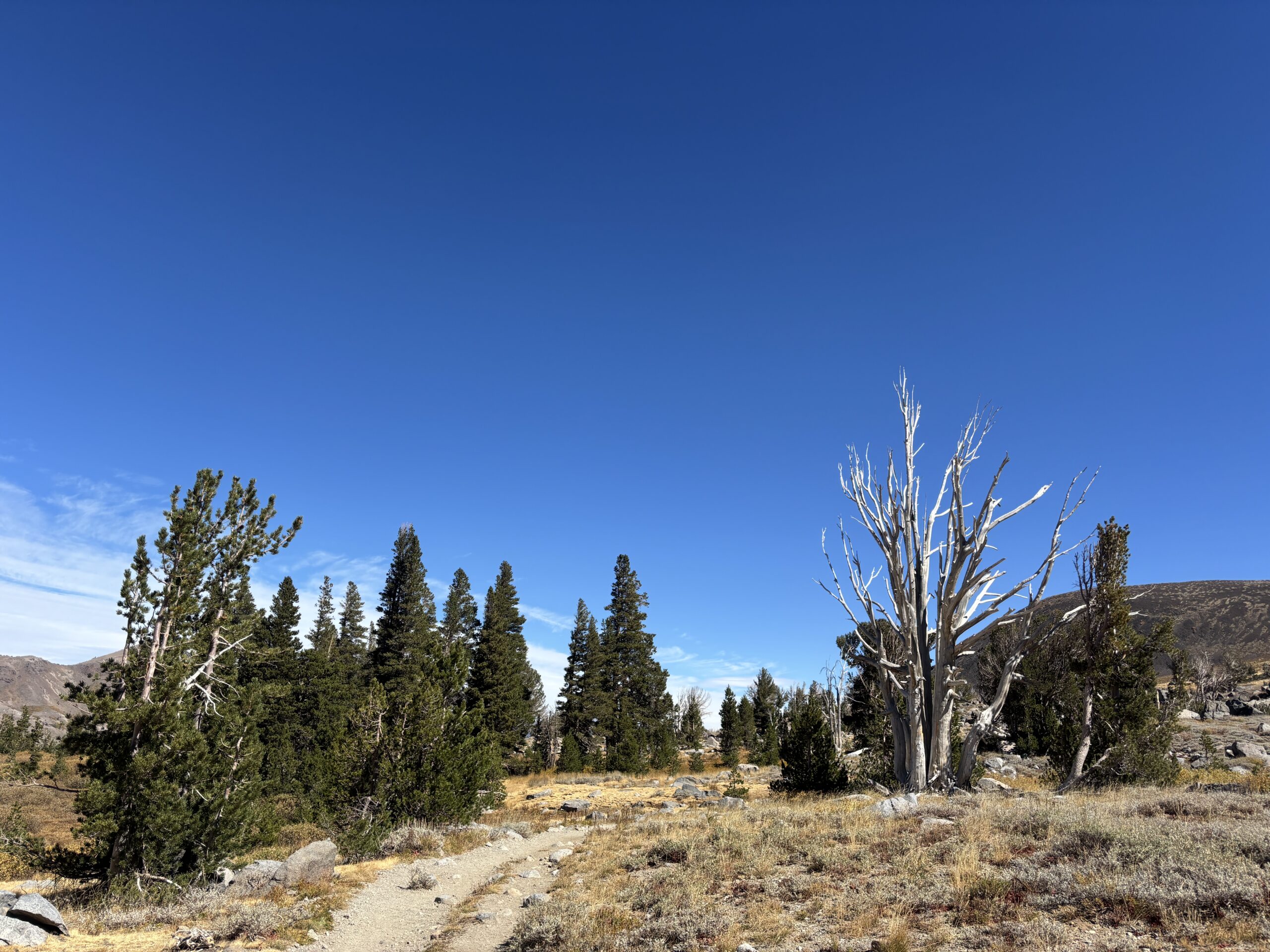
A year ago in Bozeman: a data gap and a plan
Last year, I joined WPEF’s five-needle pine conference in Bozeman, Montana, just as we were pulling together a new project with the WPEF for the U.S. Forest Service (USFS) Region 6. The Forest Service had a clear need: better information on where whitebark pine grows, how healthy it is, and where cones are coming on, across high, remote terrain their crews rarely reach.
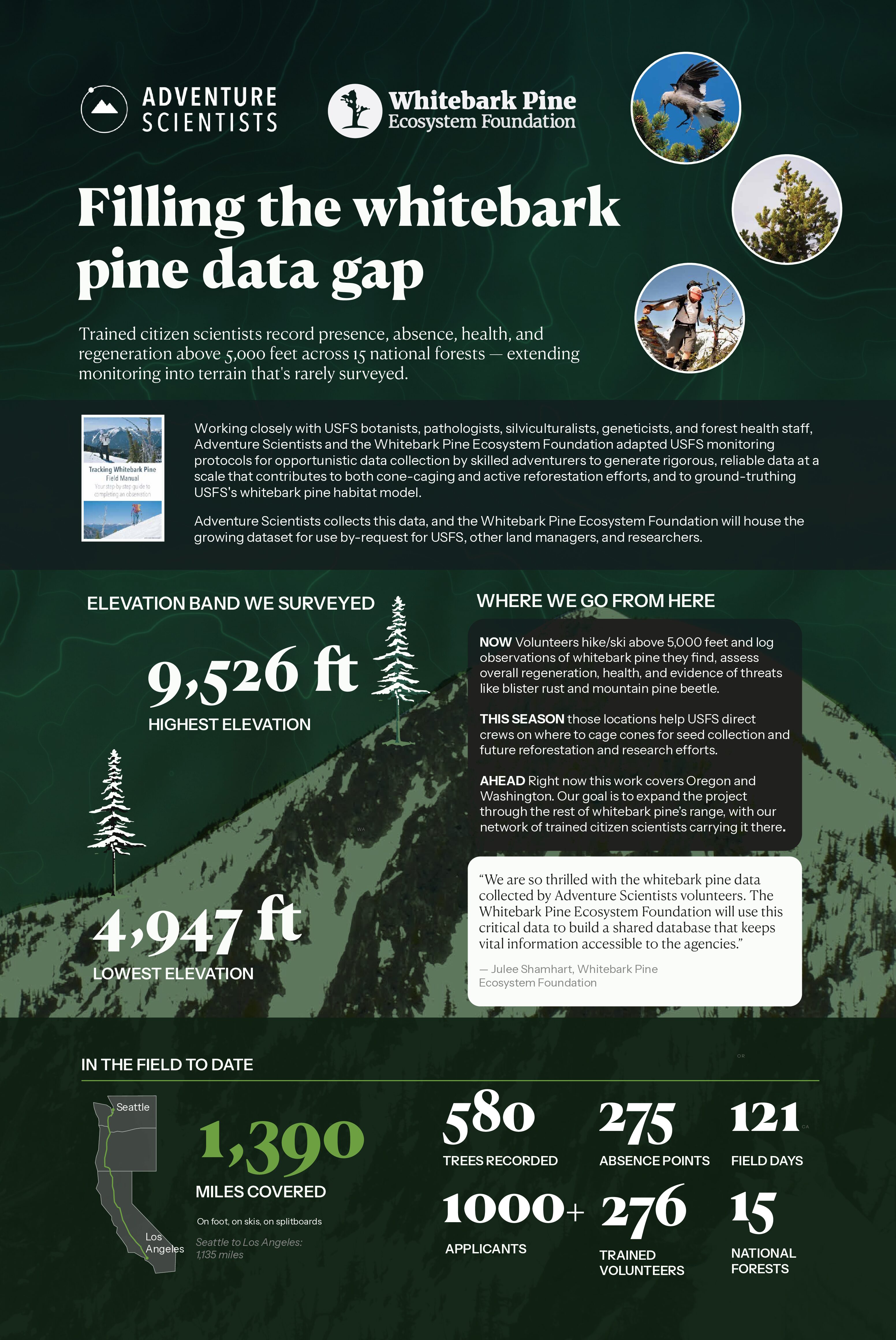
That need became Tracking Whitebark Pine. Together with USFS and WPEF, we adapted Forest Service monitoring protocols so skilled adventurers could collect rigorous, reliable data on their own trips. Trained volunteers now record whitebark pine presence, absence, health, and regeneration above 5,000 feet across 15 national forests. Their data supports cone caging and active reforestation, and helps ground-truth the USFS whitebark pine habitat model. WPEF houses the growing dataset, available by request to USFS, other land managers, and researchers.
This year, WPEF invited us back to share our preliminary findings at The Fate of High-Elevation Forests in a Changing World: Ecology and Management of Western 5-Needle Pines, held September 22–24 in South Lake Tahoe, with the same community that called for this data in the first place.
“We are so thrilled with the whitebark pine data collected by Adventure Scientists volunteers. The Whitebark Pine Ecosystem Foundation will use this critical data to build a shared database that keeps vital information accessible to the agencies.”
Starting high: a hike into whitebark pine country
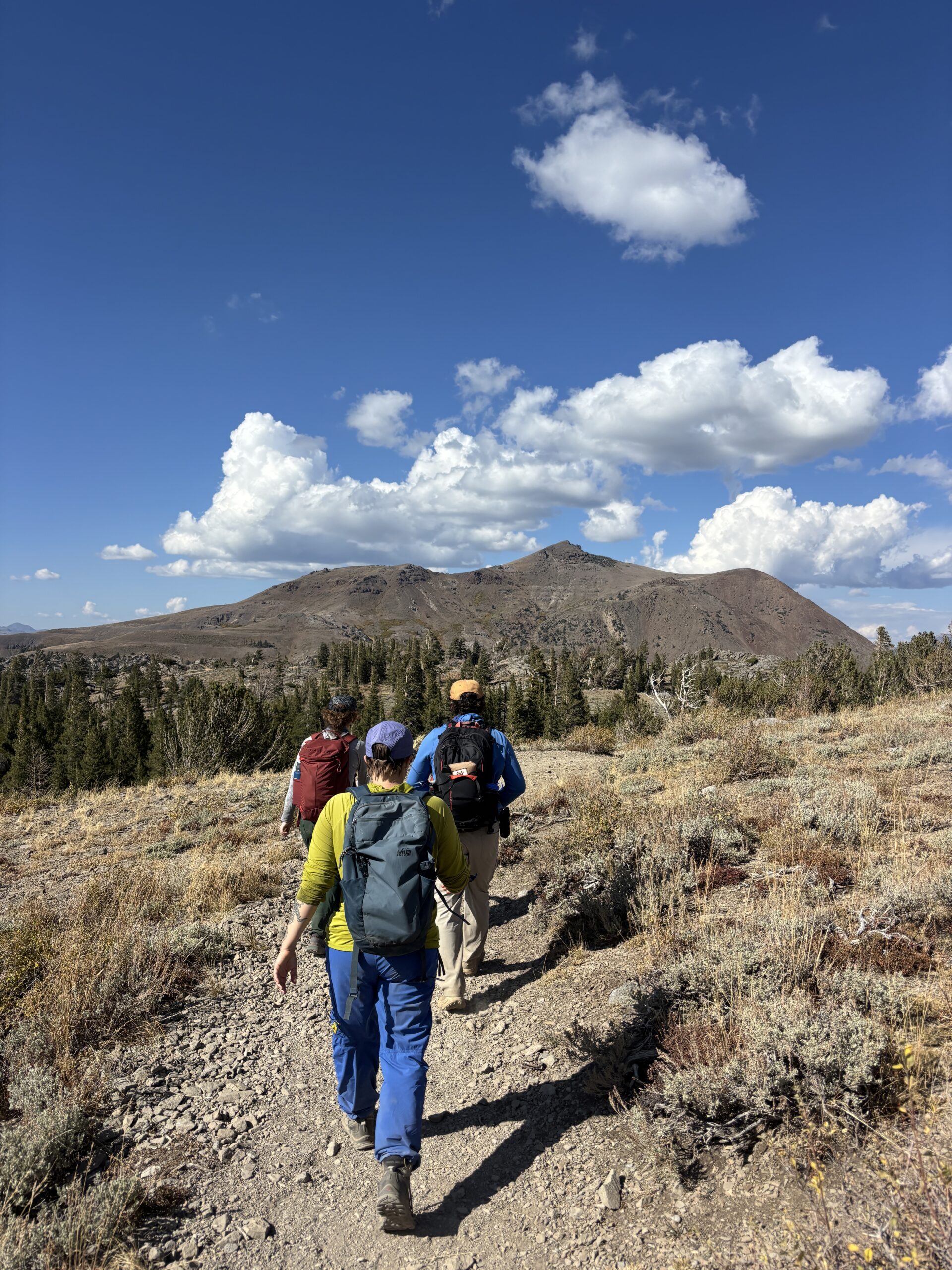
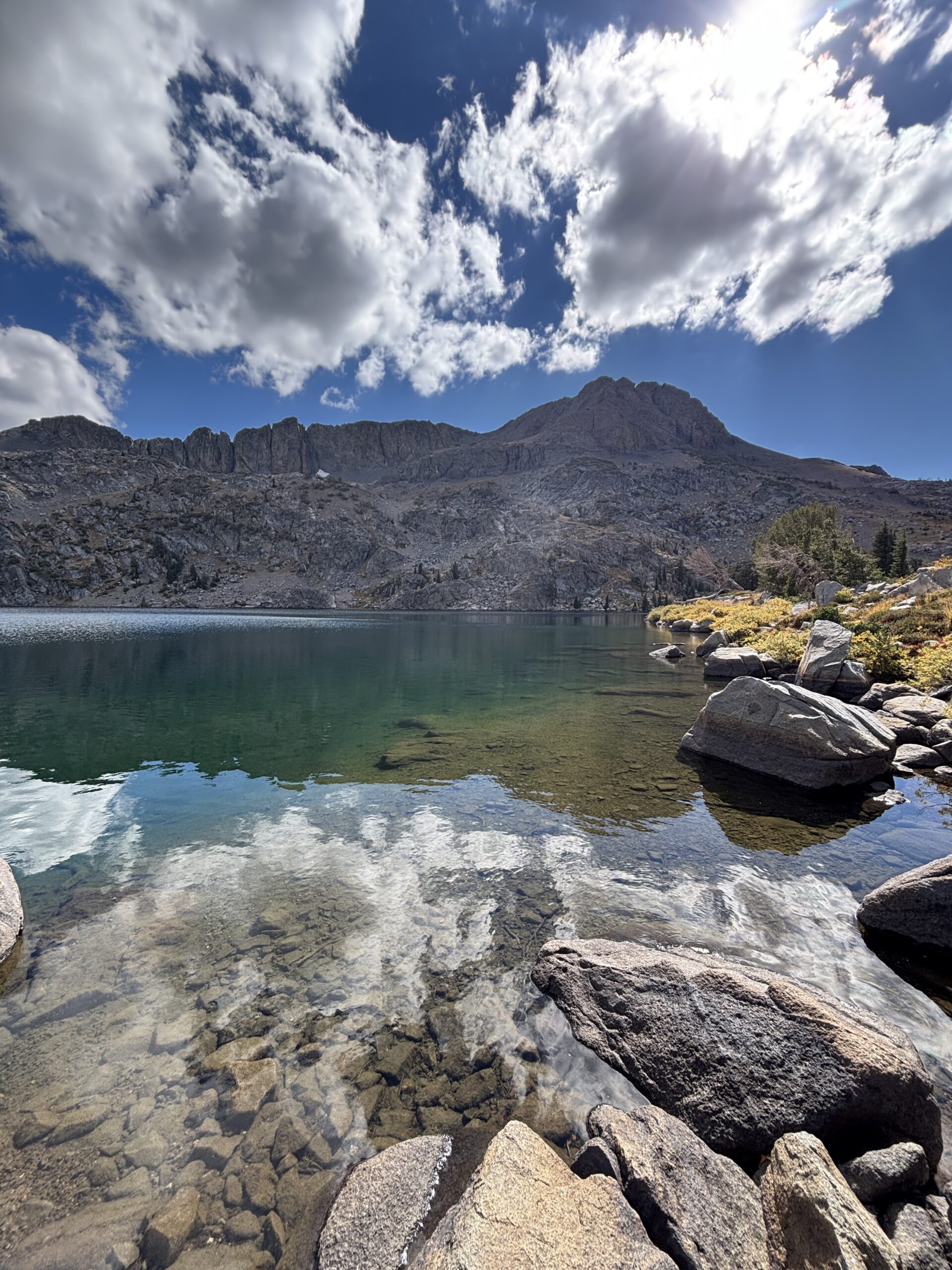
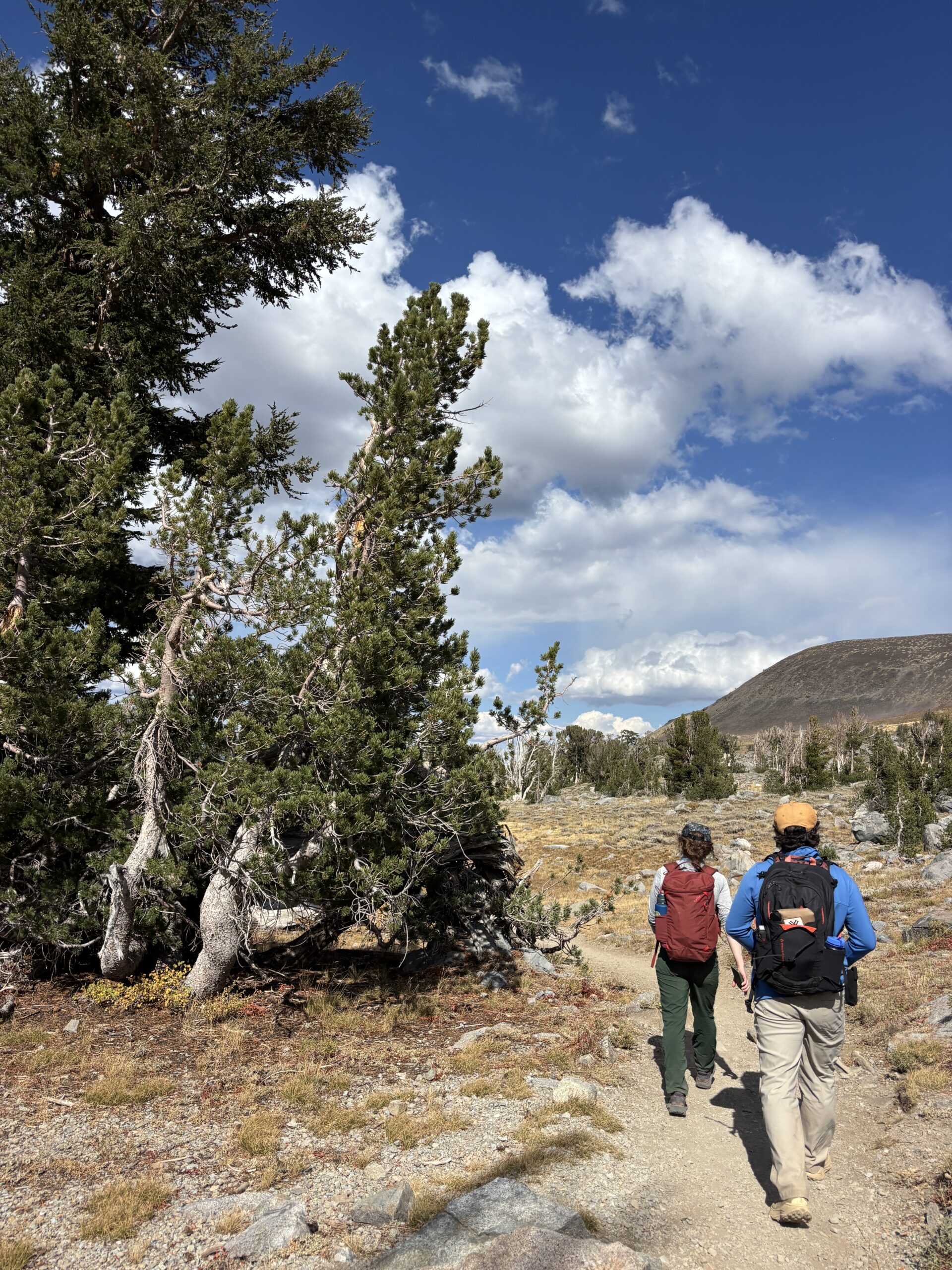
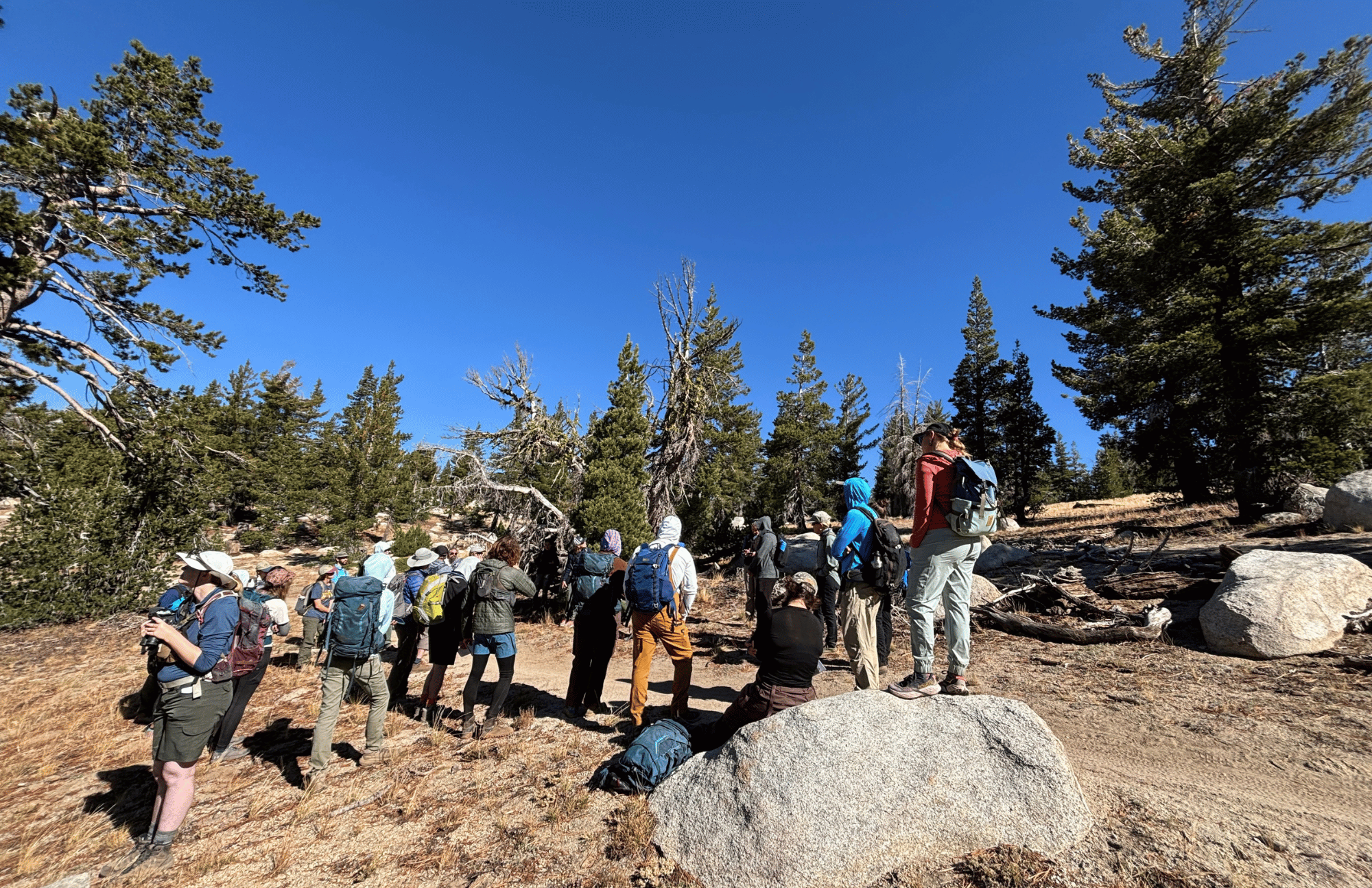
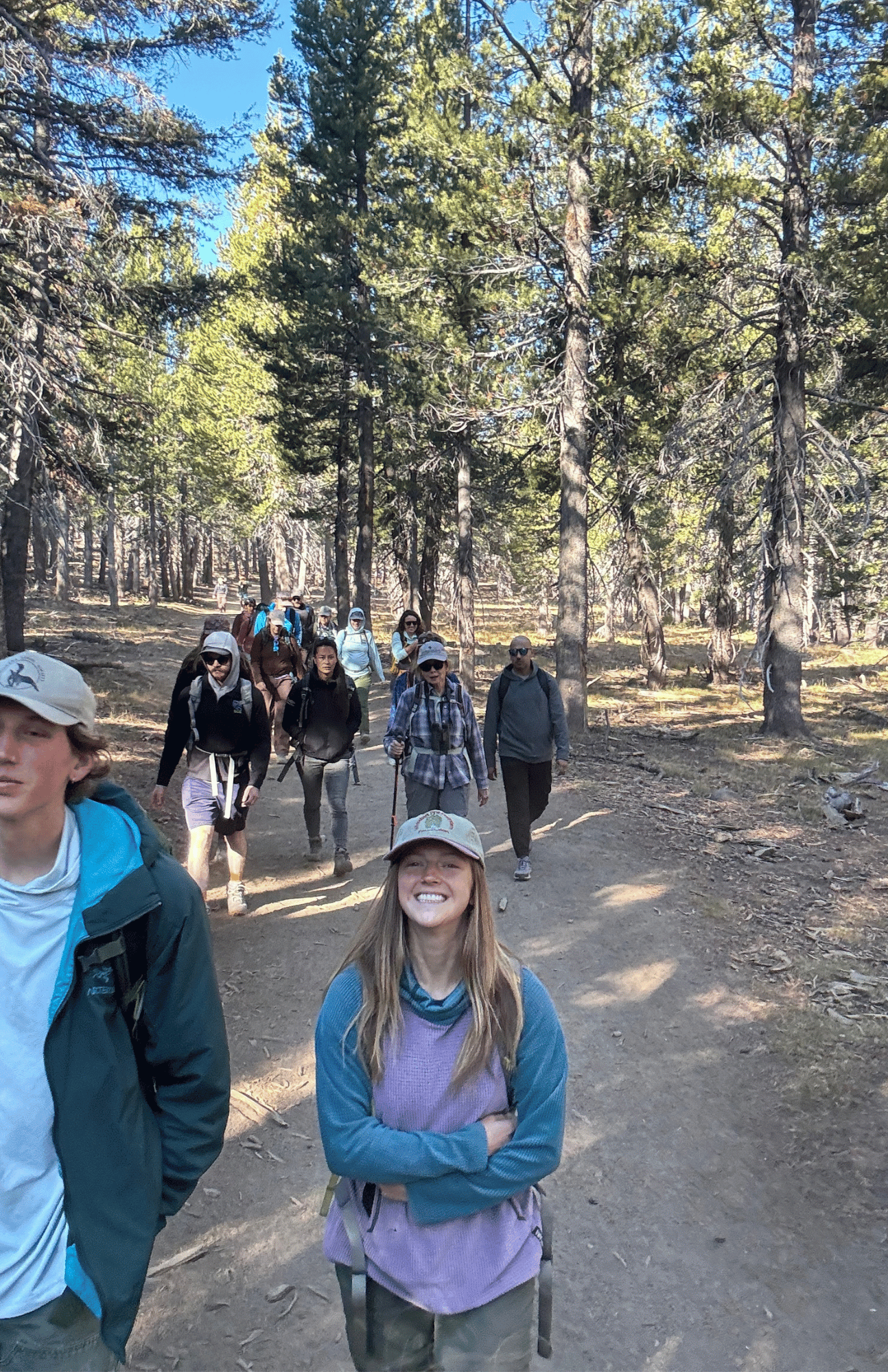
The conference started high, literally, at about 8,500 feet. Eve Bernhard of American Forests and North Cascades National Park led us into whitebark pine territory, with sweeping views of Frog Lake and Winnemucca Lake.
Community Night: it takes a village
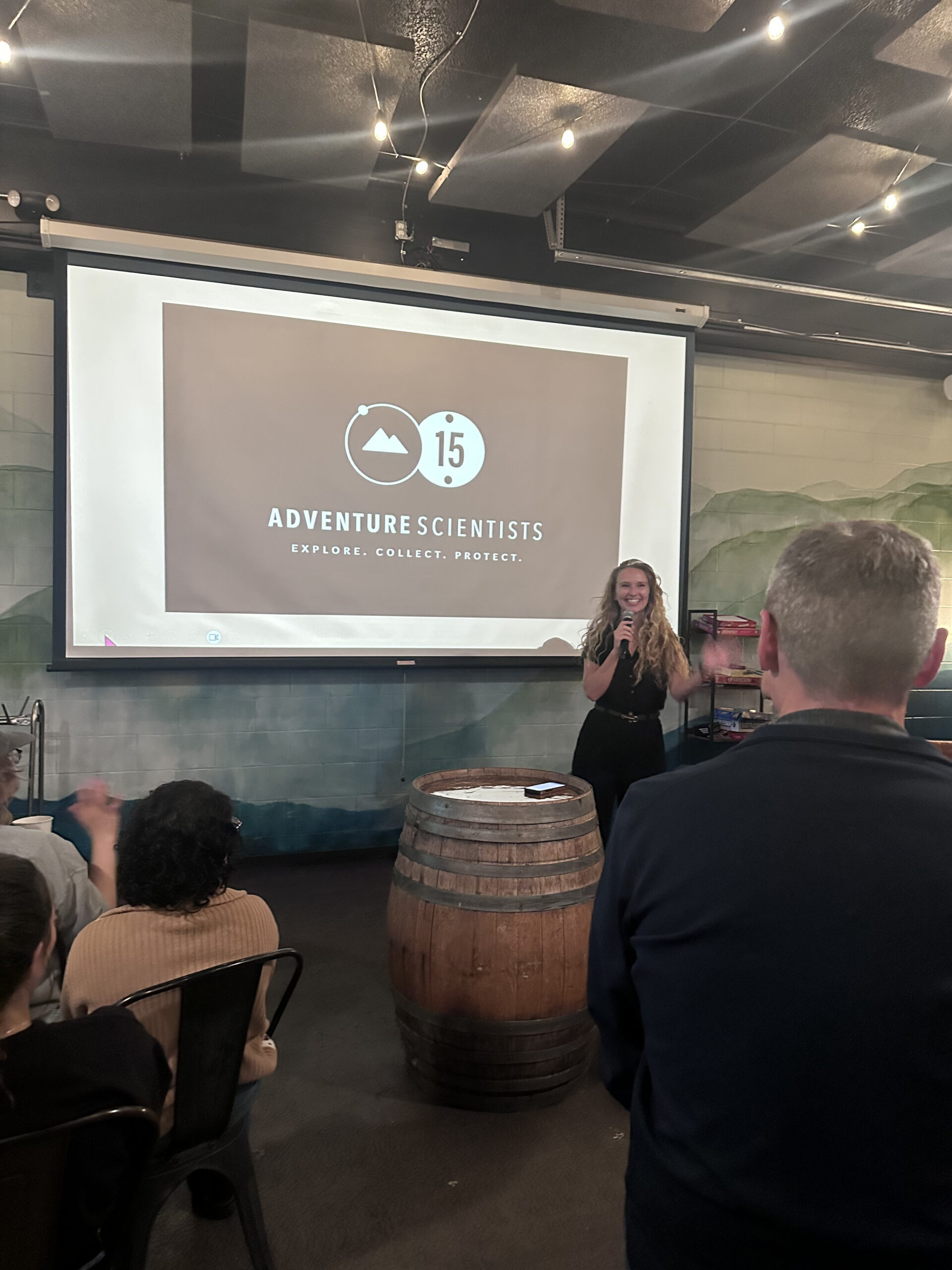
That evening, WPEF asked Adventure Scientists to present Tracking Whitebark Pine at Community Night. I shared how the project came to be: the Forest Service brought us a data gap, and together with WPEF and an incredible community of volunteers, we set out to fill it.
So far, our volunteers have hiked more than 1,390 miles in search of this threatened keystone species (farther than the drive from Los Angeles to Seattle) and documented more than 580 whitebark pines. Every one of those data points helps the Forest Service decide where to focus its conservation work.
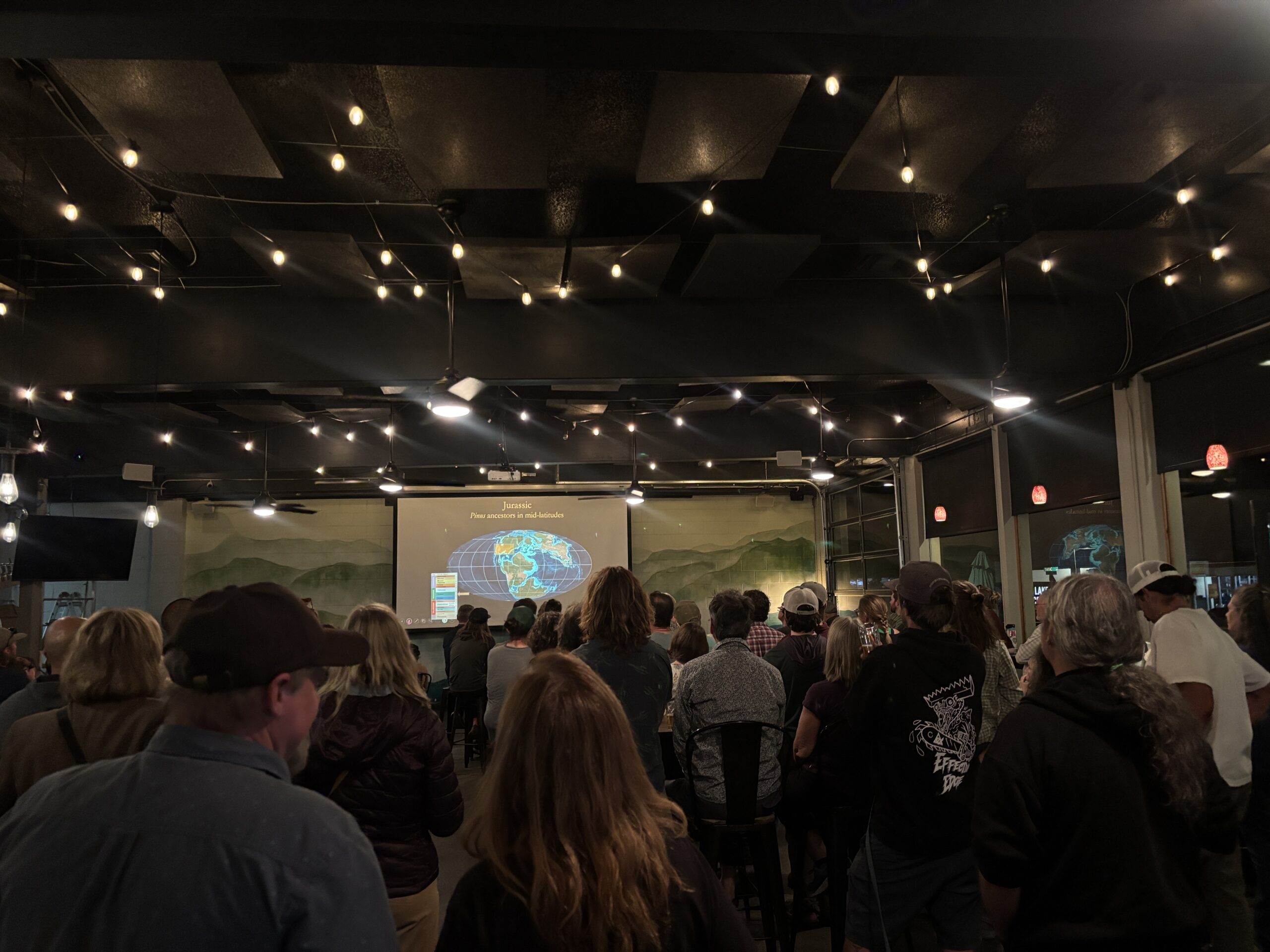
We shared the stage with California Trout, the Lake Tahoe Basin Management Unit, the Sugar Pine Foundation, Pride of the Mountains, and the Ancient Forest Foundation. Ecologist and author Michael Kauffman closed the night with an inspiring talk on the five-needle pines of the American West. It was a good reminder that positive change for people and nature truly takes a village.
Conference day: nutcrackers, seeds, and fire
Wednesday was a full day of sessions, and a few talks stood out.
- Clark’s nutcrackers. Karina Li presented new research on Clark’s nutcrackers – the birds with a special mutualistic partnership with whitebark pine. The birds bury seeds in caches to eat later, and the seeds they never return for can grow into the next generation of trees.
- Direct seeding. Teams from the Tetons and the North Cascades shared how they mimic the nutcracker by planting seeds directly into the ground, often the best way to reforest wilderness areas. It’s also a perfect picture of where Tracking Whitebark Pine data ends up: crews collect seeds from caged cones, those cones get caged because the Forest Service knows where to find them, and the Forest Service knows where to find them because a volunteer spotted them and submitted a survey. Our volunteers are at the very front of that chain.
- Recovery after fire. Emerging research suggests that while aspen are often the first trees to return after a fire at lower elevations, whitebark pine can play that role up high. That adds yet another dimension to its keystone status, especially as wildfires grow more frequent and severe.
Poster session: what the data shows so far
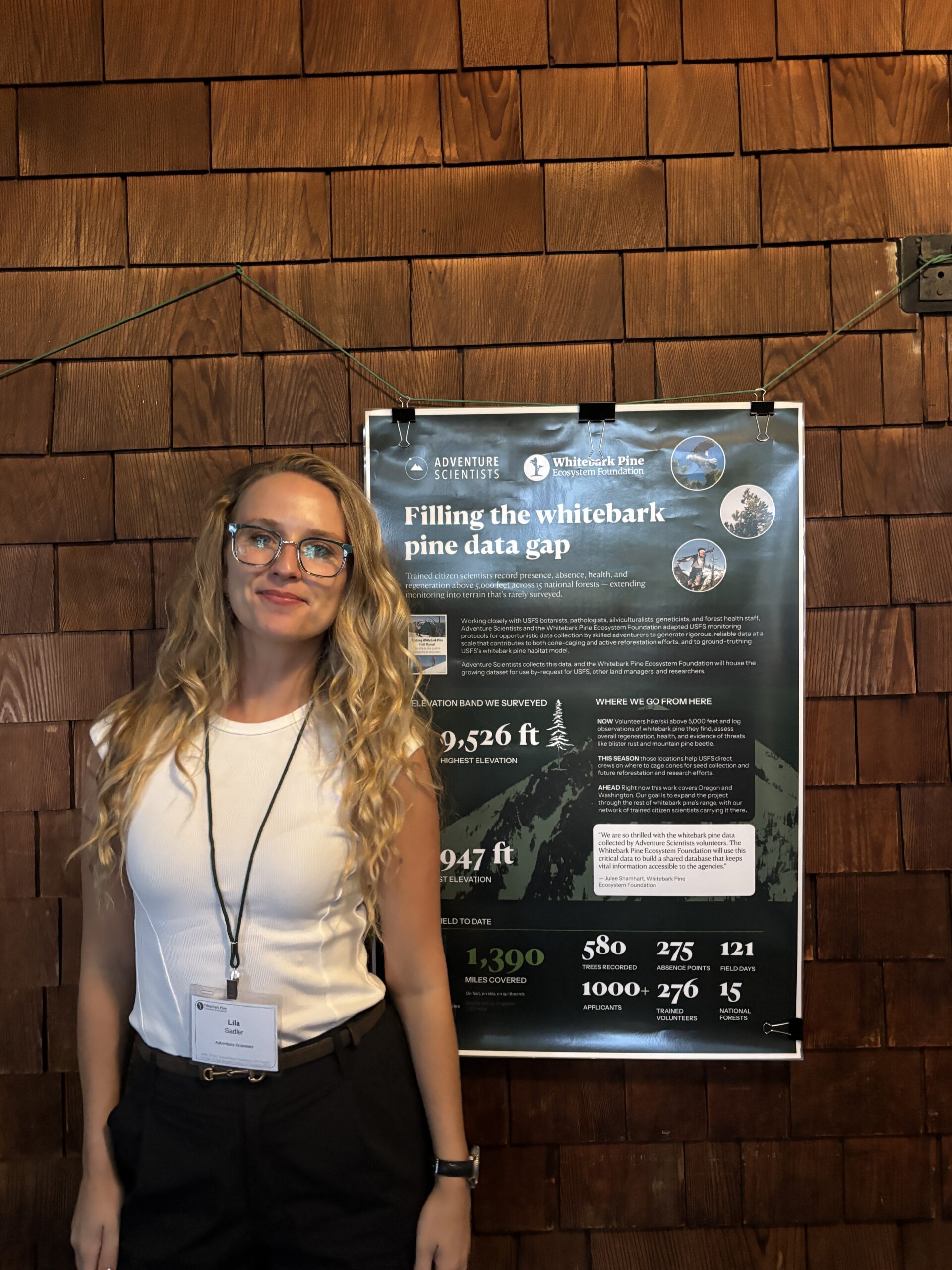
That evening, I presented our poster on Tracking Whitebark Pine’s early results. Volunteers found whitebark pine as high as 9,526 feet, but the biggest surprise was at the other end of the range: a whitebark pine growing at just 4,947 feet, below the 5,000-foot elevation our surveys target. Finds like that are exactly why adventurer-collected data matters. They show land managers where this species is actually growing, not just where we expect it to be. Across more than 121 field days, volunteers averaged over four trees per outing. That’s incredible.
The poster sparked great conversations with universities, national parks, and staff from other Forest Service regions. If you’re in Montana, Idaho, Wyoming, Nevada, or California and interested in Tracking Whitebark Pine, keep an eye out for updates!
In the field: blister rust training
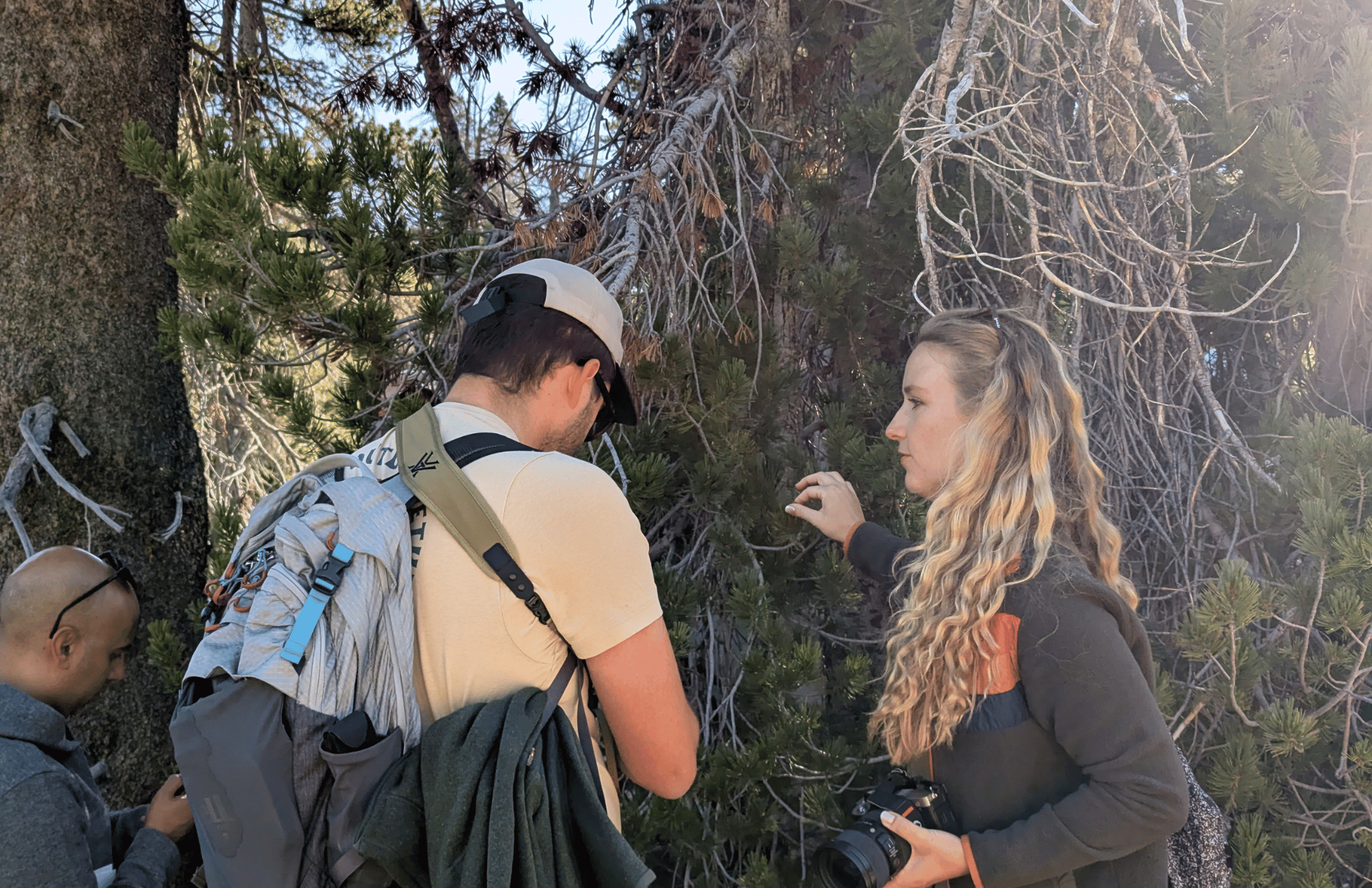
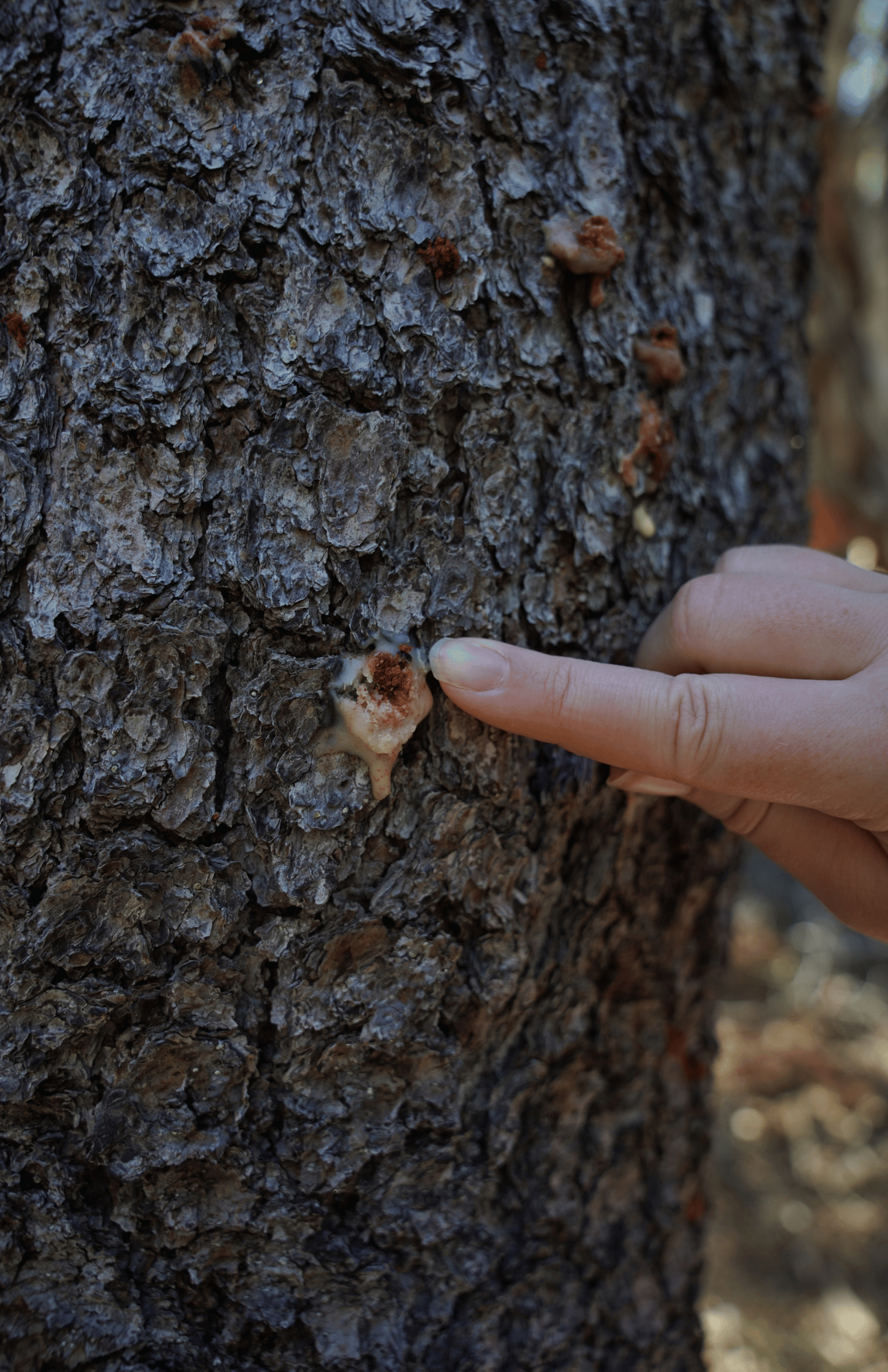
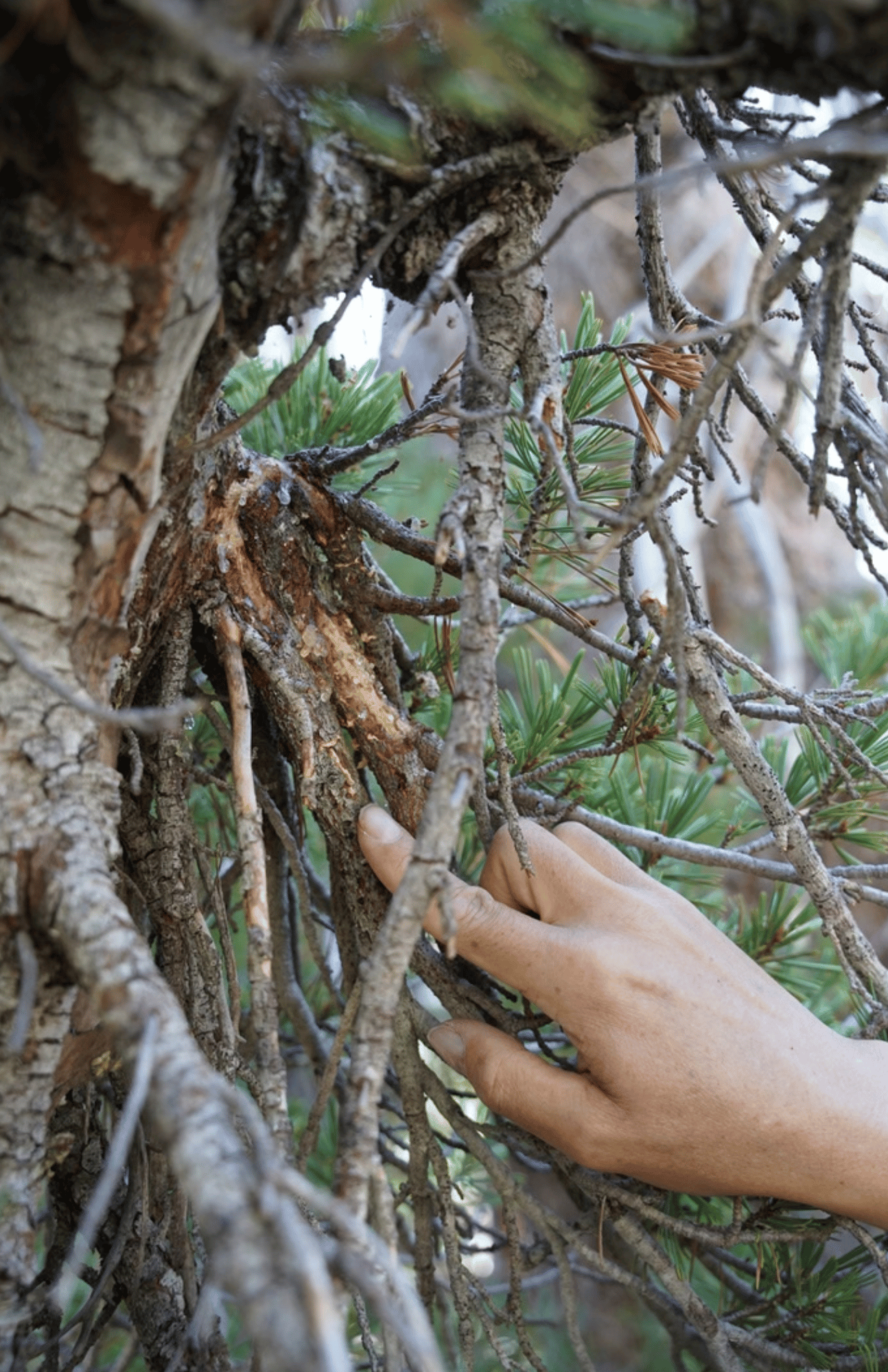
The next morning, we headed into the field near Mt. Rose for blister rust management training. White pine blister rust, a non-native fungal disease, is one of the biggest threats to whitebark pine’s survival.
A local whitebark pine researcher led the training, with help from Melissa Jenkins (WPEF board member and former USFS silviculturist) and Diana Tomback (Tomback Forest Ecology Lab, University of Colorado Denver). We talked through how blister rust spreads through Ribes (currants and gooseberries), the conditions where it thrives, and how land managers can avoid creating them. The experts also flagged research gaps where better information could lead to better outcomes. The takeaway was clear: we need more, and better, data.
One lighter moment: a chickadee landed on a trainee’s hand for a snack. We don’t recommend feeding wildlife, but it was a pretty magical Snow White moment.
Managing forests with whitebark pine in mind
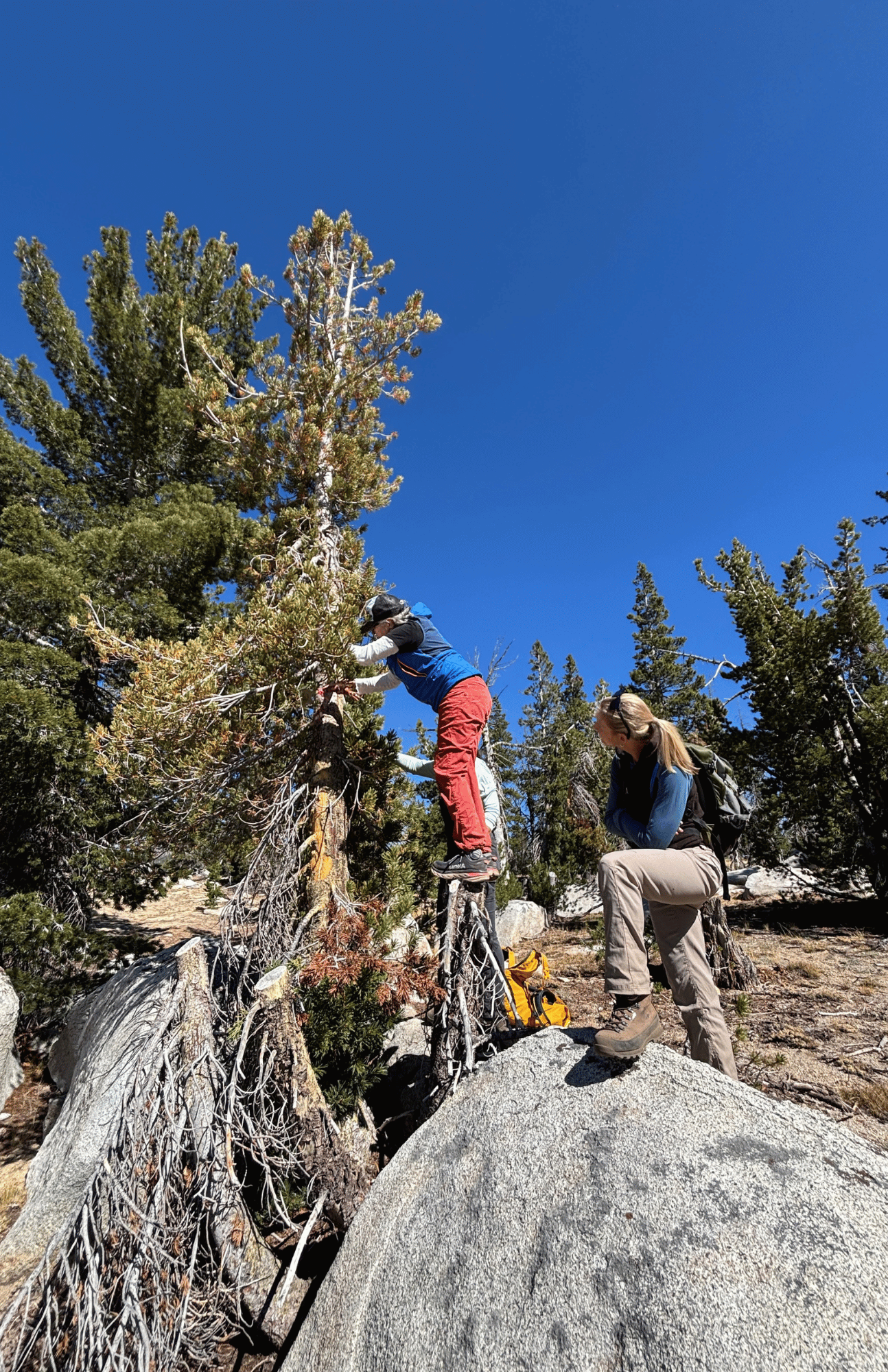
That afternoon, forest ecologists from the Humboldt-Toiyabe National Forest and the Lake Tahoe Basin Management Unit walked us through active fire management units to talk strategy.
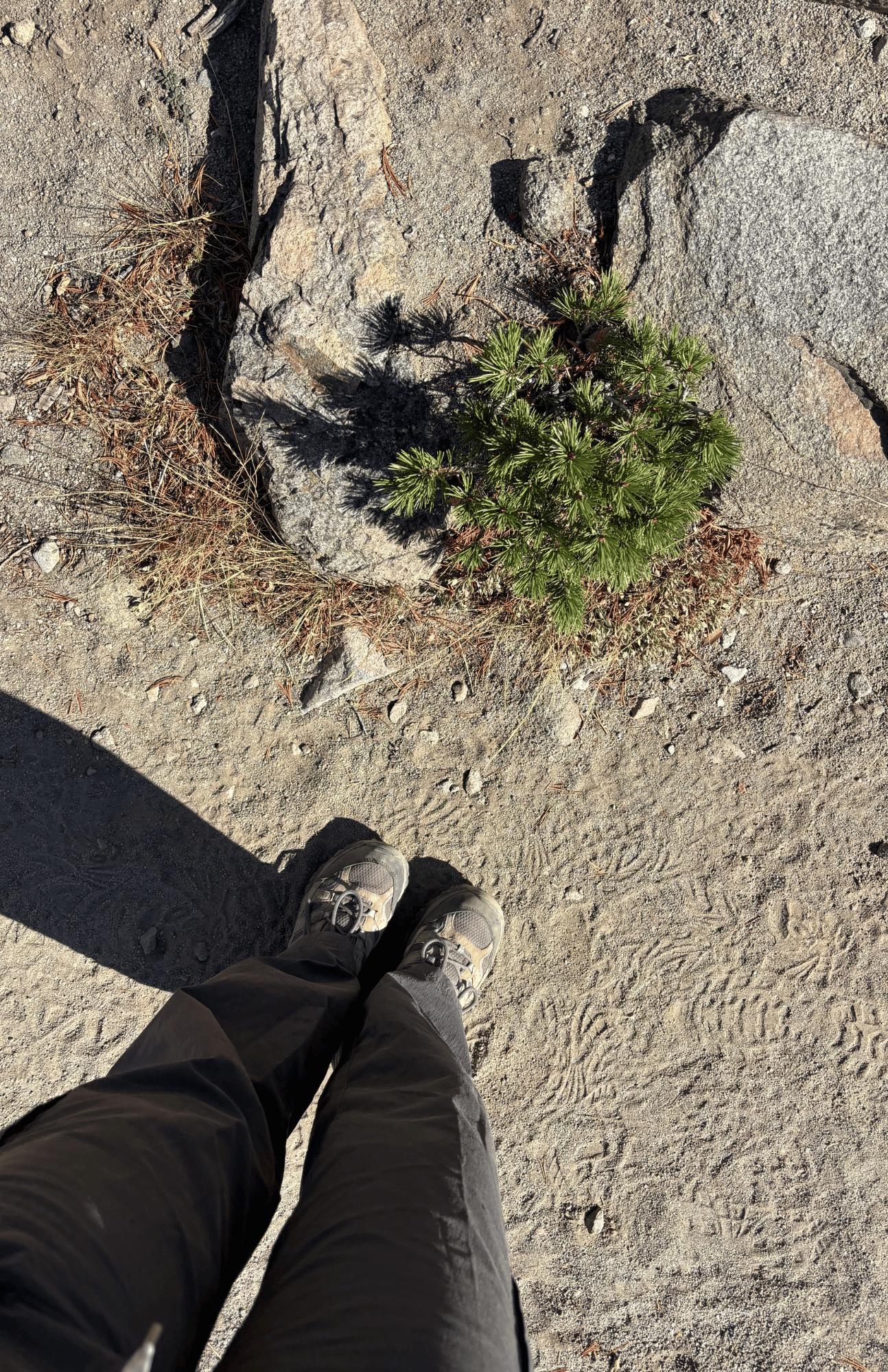
One idea stuck with me. Fire crews often clear dead standing trees, called snags, near roads because they’re a hazard. If the resulting logs are placed strategically, they can create microsites: small sheltered spots behind a log or rock where whitebark pine seedlings are much more likely to take root. In other words, fire safety work can double as reforestation.
We also talked about a serious bottleneck: there simply aren’t enough whitebark pine seeds to meet reforestation demand. The two major seed sources, the Coeur d’Alene Nursery in Idaho and the Dorena Genetic Resource Center in Oregon, can’t keep up, and California’s Placerville Nursery is scaling up to help. More cones need to be found.
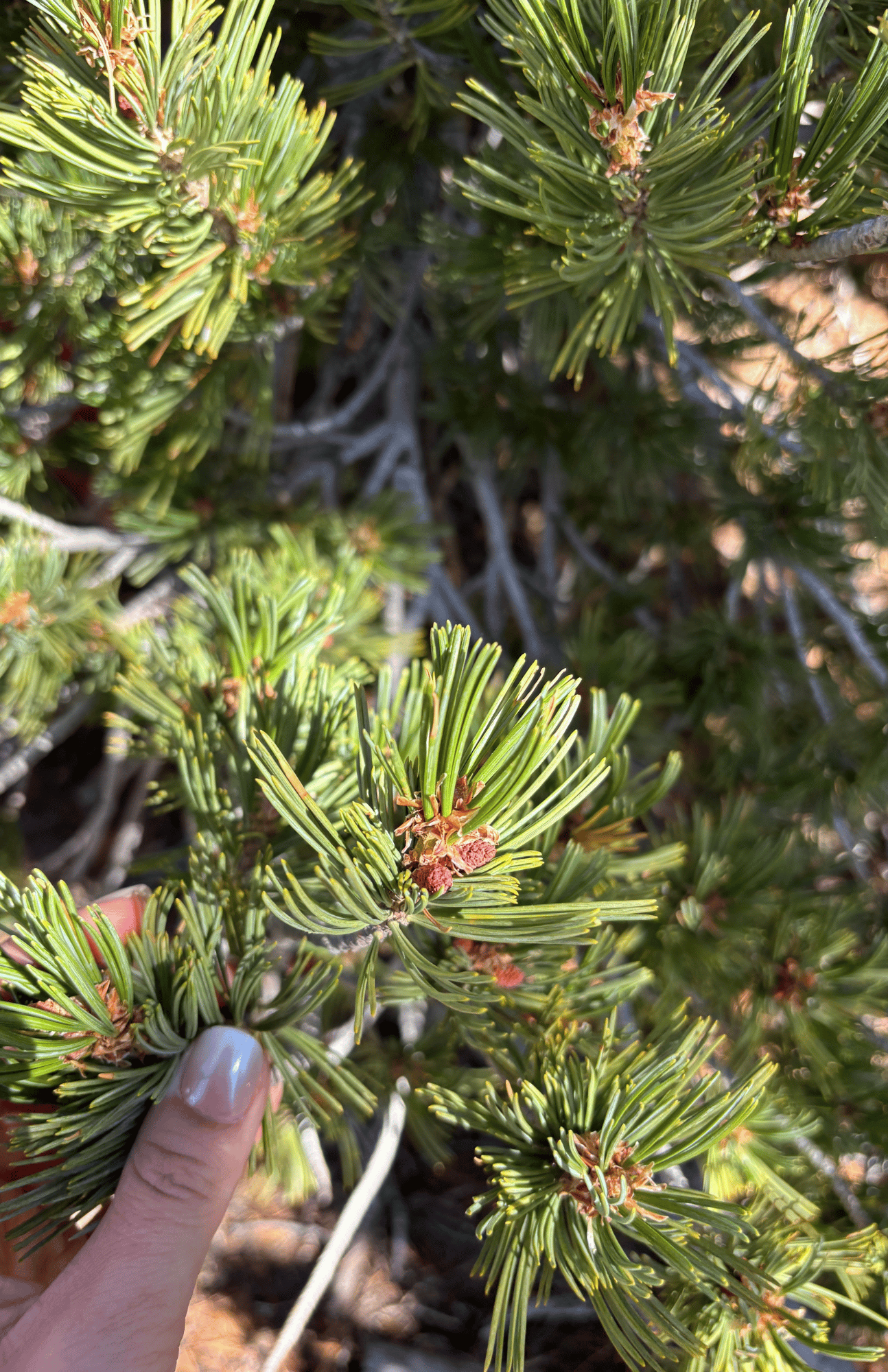
That’s where timing matters. Whitebark pine cones take two years to mature, so spotting developing cone crops early tells the Forest Service where to send crews before the window closes. The agency doesn’t have the staff to survey these forests alone, which is why volunteers are so critical.
And it’s already happening. Just before this conference, I spoke with a representative from Region 6’s Forest Health program, who shared that they’ve used cone data from Tracking Whitebark Pine volunteers to help direct their cone-caging crews.
A Tracking Whitebark Pine survey isn’t just a data point. It becomes seed in a forest manager’s hands, and eventually, the climate-resilient forests of tomorrow.
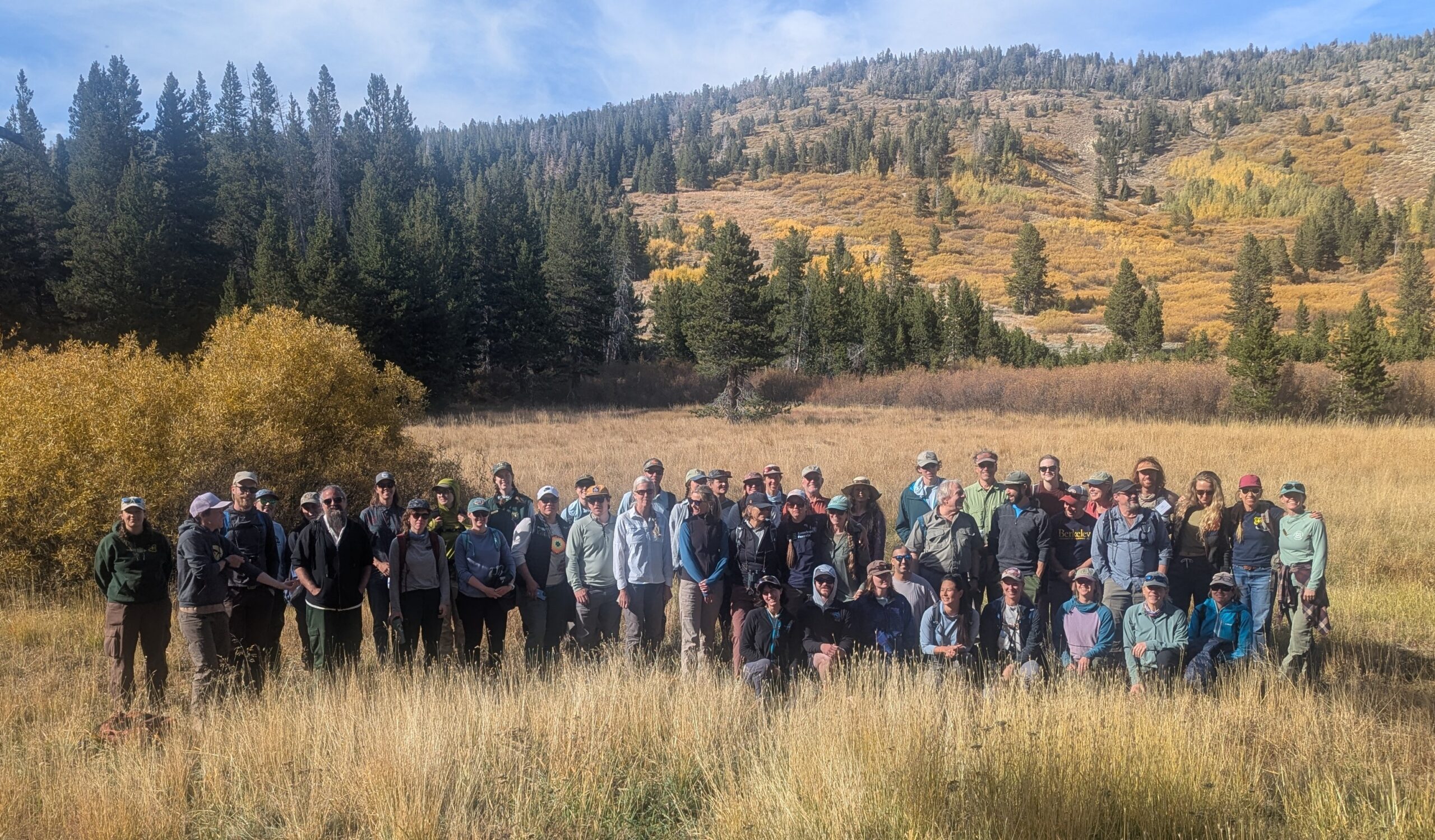
Until next year
From the first hike to the final field session, two themes ran through the whole conference: partnership across organizations, and the need for solid data to guide decisions. As we expand Tracking Whitebark Pine across the species’ range, we’re excited to grow our impact right along with it. I can’t wait to come back next year with even more data, and even more to share.
Want to be part of it?
If you’re with a Forest Service region, national park, or other land management agency and want trained citizen scientists collecting data in your area, email the whitebark pine team here.
Love getting up high?
If you can hike, ski, or snowboard into high-elevation terrain, you can help! Volunteers complete a short scientific training, then collect data on their own adventures.