
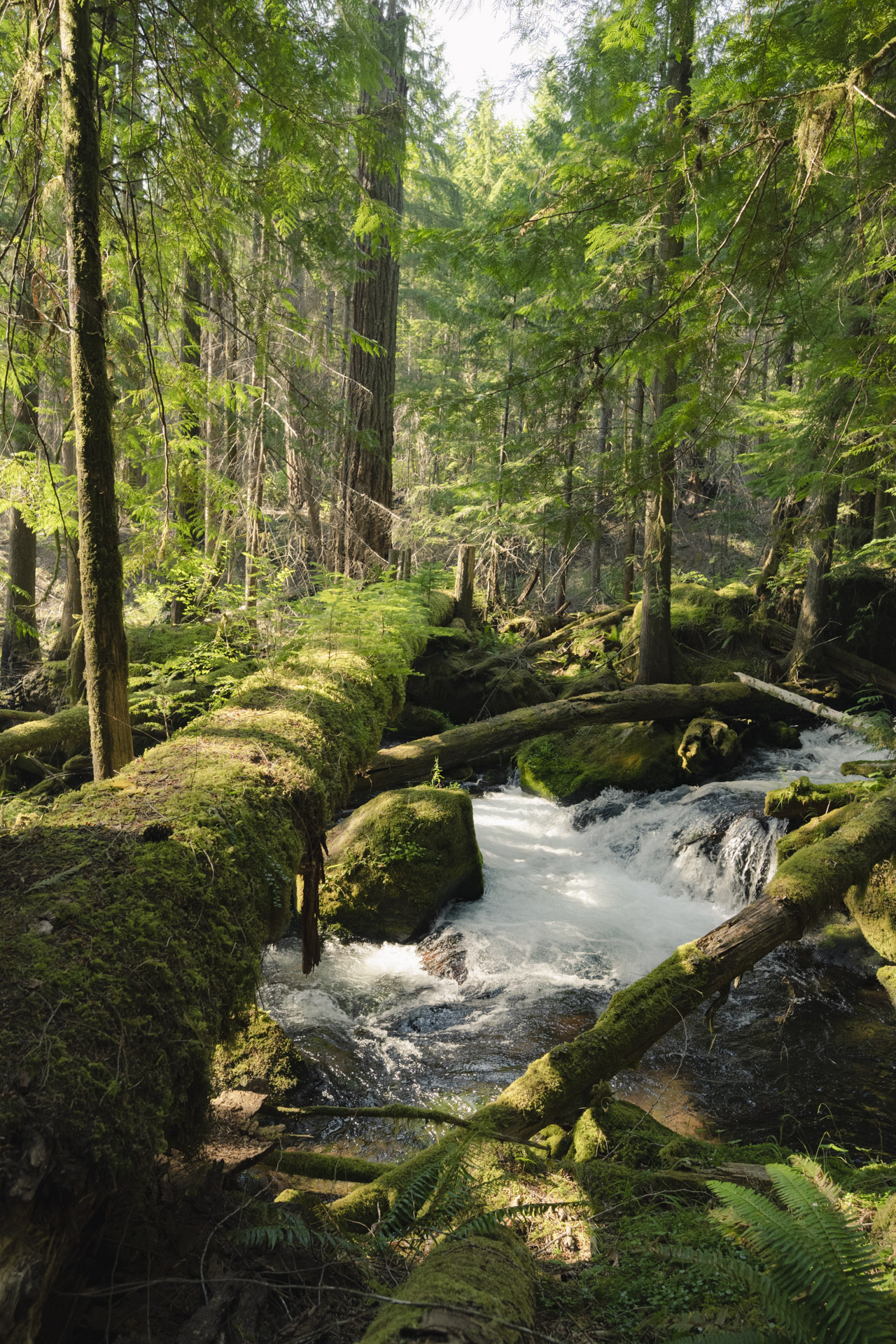
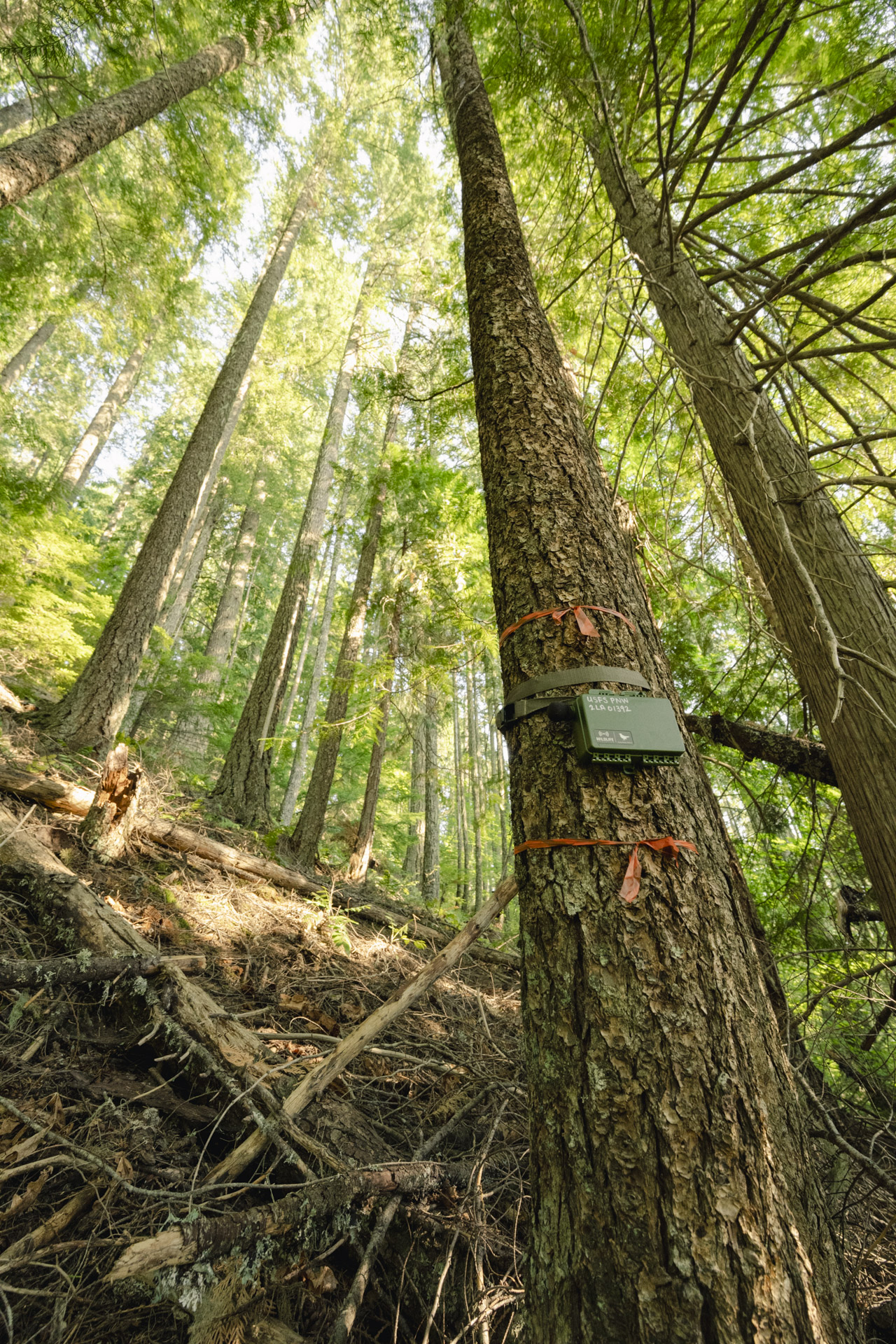
Christian Murillo spent his summer bushwhacking off-trail through Pacific Northwest forests to retrieve wildlife recorders. Here are the five tips he wants you to know before backcountry trekking for science.
Christian Murillo is a nature photographer that has spent the summer hiking off-trail through Pacific Northwest forests for our Preserving Northwest Forest Biodiversity project, and he came back with a list.
Here’s what he wishes he’d known before he started. Listen for yourself or skim below.
1. Wear pants
This project involves enough off-trail bushwhacking that shorts aren’t a comfort preference. Pants are the difference between a good day and a sketchy (or, scratchy) one.
2. Carry backup power, and don’t trust the roads on your map
Bring extra batteries for your GPS or phone, or a second charger. Your phone dying mid-hike means navigating the rest of a remote forest from memory… which, unfortunately, Christian says from experience. His last trip required a separate ten-mile hike back into the backcountry to finish the job properly.
He also preloads his locations before he leaves cell service, using OnX, Gaia, or whatever GPS app he prefers, and treats Google Maps or Apple Maps as unreliable once he’s on Forest Service roads. Those roads change more often than commercial map data gets updated, so a backup he can navigate manually is worth having before he’s driving to the woods.
3. Give yourself more time than you think
Plan on roughly double the time to reach sections that are off-trail. If you’d cover three miles an hour on a maintained trail, drop your pace estimate to closer to one mile an hour — sometimes slower — once you’re bushwhacking to the coordinates.
4. Don’t let a full day become a night hike
The corollary to the timing advice: build in enough margin that you’re not hiking off-trail after dark. Rough terrain is a different problem once you can’t see it clearly.
5. The payoff is bigger – and better – than the adventure
Christian expected the exploring part to be worth it: new terrain, new places, a good excuse to be outside. What surprised him was how much the other half mattered: contributing to a body of scientific knowledge that helps conserve and protect these places for the future.
I wish I knew how rewarding it is to volunteer with Adventure Scientists. I knew that exploring off-trail and getting outdoors [in] beautiful places like this would be a good time, but it’s so rewarding to both explore areas that are completely new to me, but also just to give back to the base of scientific knowledge that’s going to help conserve and protect these places for future generations.
Both halves show up in almost everything else on his list. The five things he wishes he’d known aren’t complaints; they’re what it actually takes to do backcountry fieldwork well, and he’d tell you the tradeoff is worth it.
Want to trek for science too?
If you’re interested in volunteering with Adventure Scientists, see which current projects are a good fit for you →